Water Leaks Elba: Protect Your Second Home
Water leaks in Elba: Regular checks and prompt action are crucial to protect your second home from damage, waste, and unpleasant surprises when you're away from the island.
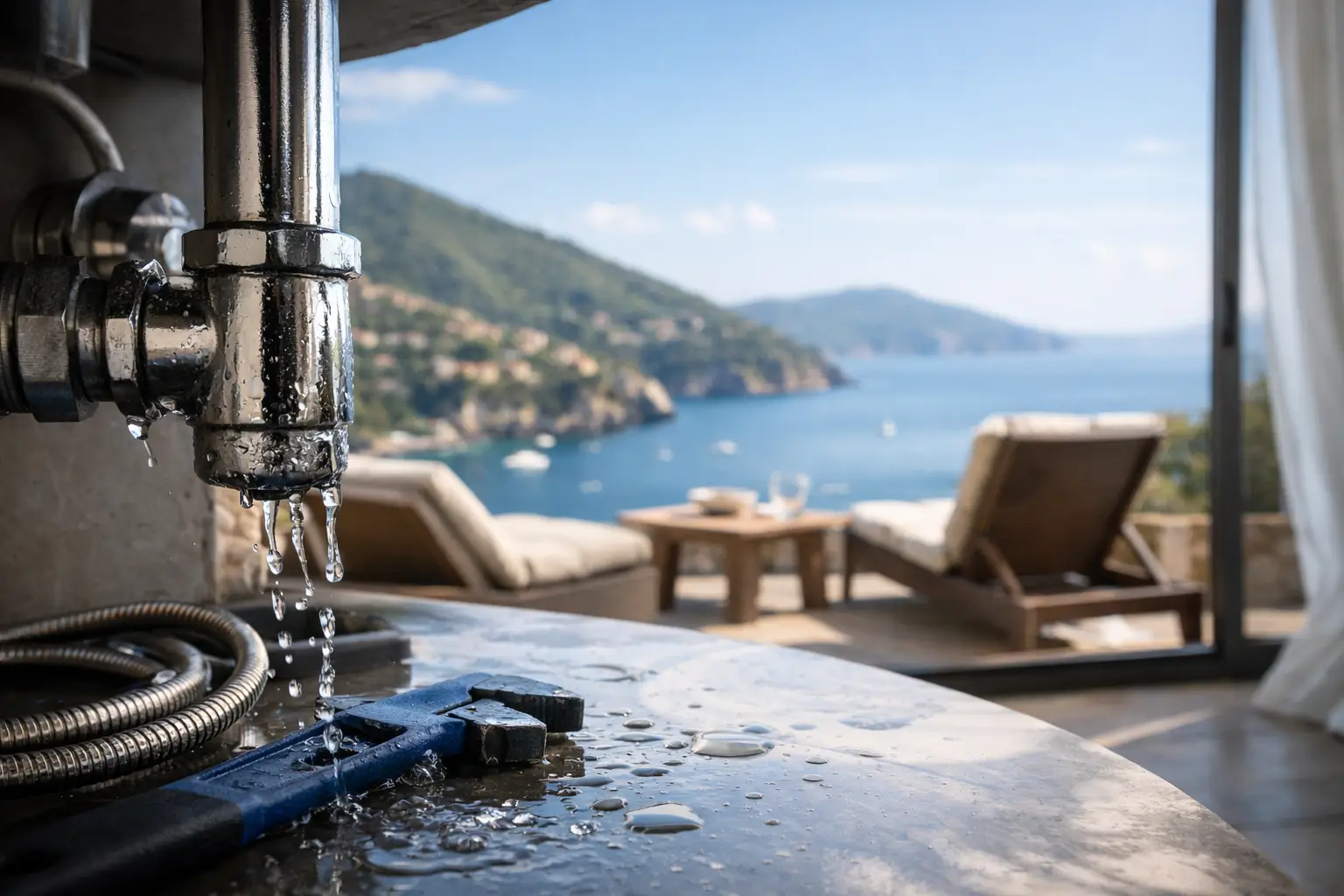
A small leak under the sink can go unnoticed for weeks. In a home occupied daily, someone would eventually spot a damp patch, a strange smell, or a water meter spinning without reason. In a second home, however, water leaks in Elba can silently escalate into significant damage to floors, walls, furnishings, and plumbing systems before the owner's next visit.
For those who live far from Elba Island, the risk isn't just about the cost of wasted water. It’s about the prolonged time without direct oversight, the difficulty of coordinating repairs, and the uncertainty regarding the property's condition. Consistent local supervision is precisely what's needed to bridge this distance: to detect early signs, assess the situation, and act before a minor fault becomes a complex problem.
Why a Leak in an Empty House Requires Attention
Water doesn't follow your vacation schedule. A worn-out gasket, a deteriorated hose, a valve that doesn't close properly, or a small infiltration from the roof can manifest at any time of year. If the property is vacant for months, even an initially modest defect can continue to feed humidity and deterioration.
The consequences depend on the location of the leak and the duration of exposure. A drip inside a kitchen cabinet can ruin hidden panels and materials. A leak behind a toilet cistern can create stains, mold, and peeling paint. A burst pipe in an upstairs bathroom can affect multiple rooms, potentially impacting neighboring properties as well.
In Elba's coastal areas, air humidity and periods of house closure warrant additional attention. While not the cause of every water problem, these conditions can make it harder to immediately detect odors, condensation, and the first traces of dampness. This is why inspections should not be limited to a quick walk-through inside the home.
Water Leaks Elba: Signs to Check During Inspections
An effective supervisory visit doesn't just look for water on the floor. It involves checking elements that might indicate an ongoing leak or a developing problem: the water meter, taps, sanitary fixtures, visible fittings, water heater, boiler, appliances connected to the water supply, and areas under sinks and basins.
The water meter often provides the first concrete indication. If all water points are closed and the meter continues to register consumption, there might be a leak in the system. This isn't a definitive diagnosis – some systems or devices may have specific behaviors – but it's a signal that requires prompt investigation.
Stains on walls also deserve caution. A damp patch doesn't always prove an active leak; it could be a past sign, condensation, or external infiltration. However, ignoring it is risky. It's essential to check if the area is damp to the touch, if the stain changes size, if a persistent odor appears, or if the paint shows blistering and peeling.
Particular attention should be paid to less visible points. Under sinks, behind washing machines and dishwashers, near manifolds, in technical compartments, and close to water heaters, problems can develop without immediately leaving traces in the main living areas. A systematic check reduces the chance of these signs remaining hidden until the owner's return.
Where Damage Occurs Most Often
There isn't a single weak point, as every property has different plumbing systems, construction age, and usage patterns. However, certain areas require regular checks, especially in homes left vacant for extended periods.
In the bathroom, the fittings under the sink, the trap, the toilet, and the cistern are among the components to observe. In the kitchen, in addition to the tap and trap, the inlet and outlet hoses of appliances should be checked. In utility rooms, a small leak from a boiler, water heater, or valves can affect floors and walls without being noticed from the outside.
Terraces and roofs require a separate assessment. Here, the problem might not stem from the plumbing system but from infiltrations related to rain, gutters, waterproofing issues, or clogged drains. The result, however, can be similar: internal dampness, damage to finishes, and the need for more extensive interventions if the cause isn't identified in time.
What to Do When a Suspicion Arises
The primary goal is to limit damage, not to make remote diagnoses. If a leak is visible or the meter suggests an anomaly, it may be necessary to turn off the main water supply, when doing so is safe and appropriate. This simple measure can stop the problem from worsening while the cause is investigated further.
The next step is precise documentation. Photos of the affected area, a meter reading, the location of the damage, and the presence of water or dampness help the owner understand the situation and provide useful information for the appointed technician. For a vacant home, clear communication is part of its protection: knowing what has been detected, what measures have been taken, and what remains to be done prevents hasty decisions.
Not all leaks require the same type of intervention. A loose trap might be a localized repair; an unidentified leak in the system might require specialist checks. The correct choice depends on the extent of the damage, the accessibility of the pipes, the continuity of consumption, and the possibility of isolating the affected area without compromising the entire home.
It's useful to avoid two opposite errors. The first is to underestimate a small anomaly because it doesn't seem urgent. The second is to order invasive work before having ascertained the origin and scope of the problem. A well-executed local check allows for the collection of concrete evidence and the quicker involvement of the appropriate professional.
Prevention: Water Shut-off and Scheduled Inspections
For many second homes, turning off the water during long periods of absence is a prudent choice. It significantly reduces the risk of damage from sudden internal leaks. However, it's not a universal solution: some systems, irrigation systems, boilers, or specific property needs may require different settings. The decision should be evaluated based on the house's characteristics and the technicians' recommendations.
Even with the water shut off, external infiltrations, residual water in certain components, pre-existing problems, and humidity conditions still need to be considered. This is why the most reliable prevention combines technical measures with periodic on-site presence.
Scheduled inspections allow verification that no changes have occurred between visits. After heavy rains, long periods of disuse, or work performed on the system, an additional visit can be particularly useful. The frequency is not the same for everyone: a villa with a garden, multiple bathrooms, and external systems often requires different oversight than a small apartment used regularly.
The Value of a Local Contact on Elba Island
When the owner is off the island, speed depends on someone being able to enter, check, and coordinate. Waiting for the next stay is not a protection strategy. In case of a suspected leak, every day can increase the damage and make it harder to determine when the problem began.
A home watching service like Elba Property Care offers continuity to those who cannot be present in person: agreed-upon visits, preventive checks, timely reports, and practical support when an anomaly arises. The value lies not just in opening the door to a technician, but in maintaining constant attention to the home between visits.
A second home should welcome you, not present an unpleasant surprise upon your arrival. Regular checks of the water system and exposed areas are a concrete gesture of care that protects the property, your time, and your peace of mind.