Signs of Hidden Problems in a Villa on Elba
Recognize the signs of hidden problems in an Elba villa: damp, systems, leaks, and security, before absence becomes costly over time.
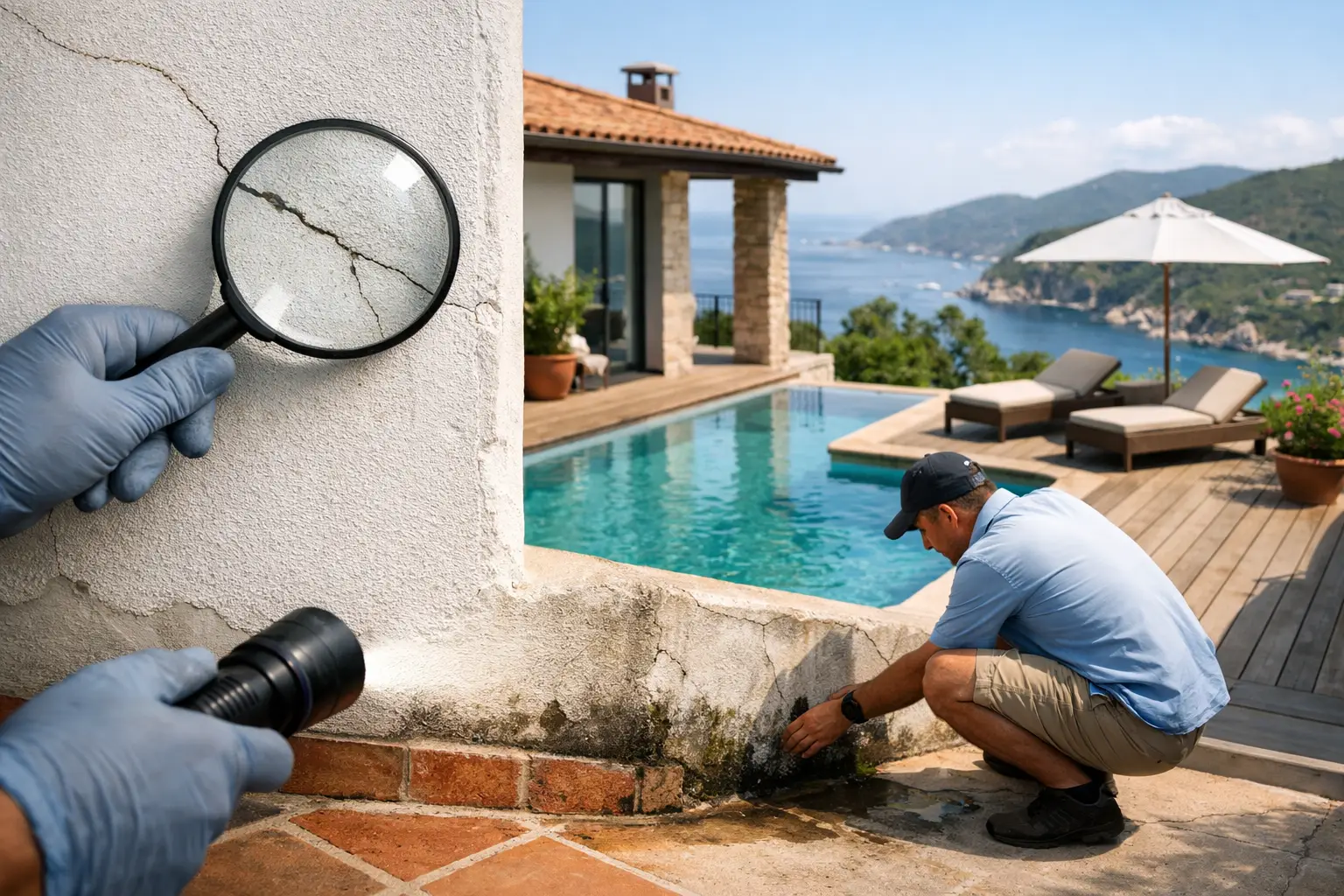
An unoccupied villa, closed for weeks, can appear perfectly in order while secretly harboring ongoing damage. Recognizing the signs of hidden problems in an Elba villa allows for intervention when a minor anomaly is still simple to manage, instead of discovering it upon return, facing urgent repairs, higher costs, and a home not ready for occupancy.
For those living far from Elba Island, the risk isn't just the breakdown itself. It's the time that passes without anyone noticing it. Regular, local checks transform uncertainty into concrete information: what's normal, what needs attention, and what needs immediate resolution.
Damp that changes walls, odors, and environments
Damp is one of the most insidious problems in second homes, often starting without an obvious leak. A stain in the corner of the ceiling, a ring near a window, or peeling paint can indicate leaks from the roof, facade, a terrace, or a pipe.
Odor also matters. A persistent musty, moldy, or cellarlike smell shouldn't be dismissed as a natural consequence of a closed-up house. It can be caused by poor ventilation, condensation, rising damp, or water hidden behind furniture and cladding. In a villa with seldom-used areas, utility rooms, basements, and secondary bathrooms deserve special attention.
On Elba, context is crucial. Properties exposed to the sea can be subject to humidity, salt spray, and wind, while those in hilly or more shaded areas can retain moisture more easily during cooler months. There's no one-size-fits-all plan for every home: exposure, materials, property age, and ventilation habits influence the type of inspection needed.
Leaks and Roofing: Damage often starting from above
A roof, a blocked gutter, or a deteriorated membrane can remain seemingly harmless until the first heavy downpour. The initial sign isn't always a drip from the ceiling. It can be a slight discoloration, a crack that worsens, plaster that feels colder to the touch, or an area that takes longer to dry.
Terraces, balconies, and flat roofs require the same attention. Leaves, soil, and debris can impede proper water drainage. If a downpipe doesn't drain well, water finds other paths and can reach delicate parts of the structure. After significant weather events, an external check is often more useful than it seems, especially if the house will remain empty for a long time.
Prevention doesn't mean intervening on every tiny imperfection. It means distinguishing a stable aesthetic mark from a new or evolving anomaly. Periodic photos of the same spots help to understand if a stain, crack, or detachment is changing over time.
Water Systems: a small leak won't wait for your return
A dripping faucet, a constantly refilling toilet cistern, or a slightly damp connection might seem like minor details. In an inhabited home, they are noticed and dealt with quickly. In an unattended villa, however, they can cause waste, persistent damp, and damage to furniture, floors, or underlying rooms.
The most sensitive points are often the least visible: under sinks and washbasins, behind appliances, in guest bathrooms, laundry rooms, technical rooms, and near water heaters. Unusual water pressure, a meter showing unexpected consumption, or a continuous noise in the systems also warrant inspection.
The decision to leave the water on or off depends on the system, the season, and the property's needs. Shutting off the supply can reduce certain risks, but it doesn't replace inspection: pipes, valves, and equipment must still be checked, especially before a prolonged absence.
Electricity, Air Conditioning, and Silent System Signals
A tripped breaker, a lowered safety switch, or an unresponsive appliance aren't always simple inconveniences. They can signal an overload, a moisture problem, a faulty device, or a localized breakdown. When a villa remains closed, checking the electrical panel and main utilities prevents the problem from remaining invisible for months.
Air conditioners and dehumidifiers require attention for a practical reason: dirty filters, blocked condensate drains, or leaks can compromise comfort and promote dampness in rooms. If the system is used to protect the house during months of closure, verifying its proper functioning is part of property protection.
There's no need to turn every visit into an invasive technical inspection. What's needed is methodical observation: checking for abnormal indicator lights, unusual noises, burning smells, excessive condensation, or unexplained outages. When a doubt arises, the correct step is to involve a competent professional before the anomaly worsens.
Fixtures, Shutters, and Access Points: External Protection Too
A villa's security doesn't only depend on locked doors and alarm systems. A damaged shutter, a window that doesn't close properly, a stiff lock, or a gate with irregular opening are signals that need attention. They can expose the property to bad weather, make unwanted access easier, or create a problem just when guests are about to arrive.
The salty air in some areas of Elba can accelerate the wear of hardware, hinges, gates, and metal components. Rust, loose screws, and hardened seals don't necessarily have to be interpreted as emergencies, but they require timely maintenance. Delaying too often means risking a small intervention becoming a more costly replacement.
During an external check, it's also useful to observe fences, perimeter lights, driveways, and vegetation. A branch resting on the roof, a plant grown in front of an access point, or non-functional outdoor lighting can reduce the property's security and visibility.
Garden and Outdoor Areas: When the Problem Originates Outside the House
A neglected garden immediately communicates that a villa is infrequently visited, but it's not just an aesthetic issue. Excessive vegetation can obstruct pathways, retain moisture against facades, damage fences, and hide problems that require attention. After strong winds or rains, broken branches and covered drains can create immediate critical issues.
Pools, tubs, irrigation systems, and outdoor showers require checks proportionate to their use. Cloudy water, leaks, levels dropping without reason, or exposed components are signs to investigate. Not every property has the same systems, so the supervision plan must be tailored to the actual villa and its priorities.
Hidden Problem Signs in an Elba Villa Not to Postpone
Some anomalies can await a scheduled evaluation, while others require a quick response. Visible water on the floor, a suddenly appeared damp patch, a broken window, an open door or window, gas odor, electrical failure, or signs of forced entry must be dealt with without waiting for the owner's next stay.
What makes the difference is someone present on-site. A local contact can assess the situation, document it clearly, secure the area, and coordinate necessary interventions with the owner's approval. For those off the island, receiving precise updates prevents decisions made in the dark and reduces reaction times.
Elba Property Care conducts scheduled checks for second homes, villas, and unoccupied properties on Elba Island, with an approach based on constant observation and prevention. Each visit should leave the owner with a simple certainty: the home has been seen, checked, and looked after by someone who knows the area.
A well-maintained property shouldn't wait for the owner's return for a problem to surface. Regular checks mean protecting its value, security, and availability, so that every arrival on Elba can start with the home, not an emergency.