How to Prepare Your Home Before You Leave
Preparing your home before you leave Elba Island: essential checks to protect your property and depart with peace of mind.
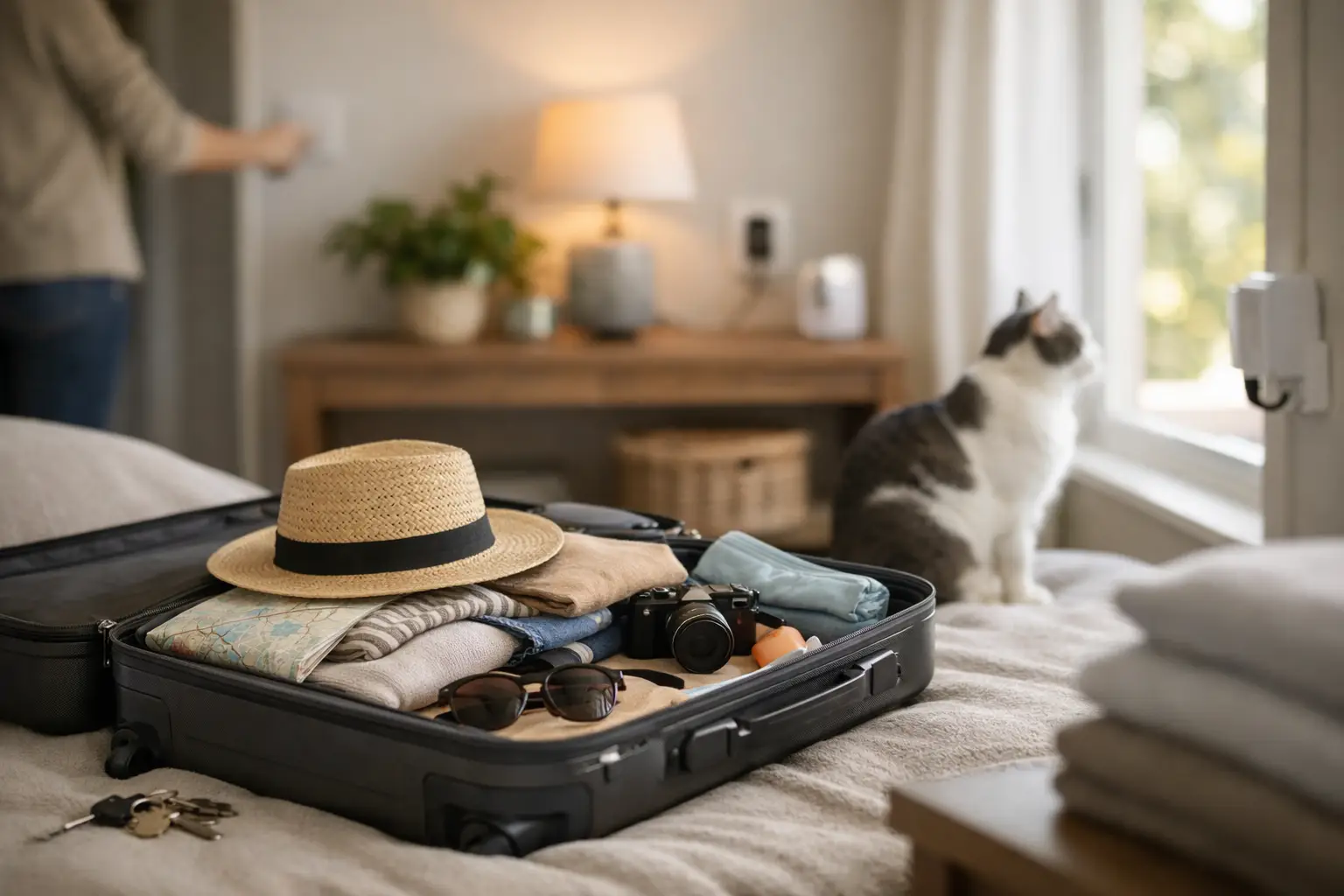
Leaving an empty house requires more attention than it might seem. Knowing how to prepare your home before you leave isn't just about “tidying up” before closing the door; it's about reducing concrete risks, avoiding small problems that worsen rapidly, and keeping the property protected until you return. For those who own a second home on Elba Island, this step is even more delicate because the distance makes any unforeseen event harder to manage.
How to prepare your home before you leave without overlooking anything
When a property remains uninhabited, the real problem isn't the absence itself. The problem is what can happen when no one is watching. A minor leak can cause extensive damage. A power outage can stop essential appliances. Humidity can build up unnoticed. And even a simple window left incorrectly can expose the house to infiltration or unwanted access.
For this reason, it's better to think in terms of risk areas, not just habit. The goal isn't to do as many things as possible, but to do the right ones.
Water, electricity, and gas systems: the first checks to make
Safety of utility systems is always the priority. Before you leave, it's advisable to turn off the water if the house will remain empty for an extended period. This choice, in most cases, limits the risk of unexpected leaks. However, there are situations where it's not so simple, for example, if some systems need to remain active. In these cases, the entire system needs to be evaluated, rather than proceeding automatically.
Gas also requires careful checking. If it's not necessary to keep it on, turning it off is a prudent measure. For electricity, however, the approach is more selective. Turning everything off might seem like the safest choice, but it depends on the house. If there are alarms, video surveillance systems, automatic gates, or devices that need to remain powered, you need to identify what to turn off and what to leave active.
A final visual check of faucets, flexible hoses, the electrical panel, and valves reduces the risk of hasty departures and oversights.
Refrigerator, pantry, and waste: avoiding bad odors and infestations
A closed house tends to trap odors and humidity. If perishable food or waste remains inside, the problem can become serious in a short time. Before leaving, it's advisable to empty the refrigerator of anything that can spoil, check the freezer, and verify that there are no open packages in the pantry.
If the period of absence will be long, turning off the refrigerator can make sense, but only after emptying, cleaning, and leaving it slightly ajar to prevent mold and bad odors. If, however, the house will be empty for only a few days or a short interval between stays, keeping it on might be more practical.
Waste also deserves attention. Forgotten bags, un-disposed organic waste, or dirty containers attract insects and create a neglected environment precisely when no one is present to intervene.
Physical security of the house: locks, access points, and weak spots
Properly preparing an empty house also means looking at the property from the perspective of someone who might take advantage of your absence. Doors, windows, shutters, gates, and secondary access points must be methodically checked.
Simply closing everything isn't enough if a lock is weak, a shutter doesn't block correctly, or a service door is more exposed than the main entrance. In second homes, it often happens that attention is focused on interior spaces, while technical rooms, garages, external storage, or side access points are neglected.
On Elba Island, especially in independent properties or villas with outdoor spaces, it's also worth checking fences, gates, and external lighting. A visibly monitored house deters more than a simply locked one.
Shutters closed or open?
There's no single answer that applies to everyone. If everything is completely closed for weeks, the house can appear conspicuously uninhabited. If too much is left open, however, exposure increases. The solution depends on the property's location, visibility from the street, presence of neighbors, and the duration of your absence.
In some cases, it's preferable not to make your absence too obvious. In others, completely protecting the fixtures is the most prudent choice, especially in the presence of strong sun exposure, wind, or bad weather.
Humidity, air, and internal conditions: the less visible risk
One of the most underestimated problems in unoccupied homes is slow deterioration. It makes no noise, sends no immediate signals, but upon return, it can already be advanced. A musty smell, mold, stains, wood damage, fabrics absorbing humidity: all this develops precisely when the house remains unchecked.
To reduce the risk, it's helpful to leave rooms in stable conditions. Bathrooms must be dry, shower trays clean, and sanitary fixtures checked. Wardrobes should not be compressed with damp fabrics or imperfectly dry linen. If the house already has critical points, such as colder walls or poorly ventilated rooms, even more attention is needed.
Again, there is no single rule. A house near the sea, a hillside villa, or an apartment used occasionally react differently to periods of closure. This is why periodic checks on site have concrete value: they allow a problem to be seen while it is still manageable.
Exteriors, terraces, and garden: what outside can damage inside
Many inconveniences begin outside. Clogged gutters or drains, exposed furniture, unmanaged plants, unchecked terraces, mobile objects moved by the wind: it takes little for a small detail to become major damage.
Before you leave, it's advisable to secure everything that can move or deteriorate. If the property has a green space, consider irrigation, vegetation growth, and the general condition of the area. A neglected exterior is not just an aesthetic problem; it can become a clear sign of abandonment and increase the risk of critical issues.
In houses on Elba exposed to salt spray, strong sun, and changing weather, exteriors require particular attention. Fixtures, surfaces, and external systems suffer more than you think from a lack of inspection.
Documents, keys, and contacts: the organization that makes a difference
When an unforeseen event occurs, the real obstacle is often not the technical problem but the lack of clear management. Who has the keys? Who can enter? Who knows the location of the meters? Who can authorize an intervention? If these answers are not already defined, even a simple situation becomes complicated.
Before leaving the house, it's useful to have a reliable local contact, especially if you live far away or abroad. This isn't just about opening the door for a technician, but having someone who can verify, confirm, coordinate, and update the owner promptly.
This aspect is often decisive for second homes. Absence becomes more peaceful when there is continuity of control, not just good initial preparation.
How to prepare your home before you leave if you don't live on the island
For non-resident owners, preparing the property before leaving is only part of the job. Real protection continues afterward. If the house is in Portoferraio, Capoliveri, Porto Azzurro, Marciana, Campo nell'Elba, or another area of the island, the distance changes reaction times and makes it more difficult to personally verify every abnormal signal.
This is where periodic checks acquire operational value. Not as an accessory service, but as a local safeguard. An empty house doesn't just need to be well-closed. It needs to be monitored over time, especially during seasonal changes, after weather events, after technical work, or between stays.
This is why many owners choose stable local support like Elba Property Care: not to replace their presence, but to ensure that the house remains checked, protected, and ready even when they are away.
Leaving a house in order is useful. Leaving it under control is what truly reduces uncertainty. Before every absence, the right question isn't just whether you've closed everything. It's whether you've anticipated what might happen while you're not there.