Checking Systems in Unused Homes on Elba
Checking systems in unused homes on Elba: controls on water, electricity, and gas to prevent breakdowns, leaks, and risks when the property remains vacant.
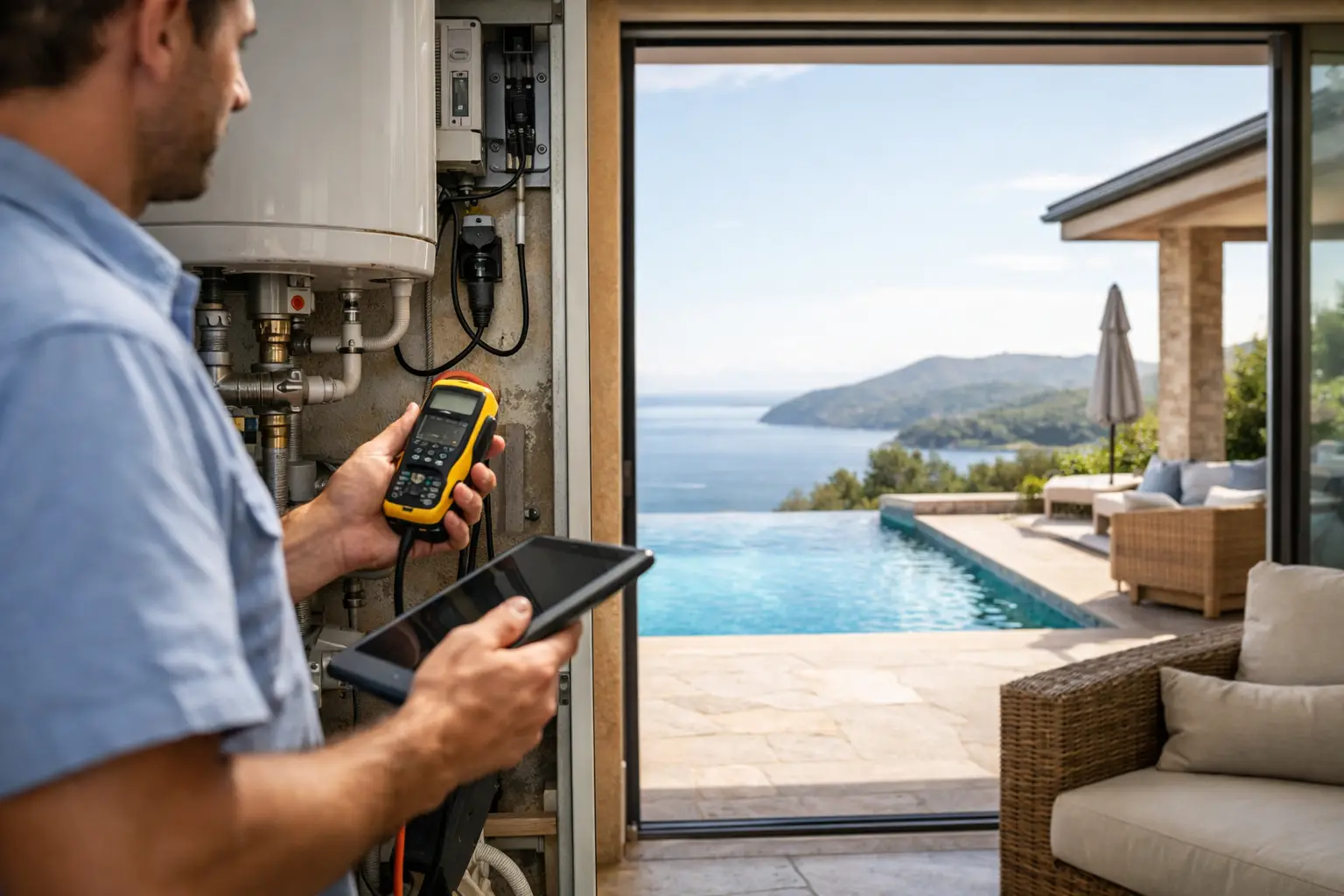
When a house remains closed for weeks or months, the problem isn't the silence. The problem is what can happen unnoticed: a small leak, a tripped circuit breaker, advancing dampness, a gas smell that no one detects. Checking the systems of an unused house serves precisely this purpose: intercepting weak signals before they become serious damage.
For those who own a second home on Elba Island, the risk increases with distance. If the property is in Portoferraio, Capoliveri, Porto Azzurro, or Marina di Campo and the owner lives elsewhere, even a simple fault can remain invisible for too long. This is not just about maintenance; it's about active home protection.
Why checking systems in an unused home should not be postponed
In an occupied house, many problems emerge immediately. A tap leaks, an outlet doesn't work, the boiler breaks down, and someone notices it the same day. In a vacant house, the opposite happens. Time works against the owner.
A dormant plumbing system can develop slow leaks or stagnant water. An unused electrical system can show anomalies after power surges, storms, or prolonged humidity. If gas is also present, even greater caution is needed, because the absence of direct control eliminates the first level of safety: human presence.
On Elba, this aspect is particularly tangible. Many homes are used only during certain periods of the year, often in summer or during long weekends. During the months they are closed, wind, salt, humidity, and bad weather can affect the systems more than one might imagine.
Checking systems in unused homes: what to truly inspect
Checking systems in an unused house doesn't mean just a quick general look. A useful check must be methodical and focused on the points that, in a vacant property, generate the most costly or dangerous damage.
Electrical system
The goal is not to perform a complete technical diagnosis every time, but to verify that the system is in proper condition and that there are no obvious signs of anomaly. This includes checking the electrical panel, the correct state of switches, any tripped circuit breakers, and outlets or light points that show traces of humidity, blackening, or malfunctions.
In a house closed for a long time, it's also important to observe the context. If there has been an infiltration from a wall or ceiling, the electrical system can be indirectly affected. In such cases, reactivating everything without verification is a common mistake.
Plumbing system
Here, the risk is often silent. A minimal leak under a sink, behind a toilet, or near a washing machine can continue for weeks. When the house is reopened, stains, swelling, mold, or furniture damage are found. Meanwhile, the water may have also affected the apartment below or common areas.
A thorough check verifies the absence of visible leaks, the correct condition of taps and fittings, the presence of unusual humidity, and the essential functionality of water points. If the house remains closed for a long time, it may also be appropriate to consider scheduled main water shut-off, but this depends on the property's use and the season.
Gas and connected appliances
If the property has a gas system, kitchen, or boiler, the level of attention must be higher. Even when not in use, valves, pipes, and connections should be checked periodically. Suspicious odors, visible wear, or signs of corrosion should never be underestimated.
Not all homes have the same needs. In some properties, the most prudent choice is to shut off the gas when the house is vacant. In others, more frequent checks are needed, especially if there are appliances that need to be reactivated upon the owners' return.
Signals often discovered too late
Those who use their home only occasionally tend to think about major events: a significant breakage, an obvious flood, a total blackout. In practice, problems almost always start in a much less noticeable way.
An anomalous bill can indicate a leak. A bad smell upon entering can signal stagnant water, dry drains, or hidden humidity. A slightly swelled wall near a bathroom can precede much more extensive damage. Even a simple appliance not turning back on after months of inactivity can be a sign that something in the electrical system needs attention.
The point is this: rare and sudden damage makes headlines, but the typical damage in an unused house arises from ignored small signals.
How often to perform checks
There isn't a single schedule for everyone. It depends on how long the house remains vacant, the season, the property's exposure, and the age of the systems.
A house used only in summer and closed for long periods requires more regular checks than an apartment visited every two or three weeks. The location also matters. A property near the sea, exposed to salt and humidity, may require greater attention than a less exposed house.
In general, the most prudent choice is to schedule periodic checks instead of waiting for the seasonal reopening. For an absent owner, the difference is clear: a control visit can detect a manageable problem, while months of absence can turn it into an urgent and costly intervention.
Before closing and before returning
The best protection doesn't begin when a problem appears. It starts before the house is left vacant.
Before closing, it's advisable to check that the systems are left in conditions consistent with the period of disuse. This means checking water, electricity, any gas, and all appliances that should not remain active. Simply “turning everything off” is not always the right solution, as some homes have specific needs. But leaving the house without a clear procedure is almost always a mistake.
Returning also deserves attention. After weeks or months of closure, reactivating systems without a preliminary check exposes one to avoidable surprises. It's better to first verify the general state and then proceed with reactivation and essential tests.
The value of local control on Elba Island
When the owner does not live on the island, the real difficulty is not understanding that checks are needed. The difficulty is performing them regularly and reliably. Organizing a remote check, especially after bad weather, long periods of absence, or before an arrival at the house, requires a concrete local presence.
For this reason, periodic control has a value that goes beyond simple inspection. It means having someone who continuously observes the property, knows the context, detects anomalies, and promptly reports what needs intervention. In a second home on Elba, this continuity is often the difference between a house ready for use and a house that presents surprises upon reopening.
A diligent service does not replace a specialized technician when needed, but it reduces the time a problem remains invisible. And that time, in vacant homes, is the most critical factor.
Checking systems in unused homes and owner's peace of mind
Those who own a home not continuously occupied are not just looking for maintenance. They are looking for certainty. They want to know that water, electricity, and gas are not creating a risk while the property is closed. They want to avoid arriving after months and finding damage, odors, breakdowns, or an unready environment.
Checking systems in unused homes addresses this need very concretely. It doesn't promise the impossible, because no property is immune to faults. However, it reduces uncertainty, anticipates problems, and protects the value of the property.
For a home on Elba Island, especially if used as a second home or seasonal residence, regular system checks are a form of responsible stewardship. It is a practical gesture, but also a choice of protection. Because an empty house is not a dormant house: it is a house that continues to require attention, even when no one is inside.
If this attention is maintained over time, returning home completely changes. There is no anxiety about discovering what happened during the absence. There is the serenity of finding a property that is monitored, protected, and continuously looked after, exactly as it should be.