Year-Round Home Protection: What You Need
Year-round home protection for second homes on Elba: regular checks, prevention, and local presence to avoid damage and unforeseen events.
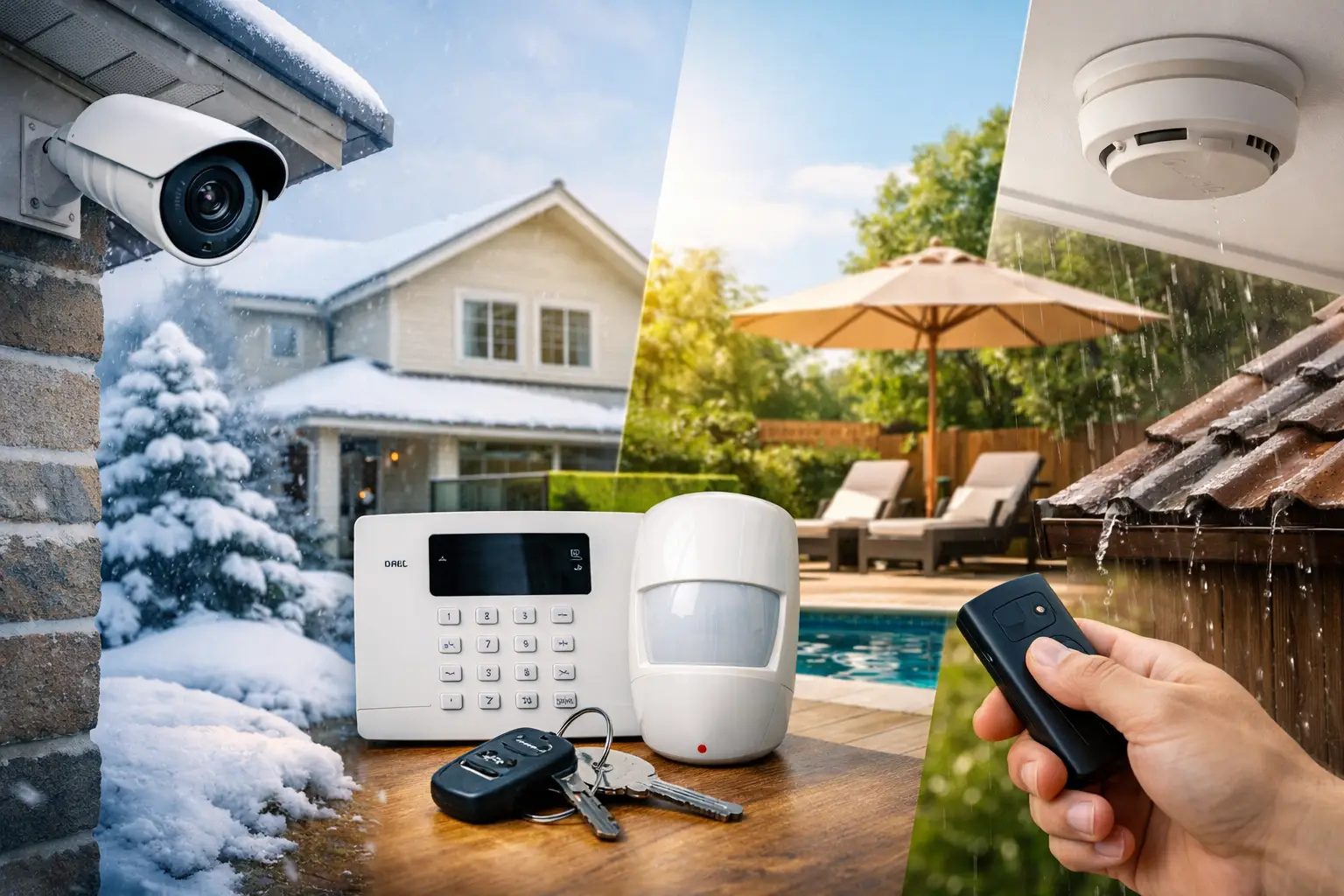
A second home left empty for weeks or months is never truly static. Humidity creeps in, a minor fault can silently worsen, a poorly closed window becomes a weak point, a blackout or a water leak can go unnoticed for too long. This is why year-round home protection isn't an extra; it's a concrete measure to preserve the value, safety, and liveability of the property.
On Elba Island, this issue is even more pronounced. The climate, proximity to the sea, periods of disuse, and the owners' distance create a clear combination: if the house isn't regularly checked, problems arise sooner and cost more. Those who live elsewhere don't need generic promises. They need a reliable local presence, capable of seeing, verifying, and intervening in time.
Why Year-Round Home Protection Differs from Simple Maintenance
Many owners associate property care with routine maintenance. In reality, they are not the same thing. Maintenance addresses pre-known or scheduled elements, such as an HVAC system due for inspection or a repaint. Year-round home protection, conversely, focuses on continuous oversight.
The difference is practical. A house not permanently inhabited might appear fine when closed up but can change condition in just a few days. An unobserved infiltration can damage walls, furnishings, and systems. Salinity accelerates the deterioration of fixtures and external components. Prolonged absence makes it harder to notice minor anomalies that, over time, become structured problems.
That's why protection isn't just about repairing. It's about safeguarding. It means methodically checking the property's status, reducing the time to discover an anomaly, and maintaining the property in controlled conditions even when the owner is away.
The Most Common Risks in Second Homes on Elba
Second homes on the island face very specific challenges. The first risk is silent damage. Water leaks, humidity, mold, stagnant odors, electrical outages, or minor malfunctions often don't give immediate remote signals. By the time the owner returns, the damage is already extensive.
Then there's the issue of security. A long-closed property appears vulnerable, especially if it shows no signs of presence or oversight. This isn't just about intrusions. Even a gate that isn't perfectly closed, a stuck shutter, or a neglected secondary access can create critical issues.
Finally, there's progressive deterioration. Sea air, seasonal rains, wind, and periods of disuse affect exteriors, fixtures, systems, and finishes. A house near the sea requires constant attention, not just occasional interventions. Waiting until the next season to check the property's condition is often the most expensive choice.
What True Year-Round Home Protection Includes
Effective protection doesn't mean an occasional visit. It requires a system of periodic checks, with inspections carried out according to a preventive logic. The central point is regularity.
During a well-executed check, one observes access points, closures, general internal and external conditions, any signs of infiltration, state of systems, presence of abnormal humidity, essential utility functions, and any deviation from the house's normal state. It's not about making a long bureaucratic list. It's about knowing where to look and immediately recognizing what shouldn't be there.
The ability to follow up on a problem after detection is also crucial. If an anomaly emerges, the owner needs a local contact who can coordinate the next steps quickly and judiciously. Without this continuity, the check loses much of its value.
For vacation home owners, protection also includes the property's readiness for use. Arriving to find the house tidy, checked, and functional changes the ownership experience. It's not just convenience. It's the certainty that the home has been looked after over time.
Local Presence and Prevention: The True Differentiating Factor
When the owner lives far away, the trickiest part isn't understanding that the house needs checking. It's knowing who will do it and with what consistency. In this sense, a local presence is not an operational detail. It is the foundation of the entire service.
Remote management, without a local contact, leaves too much room for uncertainty. If something happens, every decision becomes slower. However, if there's a local operator who knows the property, monitors its condition over time, and maintains a checking routine, the risk margin is significantly reduced.
Prevention works precisely this way: it doesn't wait for an emergency. It keeps the house under observation before an urgent situation arises. This approach is particularly useful for those who use the property only a few months a year or for those who live abroad and cannot intervene quickly.
In a context like Elba, where many properties remain vacant for long periods, relying on regular preventive checks is often more effective than managing a series of sporadic interventions. The reason is simple: the house remains protected even when the owner cannot be there.
How to Tell If Your Home Needs a Structured Check Program
Not all properties have the same level of exposure, but there are clear signs that indicate the need for a continuous program. If the house remains empty for many months, if you are far away and don't have a trusted local contact, if the property is near the sea, or if minor damages were discovered too late in the past, the need for supervision increases.
The same applies to those who want to avoid fragmented management of technicians, artisans, and occasional checks. Without constant oversight, every problem is treated as an isolated case. This leads to delays, a lack of overall vision, and often higher costs.
A structured check isn't only necessary when the house is fragile or old. It's also needed when the property is high-quality, well-maintained, and valuable. Indeed, precisely in these cases, it makes even more sense to protect it continuously to preserve its standards, efficiency, and image over time.
A Useful Service Doesn't Promise the Impossible: It Reduces Real Risk
It's fair to state clearly: no service can eliminate every unforeseen event. Weather events, technical failures, or sudden problems can still occur. The difference lies in the response time and the ability to limit the consequences.
This is the most important point for an absent owner. It's not just about someone intervening when damage is evident. It's about someone detecting it sooner, or at least in its initial stages. A leak discovered after a few days is not the same as a leak left to act for a month. The same applies to infiltrations, blackouts, malfunctions, and signs of unauthorized access.
That's why a serious approach speaks of control, prevention, and continuity, not absolute formulas. Trust stems from clear procedures, real presence, and constant attention to the details that protect the asset as a whole.
Owner's Peace of Mind Comes from a Reliable Routine
Anyone who owns a second home on Elba isn't just looking for a technical solution. They are seeking concrete peace of mind. They want to know that the property is regularly observed, that any anomalies don't go unnoticed, and that there is someone on site able to act responsibly.
This is where a service like Elba Property Care's finds its value: not as an episodic intervention, but as continuous monitoring of the house throughout the year. Property protection thus becomes an organized, constant, and transparent activity, not a re-emerging concern each time before arrival.
When a house is well-looked after, it shows over time. Small criticalities are kept under control, the property's value is better preserved, and the likelihood of finding unpleasant surprises at the start of the season is reduced. For those who live far away, this is not just convenience. It is a concrete, discreet, and continuous form of protection.
Your home should welcome you, not present problems upon entry. This is where every sensible protection choice begins: ensuring that absence doesn't accumulate risk.