What to do after a sea storm at home on Elba Island
What to do after a sea storm on Elba: checks for leaks, systems, and safety to protect a second home, even from afar, securely.
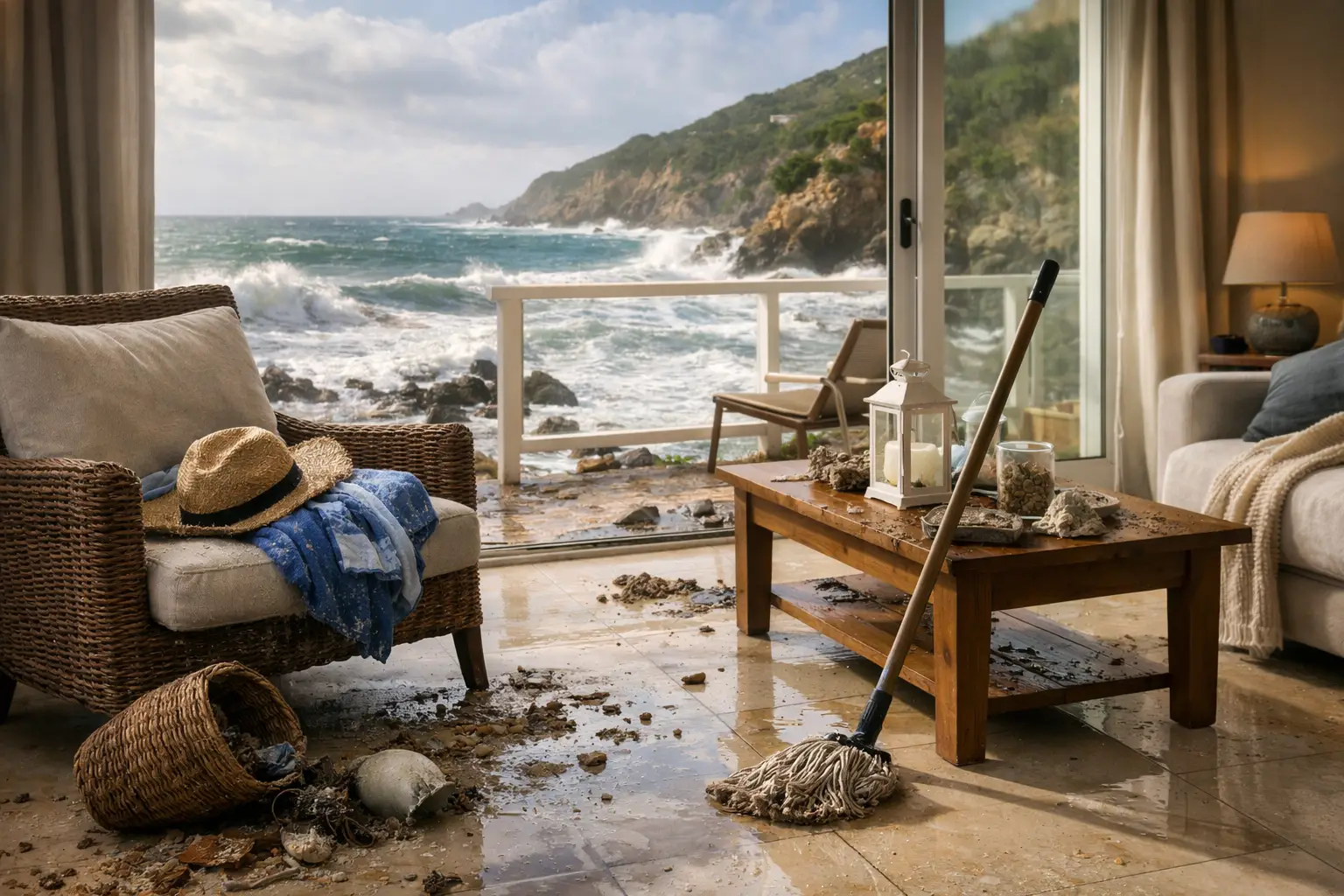
A sea storm can leave behind consequences that are not always visible from the outside: water entering through a shutter, salt deposited on window frames, a clogged gutter, or a flooded utility room. Knowing what to do after a sea storm on Elba is particularly useful for those who own a second home and cannot reach it immediately, especially for properties exposed to the coast or left unoccupied for weeks.
The first objective is not to quickly restore everything. It is to ensure the house is safe, limit damages, and gather clear information about its condition. A methodical local inspection allows for intervention on real priorities, preventing a small leak or a salt deposit from turning into a more costly problem.
What to do after a sea storm on Elba: initial checks
Before entering the property, carefully observe the exterior area. Strong winds, heavy rain, and waves can move objects, damage fences, and destabilize shutters, awnings, gates, or garden elements. If there are exposed wires, fallen roof parts, broken glass, or water near electrical systems, do not attempt improvised repairs.
Once access is secure, the inspection should start with the most vulnerable points: patio doors, windows, shutters, skylights, terraces, roofs, and ground-floor or basement rooms. In many homes on Elba Island, the damage does not come directly from the wave, but from wind-driven rain through an imperfectly sealed closure or from a drain that cannot cope with the water.
Check for water, humidity, and leaks
Water should be removed as soon as possible, but even before that, its origin must be identified. A wet floor near a patio door might be due to rain that entered during the storm; a stain on the ceiling, however, could indicate a problem with the roof, an overlying terrace, or a downpipe. Confusing the two situations easily leads to temporary remedies that do not solve the root cause.
Check room corners, exterior walls, window frames, and areas behind curtains, furniture, or wardrobes. Look for halos, paint bulges, musty smells, drips, lifted flooring, and signs of mold. In an unoccupied house, even a modest amount of water can go unnoticed for a long time and increase internal humidity.
If weather conditions permit and the property is safe, ventilating helps reduce residual humidity. However, leaving windows open unattended is not a solution, especially in an uninhabited property. Controlled openings, surface drying, and, in more serious cases, a technical assessment are needed to prevent damage to plaster, wood, plasterboard, or insulation.
Check systems without taking risks
Electricity requires particular caution. If there is water near sockets, electrical panels, extension cords, or appliances, do not reactivate the systems or touch potentially wet devices. If the panel has been safely deactivated and there are no leaks, a visual check can be performed; for doubts or anomalies, a qualified electrician is necessary.
The plumbing system also deserves attention. After an intense event, check outdoor faucets, manholes, autoclaves, drains, and utility rooms. A leak can be mistaken for rainwater, while a clogged manhole can cause water to stagnate near the foundations or access points. Also, check that no debris has entered the drainage grids.
For houses with pumps, irrigation systems, automatic gates, photovoltaic systems, or outdoor air conditioning, it is prudent not to force a restart. Salt deposits and humidity can compromise components that appear intact. A timely check limits the risk of malfunctions when the house is used again.
Salt spray: the damage that continues after the rough sea
After a sea storm, wind-borne salt can deposit on surfaces far from the shoreline. On Elba, this aspect is relevant for villas, apartments, and holiday homes in exposed locations, but also for properties that receive gusts from the sea.
Window frames, railings, locks, shutters, awnings, outdoor furniture, and air conditioning units can suffer corrosion or progressive blockages. This is not always immediate damage: the problem often emerges in the following days, when salt residues remain on metal surfaces and in sliding guides.
After ensuring there are no structural or electrical criticalities, it is advisable to clean exposed exterior parts with fresh water and suitable products for the material. However, avoid aggressive interventions on stone, wood, paints, or delicate surfaces. For locks and mechanisms, a targeted check is preferable to attempting to unblock them by force.
Exteriors, roof and access areas
Terraces, gardens, and access paths require careful inspection. Branches, pine needles, leaves, and other debris can obstruct gutters, downpipes, and drains. If water does not drain properly, a second intense rain can cause leaks even after the sea storm has passed.
Observe the roof only from the ground or a safe point. Misaligned tiles, bent metal elements, lifted membrane sections, or debris on the roof must be handled by competent personnel. Climbing onto a wet or windy roof exposes one to unnecessary risks and can worsen existing damage.
Fences, gates, low walls, pergolas, and outdoor furniture should also be checked. An object moved by the wind can obstruct access or become dangerous during a new spell of bad weather. If the property remains empty, restoring closures, gates, and protections is an essential part of security, not an aesthetic detail.
If you are not on the island: organize a reliable check
For an owner living off Elba, uncertainty is often the main problem. A call to a neighbor can be useful, but it does not replace a complete inspection: whoever enters must be able to recognize leaks, check critical points, and accurately report what was found and what actions are necessary.
A local home watching service can carry out a scheduled or extraordinary inspection, check access points, interiors, systems, and outdoor spaces, document conditions, and coordinate necessary interventions. Elba Property Care operates exclusively on Elba Island with checks designed for second home owners who want a present and responsible point of contact, even when they are away.
Not every sea storm requires urgent work. If the house is well-sealed, shows no leaks, and drains are clear, a thorough inspection and a subsequent remote check after a few days may suffice. If, however, there is water, damage to fixtures, electrical problems, or signs of structural failure, the priority is to make it safe and involve the appropriate professional.
A house checked after bad weather is not just a cleaned house. It is a continuously protected property, ready to welcome you without letting an unnoticed past event become a months-long concern.