Smart Home Tech or Local Presence on Elba: What Truly Protects?
Smart home tech or local presence on Elba: technology and local checks to protect a second home on Elba Island year-round during periods of absence.
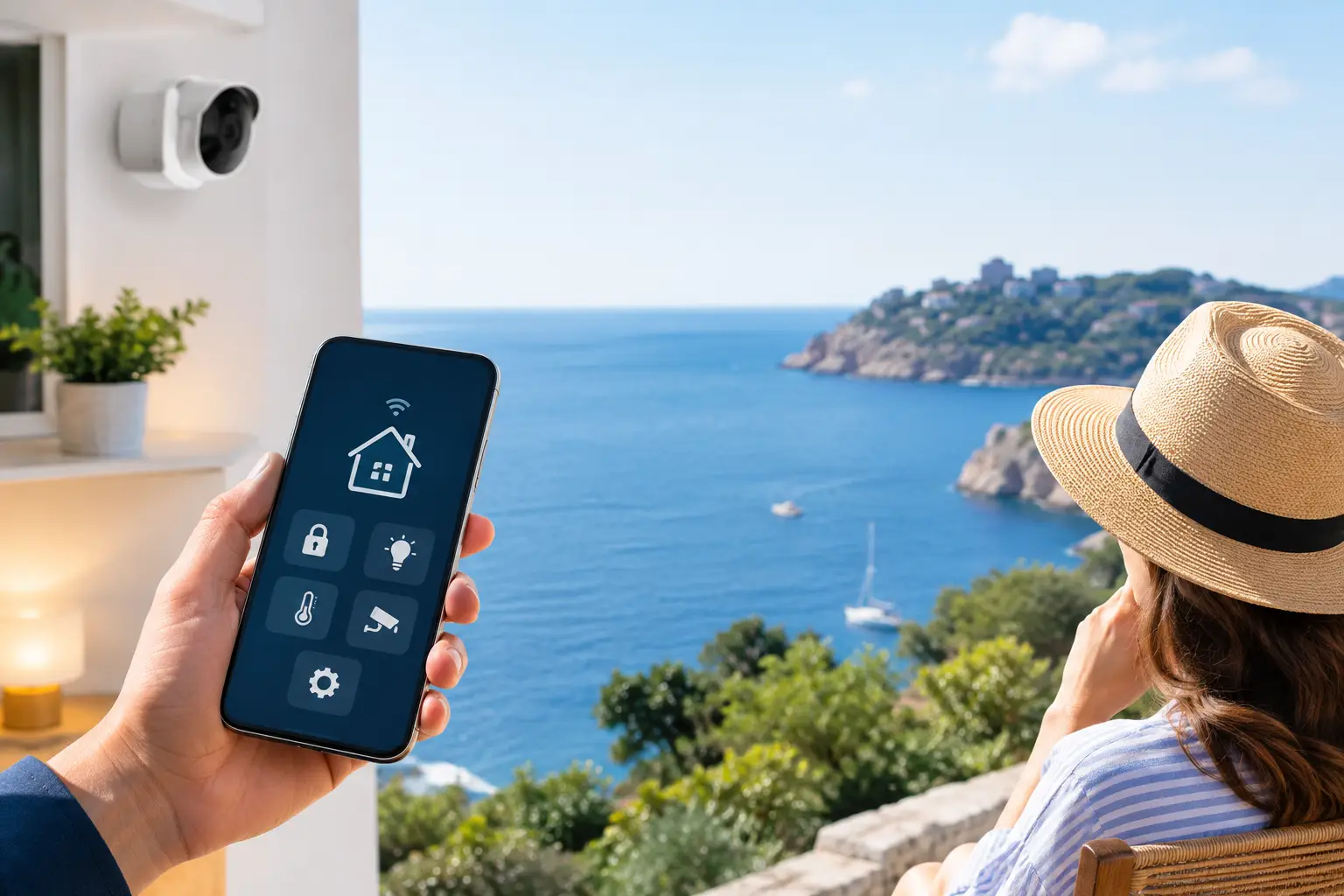
When considering smart home technology or local presence on Elba, the question isn't which solution is more modern. The real question is: who notices a problem when the house is empty and the owner is far away? For a second home, a villa, or an apartment on Elba Island, technology is an invaluable aid. But it doesn't replace a real check, carried out by a person present in the area and responsible for the property's condition.
A sensor can signal a water leak. A camera can show an open gate. A thermostat can indicate an anomaly. However, none of these tools can verify if the water has already reached another room, if the wind has damaged a shutter, if a musty smell requires attention, or if a tradesperson needs to enter quickly to mitigate damage.
Smart Home Tech or Local Presence on Elba: Not an Absolute Choice
Smart home technology offers remote control and immediacy. For those living off the island, receiving a notification on their phone or checking certain house parameters reduces uncertainty. Flood sensors, smoke detectors, alarm systems, cameras, and climate control devices can help protect the property, especially during periods when it's unoccupied.
The limitation is simple: technology detects and communicates, but it doesn't intervene on-site. Furthermore, it depends on electrical power, internet connection, proper device function, and initial configuration. If the network is down, if a battery is dead, or if a camera is obstructed, remote viewing becomes partial precisely when greater certainty is needed.
A local presence addresses a different need. An assigned person who performs scheduled visits can enter the property, observe what a device doesn't measure, and act according to agreed-upon instructions. This isn't just a courtesy visit; it's a form of active vigilance that keeps the house under control even when the owner cannot be there.
For this reason, in most cases, smart home technology and local presence are not alternatives. The most prudent solution is to make them work together: the former expedites the alert, while the latter provides verification and intervention capabilities.
What a Person Sees That a System Cannot
A house closed for weeks or months changes. Humidity can increase without immediately triggering an alarm. After a day of strong wind, an outdoor awning, a shutter, or a garden element might have shifted or been damaged. A small infiltration can start from an inconspicuous spot and only show its first signs on a wall, ceiling, or near a window frame.
During an on-site check, it's possible to observe the general condition of the rooms, air them out when appropriate, check doors, windows, and access points, look for any traces of dampness, and assess the external situation. In a property with a garden, terraces, or open spaces, the inspection can also cover gates, fences, furniture, and areas exposed to weather conditions.
This type of attention is particularly useful on Elba Island, where many homes remain unused off-season. The sea, humidity, wind, and storms can require a level of observation that no app alone can guarantee. This doesn't mean every house faces the same risks; it depends on the location, exposure, age of the building, and duration of absence. However, it does mean that a periodic physical check offers reliable information, not just data.
When Smart Home Tech Is Truly Useful
Smart home technology plays a concrete role if chosen to meet precise needs, not to create a false sense of control. A leak detection system can be very useful near kitchens, bathrooms, utility rooms, or plumbing. An alarm connected to a security service can add protection against intrusions. Remote temperature control helps identify anomalous conditions or prepare the house before the owners' arrival.
Cameras can also be appropriate, provided they are installed and managed with respect for privacy and realistic expectations. They show a specific frame, not the entire situation. They can highlight movement, but not determine if a locksmith, plumber, electrician, or a simple on-site check is needed.
Technology is therefore more effective when backed by a procedure. Who receives a notification? Who can access the house? Who contacts a technician if necessary? How quickly is an anomaly checked? Without clear answers, an alarm risks only transferring additional worry to the distant owner.
Local Presence Transforms an Alarm into a Response
Receiving a flood notification while hundreds of kilometers away doesn't solve the problem. However, it can activate a trusted person on the island, capable of verifying the situation. This is the step that truly protects the asset: from notification to concrete evaluation, then to necessary action.
A well-organized home watching service performs regular and agreed-upon visits, records detected anomalies, and keeps the owner updated. If a problem arises, it can support the coordination of a local intervention, always within the scope of received authorizations. The owner retains control over decisions but is not left alone in the face of an unforeseen event.
Continuity matters more than occasional intervention. A person familiar with the property can more easily notice a change: a stain that wasn't there before, a lock that isn't working as it should, an off-kilter shutter, an unusual noise, or a sign of deterioration. Knowledge of the house, built visit after visit, makes attention more effective.
How to Choose the Right Protection for Your Home
The choice depends on the property and how it is used. A small apartment occasionally occupied will have different needs than an isolated villa with a garden, pool, or multiple technical systems. The owner's distance also plays a role: someone who can reach Elba in a few hours has a different margin than someone living abroad.
Before investing in devices, it's advisable to assess the property's vulnerable points. Plumbing and electrical systems, exposure to wind, the presence of outdoor spaces, the accessibility of the property, and periods of closure are all elements that help determine the frequency and type of checks. Smart home technology can be calibrated to these aspects, without installing superfluous tools.
It's equally useful to define an essential operational plan. The plan should indicate who receives communications and updates, how to access the property in case of need, which technicians can be contacted, and what spending limits or authorizations to respect. These are practical details, but in urgent moments, they prevent delays and misunderstandings.
Elba Property Care supports second homeowners on Elba Island precisely with this continuous presence: periodic checks, preventive observation, and a local point of contact when the house is not inhabited. The value is not just knowing that someone can intervene, but knowing that the property is regularly looked after.
The Most Credible Security Is Built on Real Checks
Relying solely on smart home technology may be sufficient for some limited needs, especially when the property is frequently visited and the owner has reliable local contacts. For a house left empty for a long time, however, devices should be considered an additional layer of protection, not the sole safeguard.
Physical presence does not necessarily require continuous or invasive interventions. It requires consistency, attention, and a person who knows how to recognize what warrants further investigation. It is this combination that reduces the time to discover problems and keeps the house in tidy condition between stays.
A second home should welcome the owner, not surprise them with a list of inconveniences accumulated during their absence. When technology and local control collaborate, distance ceases to be an unknown, and the property truly remains cared for, season after season.