Six Risks to Your Villa's Roof on Elba Island
The six risks to a villa's roof on Elba: targeted checks against leaks, wind, salt spray, and damage that worsens when the house is vacant.
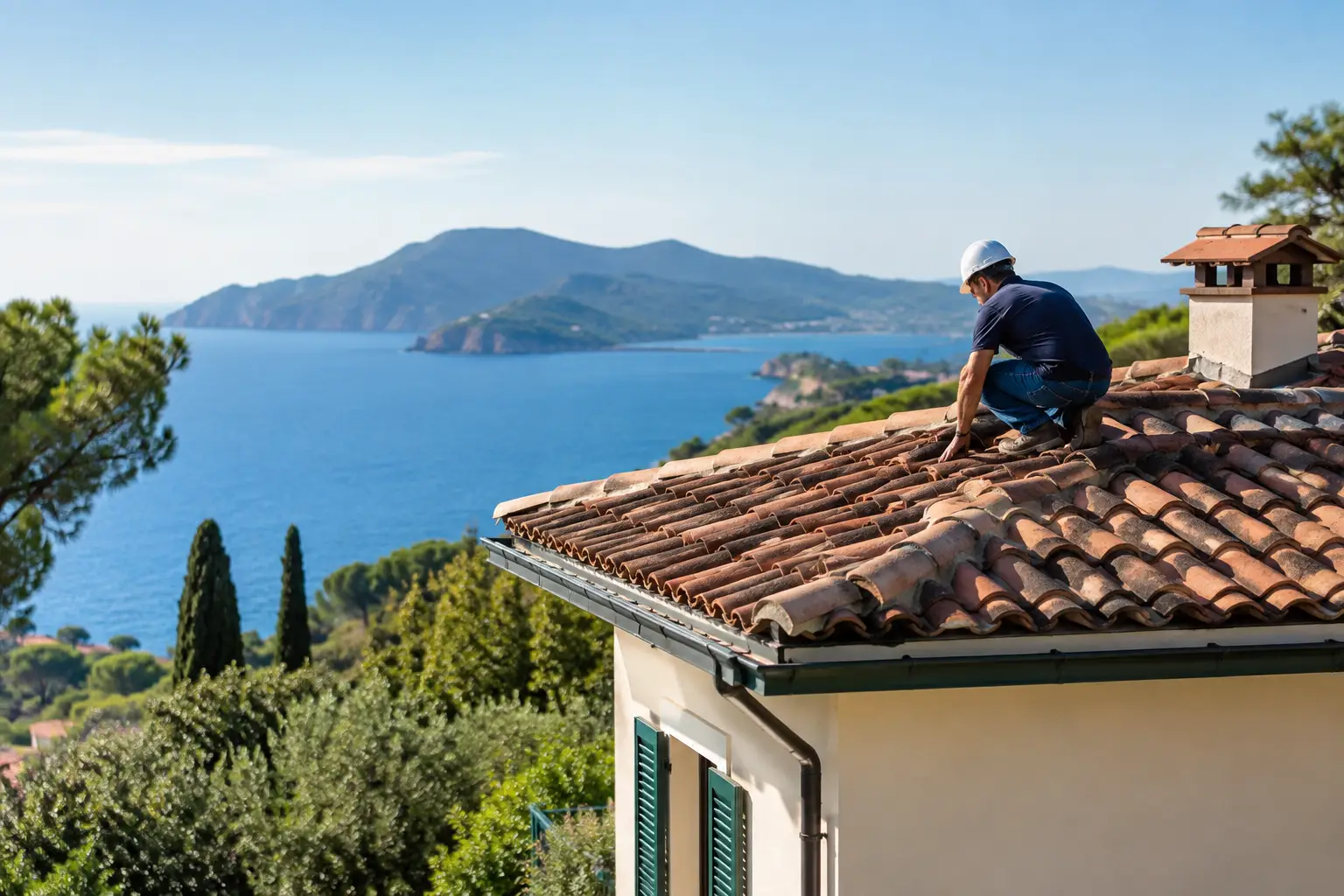
The six risks to a villa's roof on Elba Island don't just concern older homes. Even a roof that appears to be in good order can suffer from the combined effects of wind, salt spray, intense sun, and long periods of vacancy. For those who live off the island, the problem isn't just the damage; it's discovering it too late, when a minor issue has already affected ceilings, systems, and furnishings.
A roof requires continuous attention, especially for villas used seasonally. Regular inspections allow for the early detection of issues, enabling proactive intervention and keeping the property protected between stays.
Why the Roof is Exposed in Villas on Elba Island
On Elba, roof conditions vary greatly depending on the property's location. A villa overlooking the sea may be more exposed to salt spray and gusts from the coast; a house in the hills, such as in Marciana, Capoliveri, or Porto Azzurro, may be more susceptible to wind, nearby branches, and temperature fluctuations. Even the most sheltered homes are not immune to standing water, dislodged tiles, or minor structural failures in finishes.
The crucial factor is continuity. When a property is inhabited, an unusual noise, a stain on the ceiling, or an overflowing gutter is noticed immediately. In a vacant second home for months, these same signs remain invisible. And the roof continues to be exposed to every disturbance.
The Six Risks to a Villa's Roof on Elba Island
1. Tiles Displaced or Damaged by Wind
Wind can lift, misalign, or break roof tiles, even without causing obvious external damage. Just one dislodged element can create an entry point for water. With subsequent rains, humidity can reach the underlying membrane and slowly advance into the interior.
An exceptional event isn't always necessary. Repeated exposure to gusts can loosen fixings and make the edges of the roof, ridges, and areas around chimneys or skylights more vulnerable. A visual inspection after periods of bad weather helps ensure the roof maintains its integrity.
2. Small, but Persistent Leaks
The most insidious leak is not necessarily one that causes water to drip from the ceiling. It often begins as slight dampness in the attic, a barely visible stain, a musty odor, or paint changing tone. If no one regularly enters the house, weeks can pass before the problem is detected.
Meanwhile, water can compromise insulation, plaster, drywall, and wooden structures. Repairing the cause on the roof might be relatively simple; restoring the interiors, however, can become more extensive. This is why an inspection shouldn't just involve viewing the roof from a distance: it's also essential to check for signs emerging inside the villa.
3. Clogged Gutters and Downspouts
Leaves, pine needles, soil, nests, and small debris can accumulate in gutters. The result is slowed or blocked water drainage. During a downpour, water can overflow, drench facades and terraces, seep into joints, or concentrate in areas not designed to receive it.
This risk increases in properties surrounded by vegetation, but it doesn't only affect villas nestled in greenery. Wind-borne dust and accumulated residue can also cause blockages. Cleaning should be scheduled based on the trees present, the roof's configuration, and the time of year. There isn't a single frequency that suits all homes.
4. Salt Spray and Corrosion of Metal Elements
In Elba's coastal areas, salt spray can accelerate the deterioration of grilles, brackets, screws, flashing, gutters, and other metal components. This process is gradual, and precisely because of this, it often goes unnoticed. A metal part might appear intact until it shows advanced oxidation, detachments, or loss of sealing integrity.
Flashing around chimneys, walls, and skylights deserves particular attention: these are essential technical points to prevent water entry. If they show deformation, cracks in the sealant, or corrosion, the roof can become vulnerable even when the tiles are in good condition.
5. Damage Caused by Vegetation and Wildlife
Branches too close can rub against tiles, accumulate leaves in gutters, or fall onto the roof during windy conditions. Vegetation should not be considered merely an aesthetic issue: its distance from roof elements is a concrete measure of protection.
Wildlife can also create problems. Nests, birds, and small animals can occupy openings, chimneys, or attics, displace materials, and contribute to blockages. The goal is not to intervene inappropriately, but to promptly detect an anomalous situation and engage the appropriate professional, respecting regulations and the animals involved.
6. Hidden Deterioration During Vacancy Periods
An uninhabited villa doesn't stop aging. The alternation of sun, rain, humidity, and wind acts even when the house is closed and silent. If roof damage causes internal dampness, the risk extends beyond the roof: mold, persistent odors, deterioration of furniture, and problems with electrical systems in affected areas can appear.
The true cost of a lack of supervision is uncertainty. Without a local point of contact, owners often only receive news after a neighbor reports a problem or upon their return to the island. By then, the damage might require urgent decisions, quotes, technical access, and repairs at less opportune times.
What to Check Regularly
An effective roof check doesn't necessarily mean construction work. It primarily means observing, documenting, and comparing the property's condition over time. After periods of strong winds or prolonged rains, it's useful to visually check for displaced tiles, fallen elements, overloaded gutters, and obvious anomalies around chimneys and skylights.
Inside the villa, attention should be paid to ceilings, perimeter walls, and accessible attic areas. Stains, mold, paint bulges, musty odors, or traces of water warrant a quick check. Photographing anomalies and communicating them precisely to the owner allows for decisions to be made without assumptions, even from afar.
It's not advisable to improvise elevated inspections or climb onto the roof without adequate skills and equipment. The role of local supervision is to identify the signal, assess urgency, coordinate a qualified technician if necessary, and keep the owner updated. Repairs must be entrusted to suitable professionals; prevention begins with not leaving the problem unnoticed.
A Local Presence Reduces Time and Uncertainty
For a second home, the difference isn't just about the quality of materials chosen years ago. It's about the presence of someone who knows the property, can access it regularly, and acts as a point of contact when the owner is away. Elba Property Care performs scheduled inspections for properties on Elba Island, detecting anomalous conditions and offering a reliable local contact for the practical management of checks.
The frequency of visits depends on the villa's location, the type of roof, the presence of trees, exposure to the sea, and periods when the property remains vacant. A house used only in summer may require different vigilance compared to a property frequented even in winter months. The most useful plan is one built on the real conditions of the house, not a generic routine.
A consistently monitored roof does not eliminate the effects of time and bad weather, but it prevents a small anomaly from persisting for months. For those who own a villa on Elba and live elsewhere, knowing that someone is observing, checking, and reporting promptly is a concrete way to protect the house before their next arrival.