Second Home Watching: What Really Protects Your Property
Regular property checks, prevention, and local presence are key to protecting your second home when you're away. Year-round peace of mind.
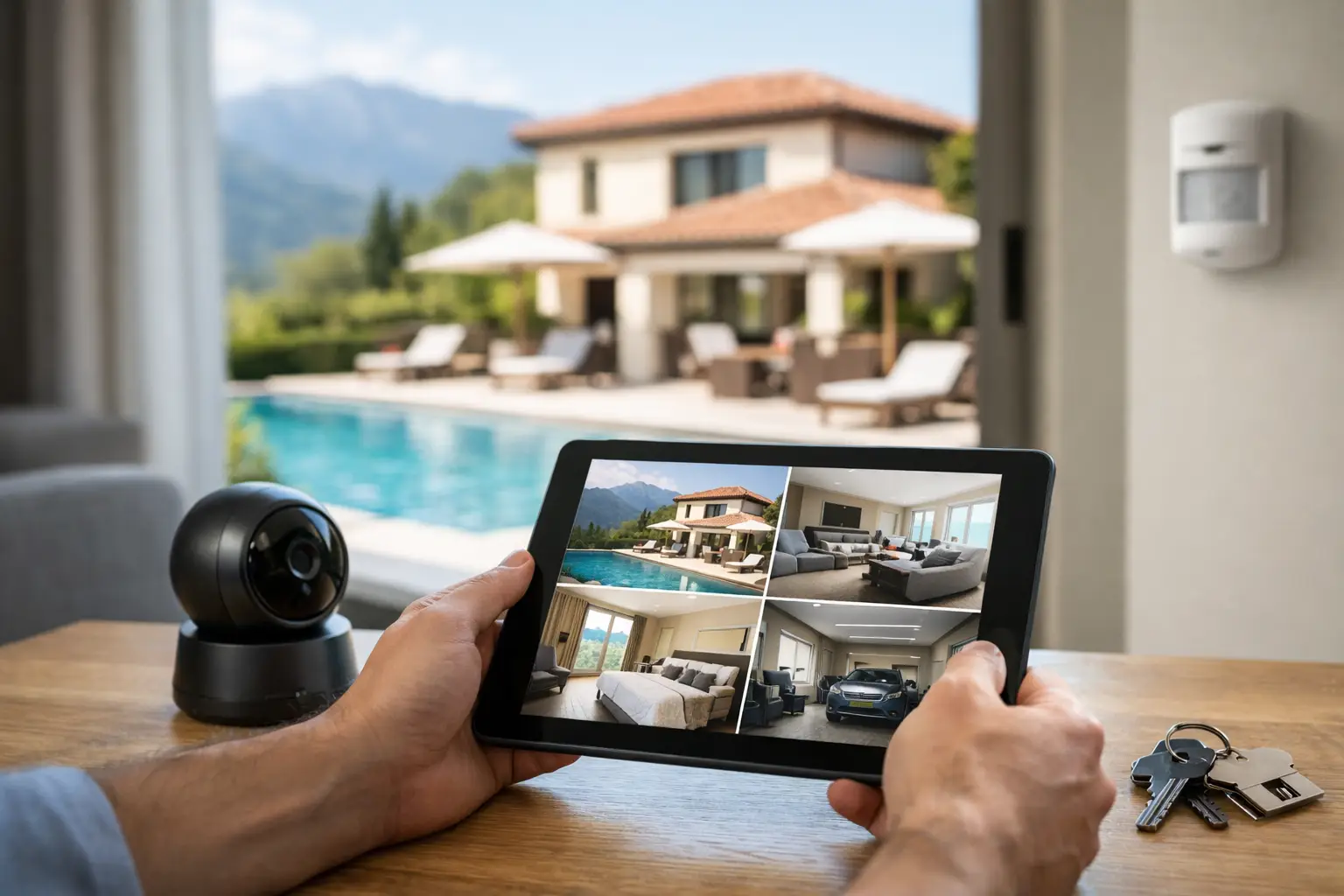
A second home left empty for weeks or months is never truly static. Humidity creeps in, a small fault can worsen, a power outage can go unnoticed, and even simple external signs can indicate that the property is unattended. This is where a second home watching service transcends mere convenience and becomes a concrete form of protection.
For those who own a home on Elba Island but don't live in it year-round, the challenge isn't just about intervening when something happens. The real issue is noticing it in time. Distance slows down every decision and makes every omission more costly. A periodic check, carried out with method and consistency, reduces this risk at its root.
Second Home Watching: Why It's Truly Necessary
Many owners think about home security only in terms of alarms or locks. These are useful tools, but they are not enough on their own. An uninhabited property requires a local presence, an expert eye, and regular checks. Without this oversight, small, manageable problems can escalate into extensive damage.
A window that doesn't close properly, a minuscule leak under a sink, an unusual smell, a build-up of humidity after bad weather: none of these signs are detected from afar. And often, they aren't even intercepted by automatic systems. The value of home watching lies precisely here – in practical prevention, not just reaction.
In the case of a second home, there's another factor to consider. The property must remain not only protected but also ready for use. Arriving for a stay and finding the water shut off, stuffy air, systems needing inspection, or minor glitches is not just inconvenient. It's a sign that the house has gone without real oversight.
What a Second Home Watching Service Includes
A serious service doesn't just involve “taking a look.” It must follow a clear, repeatable procedure tailored to the property. This is what distinguishes professional supervision from an occasional favor from a neighbor or acquaintance.
Generally, checks cover access points, the external condition of the property, signs of intrusion or attempted access, internal conditions, the presence of leaks, system anomalies, suspicious odors, humidity, mold, and any indication of deterioration. It also includes verifying the general functioning of the house, especially after intense weather events or long periods of closure.
There's also an often-underestimated aspect: continuity. A single occasional inspection provides reassurance for one day. A program of periodic visits, however, builds constant monitoring over time. It is this regularity that allows variations to be noticed, problems to be anticipated, and the house to remain under true observation.
For a property on Elba, where the climate, salt air, and periods of absence can significantly impact the property's preservation, the frequency of checks makes a tangible difference. There isn't a single correct frequency for everyone. It depends on the house's location, the season, its exposure, and how long it remains unused.
The Most Common Risks When a House Remains Empty
Those who manage a second home from afar tend to think of major unforeseen events. In reality, the most costly problems often arise from minor signals ignored for too long.
Leaks are a typical example. A small leak can ruin walls, furnishings, and systems even before the owner is informed. The same applies to persistent humidity, which can rapidly degenerate in enclosed spaces. Then there are blackouts, tripped electrical devices, appliance malfunctions, and interruptions of essential services that, if not checked, compromise the full functionality of the home.
Even the external appearance matters. Full mailboxes, an unkempt garden, and obvious signs of prolonged absence can make the property more exposed. A house that looks cared for communicates presence, attention, and control. This has both practical and deterrent value.
The point is not to create alarmism. It is to recognize that an uninhabited property requires different management than a house lived in every day. When the owner is absent, a local point of contact is needed to observe, verify, and report promptly.
Second Home Watching and Maintenance Are Not the Same Thing
Confusion often arises here. Maintenance addresses a problem or a scheduled activity. Home watching, however, serves beforehand – it checks, detects, prevents, and coordinates when necessary.
They are two complementary functions, but not overlapping. If a house is not regularly monitored, many maintenance needs emerge late. If it is continuously supervised, interventions become more targeted, less urgent, and often less expensive.
For a non-resident owner, this difference is crucial. It's not enough to know who to call in case of a breakdown. One needs to know when a fault is starting, or if there are signs that require a check before the problem becomes serious.
A well-organized service offers precisely this intermediate safeguard: it does not replace technicians or artisans but represents the first level of operational protection for the home.
What to Consider Before Entrusting Your Home's Oversight
If you're looking for a home watching service for a second home, the right question isn't just “how often do you visit?” You need to understand how the check is performed, with what method, and with what responsiveness.
Local experience matters, because knowing the local context helps to better interpret signals and act more quickly. The clarity of the checks performed matters, because a serious service must have precise criteria and not be limited to a formal presence. The ability to communicate directly, with understandable and timely updates, is also important, especially when the owner is out of the area or abroad.
Then there's the issue of trust. Entrusting a second home to a local operator means delegating access, observation, and initial management of anomalies. For this, reliability, discretion, and continuity are essential. It's not enough to be there once. You need to be there always, with the same attention.
For many owners, especially those who live far from Elba for most of the year, the true value is not just avoiding damage. It's knowing that the house has constant oversight, capable of acting with good judgment and speed when needed.
The Advantage of Year-Round Local Presence
A second home changes with the seasons. Risks change, priorities change, intervention times change. In summer, activity increases; in winter, prolonged absence carries more weight; during bad weather, careful checks close to the event are necessary.
This is why local presence is not an organizational detail. It is the foundation of the service. A local operator can regularly check the property, intervene after a report, verify the property's condition before the owners arrive, and maintain a concrete connection with the reality of the home.
In the case of Elba Property Care, this approach translates into programmed and continuous supervision, designed specifically for those who cannot be present but want their home to remain seriously and constantly monitored. It is a simple, but effective model: see, verify, report, prevent.
When Home Watching Is Particularly Useful
Not all second homes have the same risk profile. An apartment used frequently will have different needs than a villa closed for long periods. A property exposed to the elements will have different priorities than a property in a more sheltered context.
Home watching becomes particularly useful when the owner lives outside the region or country, when the house remains empty for months, when there are systems to monitor, or when you want the property to always be ready for use without surprises upon arrival. It is also valuable for those who prioritize preserving the property's value, because constant prevention directly impacts the property's condition over time.
It is not a standard solution to be applied automatically. It must be calibrated based on the house and how it is lived in. But in all cases, it has a precise objective: to reduce uncertainty.
Owners of second homes know that the heaviest problem is not always the damage itself. Often, it's the time elapsed before discovering it. Having regular checks means taking away space for the silent unforeseen and giving the property what it needs most when it's empty: presence, attention, and continuity.
Peace of mind, for a home not inhabited year-round, does not come from the idea that “everything is probably fine.” It comes from knowing that someone is truly verifying, with method and responsibility, that it is so.