Scheduled Visits or Remote Monitoring for Your Home
Scheduled visits or remote monitoring: discover which protection your second home on Elba Island truly needs, in every season, when you're away.
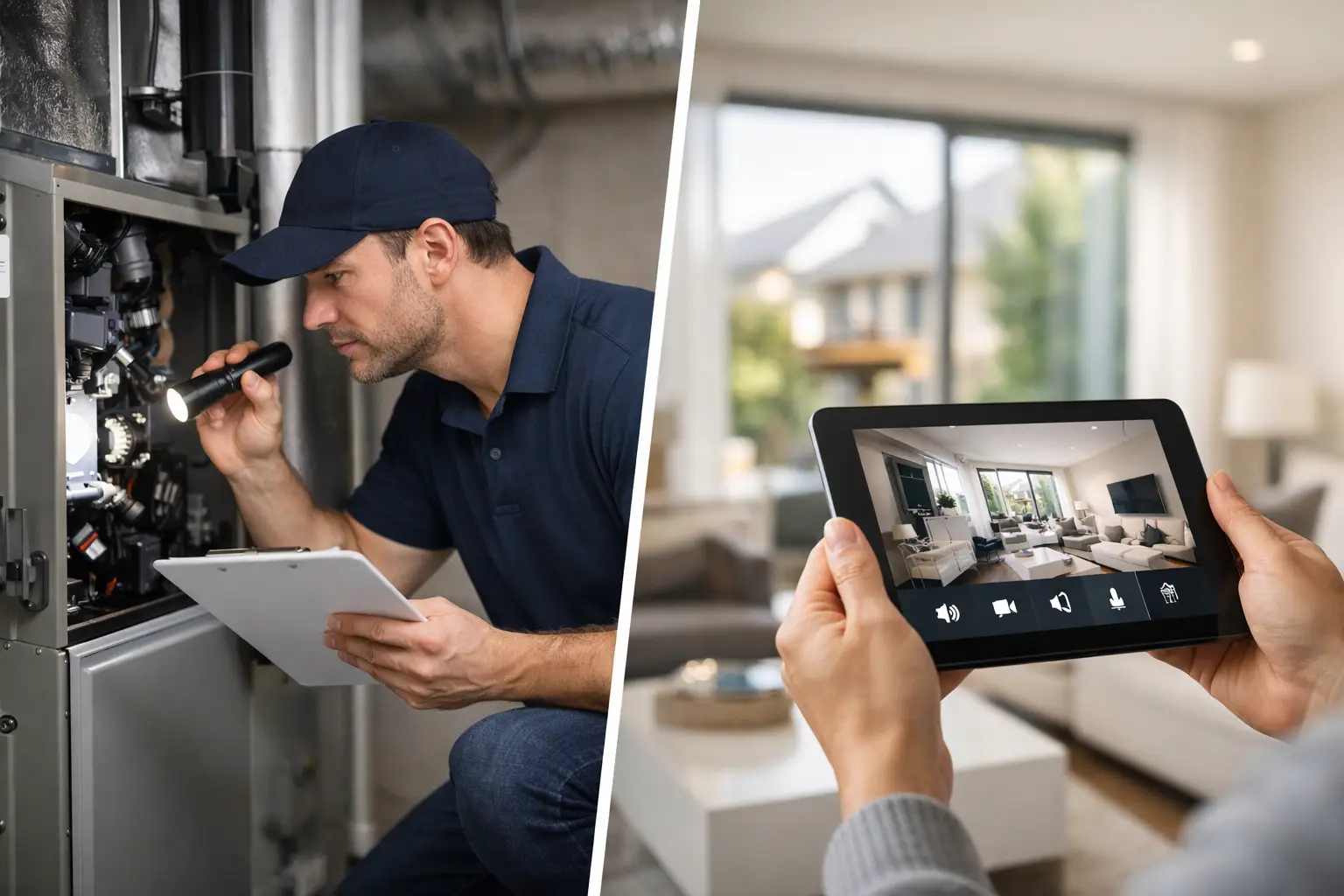
A villa closed for weeks doesn't spontaneously communicate what's happening inside. A sensor might detect movement, a camera might show an entrance, but only an on-site presence can verify if a shutter has been forced, if humidity is rising, or if a small leak is turning into significant damage. For those who own a second home on Elba Island, choosing between scheduled visits or remote monitoring means deciding how to truly protect the property during absences.
The answer, in most cases, isn't to choose one system over the other. Remote monitoring offers quick alerts; physical visits provide verification, assessment, and local intervention. Understanding the role of both helps build reliable supervision, proportionate to the home and the time it remains vacant.
Scheduled Visits or Remote Monitoring: The Real Difference
Remote monitoring relies on technological tools connected to the property: cameras, alarms, motion detectors, sensors for smoke, water, or temperature, and systems manageable via an app. It's useful because it allows the owner to receive notifications and consult information even when living far from Elba. It can reduce response times to an anomaly and provide initial visibility into the situation.
A scheduled visit, however, is an inspection performed in person by a local representative. It doesn't just detect a signal: it observes the actual state of the property, evaluates what needs attention, and verifies elements that technology cannot reliably interpret. A stale smell, a newly appearing damp spot, a clogged gutter, or a neglected garden are details that require expert eyes and presence.
The most important difference is this: remote monitoring alerts you, while periodic visits confirm it. For a home not continuously occupied, especially during bad weather or off-season, confirmation is what transforms an alert into concrete protection.
What a Scheduled Visit on Elba Island Verifies
Every property has different needs. A house in the center of Portoferraio doesn't present the same conditions as a villa exposed to the wind near the coast, or a property nestled in greenery. However, a well-executed visit follows essential checks and is not reduced to a simple opening of the door.
During the inspection, the representative can verify four critical areas:
- Accesses, windows, shutters, gates, and signs of forced entry or attempted intrusion;
- Interiors, unusual odors, dampness, leaks, water damage, presence of mold, or visible problems;
- Systems and utilities, when provided for by the service, to identify obvious anomalies before they worsen;
- Exterior spaces, visible roofing, terraces, drains, vegetation, and general property conditions.
These checks are valuable because they occur regularly. Someone who knows a house and observes it over time can more easily recognize a change: a stain that wasn't there before, a window left ajar, a leak under a sink, a branch fallen after a strong windy day.
Periodicity creates continuity. And continuity is a concrete form of prevention, not an activity to be activated only when a problem has already appeared.
Advantages and Limitations of Remote Monitoring
A remote system can be very useful, particularly when the owner wants to receive immediate alerts about specific events. A water detector near a washing machine or water heater can quickly signal a leak. An alarm system can indicate an unexpected opening. An external camera can offer initial visual verification in case of a notification.
However, these tools depend on electricity, internet connection, correct configuration, and maintenance. If the power goes out, the router is disconnected, or a camera has a blind spot, the owner might find themselves without information precisely when they need it most. Frequent or irrelevant notifications can also generate uncertainty, especially if there isn't someone on site capable of checking.
There's also a practical limitation: technology doesn't resolve the event. An alarm can warn you of an open door, but it can't close it. A sensor can detect water, but it cannot identify the origin of the leak, contact a technician, or verify the consequences in the home.
This is why remote monitoring is more effective when accompanied by a reliable local representative. Technology improves the speed of information; local presence enables a reasoned response.
When Physical Visits Are Indispensable
Scheduled visits are particularly advisable when the property remains vacant for long periods, lacks comprehensive monitoring systems, or is located in an area exposed to wind, salt spray, vegetation, and variable weather conditions. They are equally useful before and after winter, after heavy rains, during prolonged absences, and in the weeks leading up to the owners' arrival.
They are also essential when the house requires attention beyond security. A second home must remain tidy, aired when appropriate, checked at its most delicate points, and ready to receive arrivals. Waiting until the first day of vacation to discover a problem means losing valuable time and facing a situation with fewer alternatives.
For valuable properties, villas with outdoor spaces, or homes in less frequented areas during winter months, regular physical supervision also offers an element that no app can replace: the responsibility of a recognizable presence in the area.
How to Choose the Right Solution for Your Home
The frequency and type of monitoring depend on the property, the period of disuse, and the existing systems. A small, frequently used home may require less frequent checks than a villa that has been closed for months. A house equipped with alarms, cameras, and sensors can benefit from less frequent scheduled visits, but should not completely forgo in-person verification.
It's also worth considering who receives the alerts. If the owner lives abroad or cannot quickly reach Elba Island, every notification needs a clear pathway: who checks, who accesses the house, who assesses the urgency, and who coordinates any intervention. Without this local network, a good remote system risks becoming just a distant source of worry.
The best choice is not necessarily the one with the most devices or the most steps. It's the one that ensures consistent checks, clear communications, and the ability to intervene without unnecessary delays.
The Most Effective Protection Combines Technology and Presence
For many second homes, the most balanced model combines remote monitoring and scheduled visits. Devices report anomalies between inspections; the local representative verifies the property's condition, checks elements not monitorable by sensors, and intervenes when necessary. This way, the owner doesn't have to choose between visibility and presence: they can rely on both.
Elba Property Care operates precisely with this logic of active custody for properties located exclusively on Elba Island. Scheduled visits are not a generic check, but a presence designed to give the owner reliable information about their home and a local point of contact when they cannot be there in person.
A well-protected property is not just a home equipped with tools. It's a home that is continuously observed, known over time, and looked after by someone who can intervene before a small sign becomes a bigger problem.