Safely Reopening Your Seasonal Home on Elba Island
Reopening your seasonal home on Elba without surprises: checks on water, systems, humidity, and security to find your home ready and protected after winter.
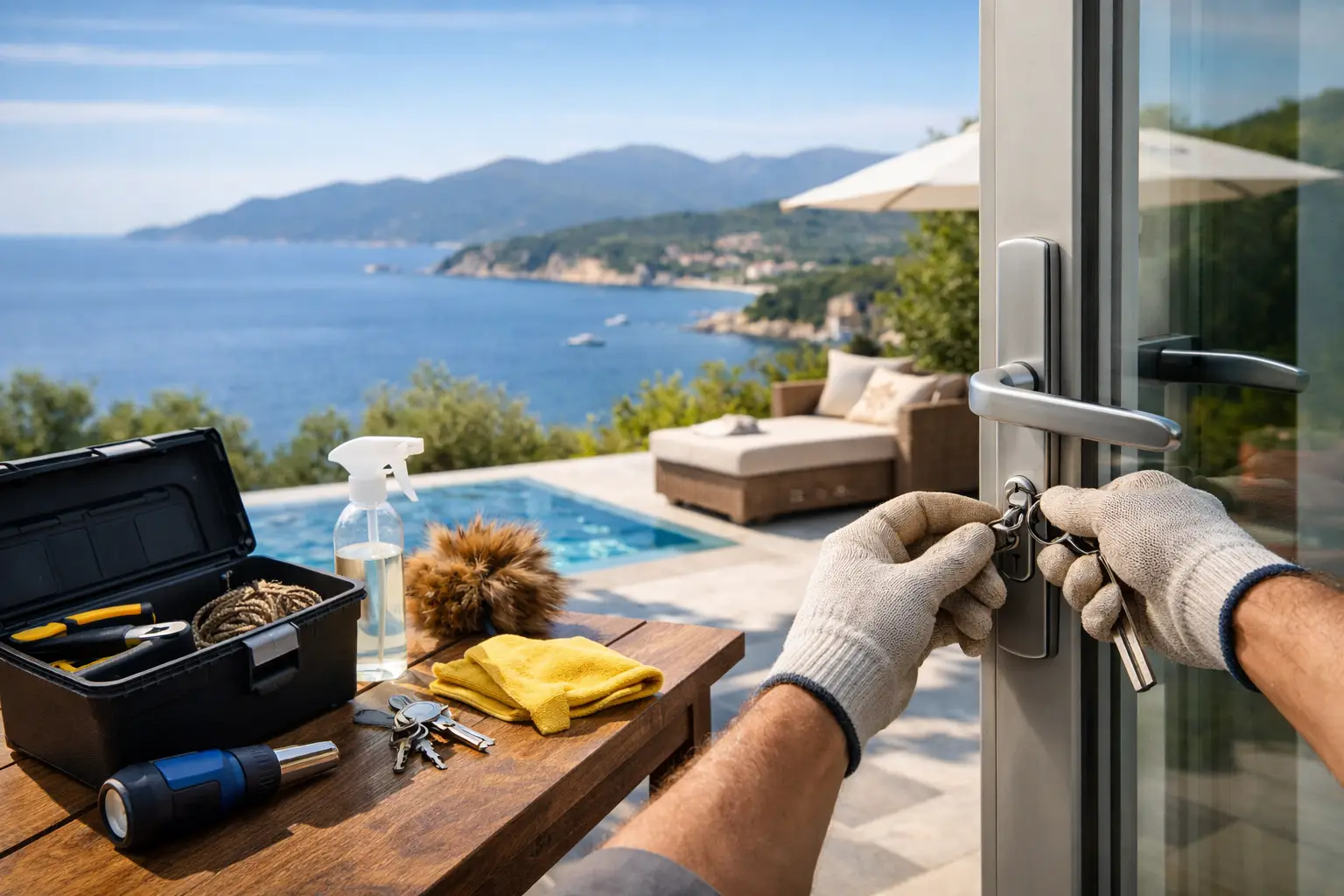
Reopening a seasonal home on Elba often means arriving after months of closure and wanting to immediately start living in it. However, before opening windows, reactivating water, and unpacking, it's wise to ensure everything is in order. A closed home doesn't communicate small problems as they arise: a minor leak, an infiltration, or an electrical fault can remain invisible for a long time and only appear upon your return.
For those living far from the island, reopening shouldn't be left to chance. It's an operational check that protects the property, prevents urgent interventions, and makes your first stay more peaceful.
Reopening Your Seasonal Home on Elba: Start from the Outside
The inspection always begins from the exterior, before you even step inside. On Elba Island, sun, wind, salt spray, and heavy rains can affect fixtures, roofs, terraces, gutters, and outdoor areas. Even a well-secured property deserves a thorough visual inspection.
Check gates, locks, shutters, windows, entrance doors, and fences, ensuring there are no signs of forced entry, wind damage, or unusual movements. For villas with gardens, it's useful to observe the condition of trees, branches, pathways, low walls, and water runoff areas. Leaves and debris in gutters, if neglected, can lead to stagnation and infiltration.
Terraces require particular attention. A crack, a clogged drain, or seemingly minor standing water can have consequences for the rooms below. If the house is in an exposed area, as is common in many coastal locations on Elba, it's advisable to also check outdoor furniture, awnings, pergolas, and light coverings.
The First Entry: Signals Not to Ignore
Once the door is open, it's not the time to switch everything on at once. First, it's better to observe, listen, and sense the environment. A persistent musty smell, mold, excessively humid air, stains on ceilings, or cold-to-the-touch walls warrant a more in-depth check.
Humidity can be due to a simple lack of air circulation, but also from infiltrations, condensation, or hidden leaks. The difference is important: airing out solves the first, not the second. Bathrooms, kitchens, utility rooms, storage areas, and rooms less exposed to the sun are the points to check most carefully.
Inspect floors, corners behind furniture, ceilings, and walls near fixtures. If a stain is new or more extensive than before, documenting it with a photo allows you to track its evolution and provide clear instructions to a technician, if necessary.
Water and Systems: Gradual Reactivation
The water system should be reopened gradually. If the water was shut off for the winter, reactivate the meter or main valve and observe for any anomalies. Before using washing machines, dishwashers, or the boiler, check the most sensitive points: connections under sinks, sanitary fixtures, flush tanks, boilers, outdoor taps, and visible pipes.
Let water run for several minutes from each tap, both hot and cold. This helps verify pressure, drainage, and the system's regularity. A slow drip might seem negligible, but in a house that will again be empty for alternating periods, it can turn into continuous waste or damage to the underlying furniture.
Electricity also needs to be restored carefully. After checking that the panel doesn't show tripped breakers or unusual signs, reactivate the lines and test lights, essential outlets, the refrigerator, air conditioners, and safety devices. If a circuit breaker trips repeatedly, it shouldn't be forced: it's a signal that needs to be checked.
For gas systems, even greater caution is required. In the presence of suspicious odors, do not light flames or operate electrical switches. Shut off the gas, ventilate, and request a qualified inspection. Seasonal reopening is the right time to ensure that the boiler, kitchen, and hot water production systems are ready for use.
The Essential Checklist Before Your Stay
An organized check reduces oversights and allows you to address problems before they become urgent. For a seasonal home on Elba, the main checks include:
- locks, fixtures, shutters, and external access points;
- roofing, gutters, terraces, drains, and signs of infiltration;
- humidity, mold, and conditions of walls, ceilings, and floors;
- water system, drains, boiler, autoclave, and outdoor taps;
- electrical panel, lights, appliances, and air conditioning;
- refrigerator, pantry, and presence of odors or pests;
- garden, pool, common areas, and outdoor equipment, where present;
- detectors, alarms, cameras, and security devices.
Not all homes require the same level of inspection. an apartment in Portoferraio will have different needs than a villa with a pool in Capoliveri or an independent house in the hinterland of Campo nell'Elba. The principle remains the same: check what, during closure, could not have been noticed in time.
Cleaning and Air Quality: Not Just an Aesthetic Matter
After months of closure, cleaning also means restoring healthy and pleasant conditions. Open windows in a controlled manner, allowing air to circulate during less humid hours, and check that mosquito nets and fixtures are intact. If there are signs of mold, don't just cover them with detergents or paint: you need to understand the cause, especially if the phenomenon recurs.
In the kitchen, check the refrigerator, freezer, filters, and small appliances. In bathrooms, observe traps and drains: evaporated water in traps can cause bad odors. In this case, running water is often enough, but if the smell persists, its origin must be identified.
The presence of insects or small animals should not be underestimated, especially in properties surrounded by greenery or those that have been closed for a long time. Traces, gnaw marks, droppings, or nests require timely intervention, before the problem affects systems, insulation, or furnishings.
When a Reopening Visit Isn't Enough
Reopening is easier if the property has also been monitored in previous months. A single visit can ascertain the current state of the house, but it cannot always reconstruct when a problem appeared. A small infiltration checked periodically can be addressed early; discovered after an entire winter, it might require more extensive work.
For this reason, homes used only periodically benefit from scheduled checks throughout the year. Periodic visits allow for verification of access points, systems, humidity, external conditions, and obvious anomalies, maintaining a constant local presence around the property.
Elba Property Care operates exclusively on Elba Island with inspection and supervision services for second homes, villas, and unoccupied properties. For an owner living far away, having a local contact means not having to wait for the next arrival to know if the house is truly protected and in order.
Prepare for the Next Closure Already
A good reopening also suggests how to better organize your next departure. Note what required attention: a tap to replace, a shutter to adjust, a damp spot to monitor, a gutter to clean more often. This information helps create an inspection plan tailored to the house, without treating every property the same way.
Peace of mind doesn't come from luckily finding everything perfect. It comes from knowing that, even when the house is empty, someone can check it regularly, recognize an anomaly, and act before your next stay on Elba begins with a surprise.