Reopening Your Elba Home Before Your Return
Reopening your Elba home: targeted checks on systems, humidity, security, and cleaning to find a second home ready, protected, and reliable upon your return.
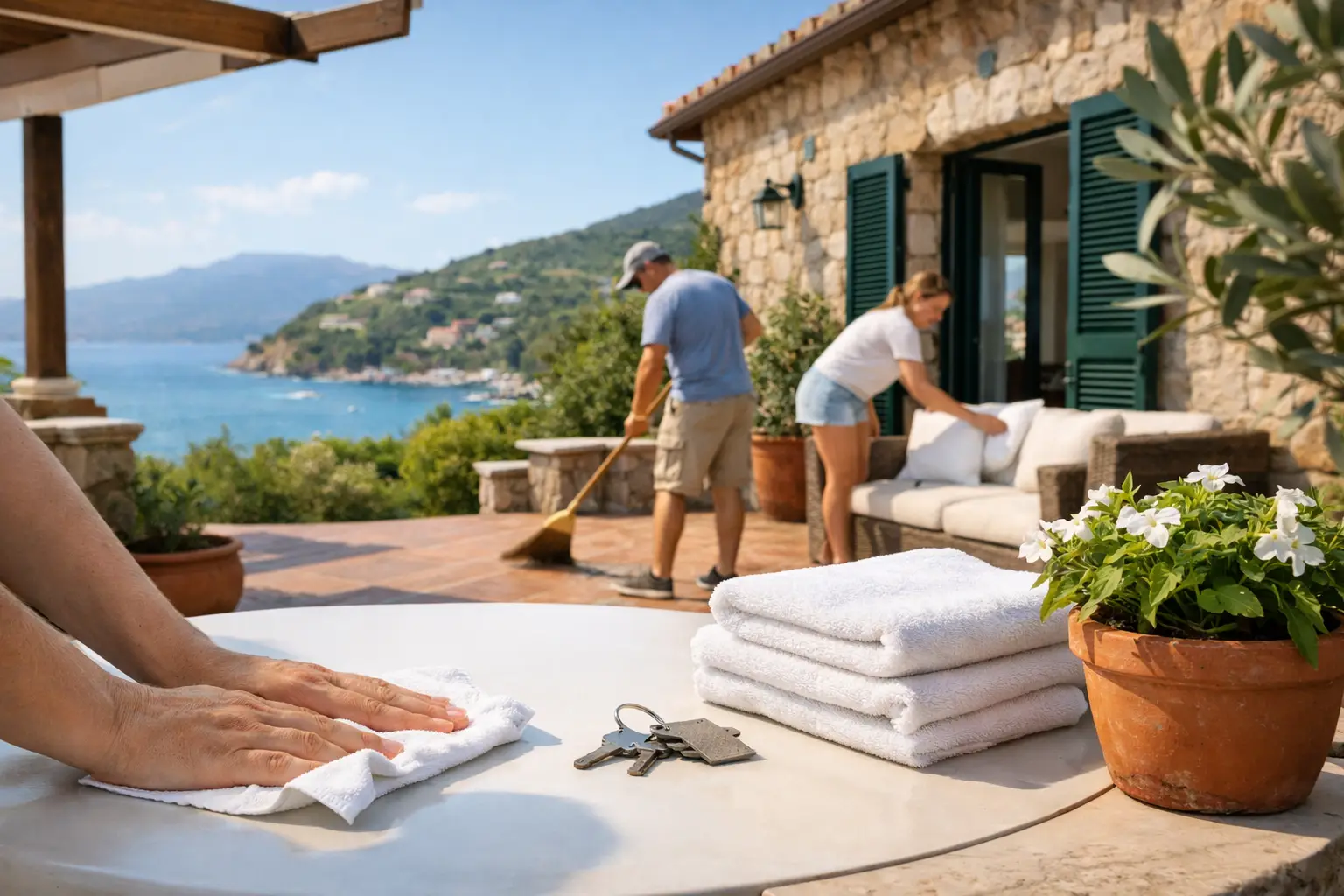
Opening a second home after weeks or months of closure isn't just about raising the blinds and airing out the rooms. Reopening homes on Elba requires systematic checks, because a small anomaly that went unnoticed during winter or between stays can turn into a costly problem just when you're looking forward to starting your holiday.
On Elba Island, salt spray, wind, humidity, storms, and long periods of disuse combine to affect homes, systems, and outdoor spaces. A thorough check performed before your arrival ensures a safer, cleaner, and truly ready-to-live-in home.
Reopening Elba Homes: Where to Start
The first check should happen before the owners arrive, not when the house is already full of luggage, guests, and commitments. This way, there's time to identify any critical issues, request technical intervention if necessary, and prepare the premises without rush.
Accessing the property is the starting point. Gates, locks, doors, windows, shutters, and blinds must be checked both for security reasons and to ensure that exposure to atmospheric agents hasn't caused blockages, wear, or leaks. In a villa with a garden, fences, automatic gates, pathways, and outdoor areas also deserve a thorough inspection.
Upon entering the house, it's useful to first observe what shouldn't be there: persistent odors, traces of damp, rings on ceilings and walls, presence of insects, leaves or water near doors and windows. These signs don't always indicate serious damage, but they do require prompt assessment. Ignoring them until the day of your return can complicate the solution.
Systems: Reactivate Them Judiciously
After a period of closure, systems should not all be restarted at once and without checks. The goal is to determine if they are working correctly and to intercept leaks, electrical anomalies, or malfunctions before they have consequences.
Water and Drains
Checking the plumbing system includes taps, sanitary fixtures, flush tanks, siphons, boilers, and outdoor water points. A constant drip under a sink or a hidden leak in a utility room can go unnoticed for a long time in an empty house. This is why it's useful to check for abnormal consumption, the presence of humidity, and proper water drainage.
Drains also deserve attention. In a house that has been closed up, siphons can dry out and cause unpleasant odors. Running water in bathrooms, the kitchen, and service areas helps restore more pleasant conditions and check for blockages.
Electricity and Appliances
The electrical panel, indoor and outdoor lights, sockets, essential appliances, and air conditioning systems should be tested carefully. If you detect tripped circuit breakers, a burning smell, damp near electrical components, or unresponsive appliances, it's not advisable to improvise repairs. The support of a qualified technician is needed.
Particular attention should be paid to the refrigerator, freezer, boiler, and air conditioners. A refrigerator that has been turned off or left closed can develop odors and mold; an air conditioner that has been idle for a long time may require cleaning and checking before intense summer use. Preventive checks prevent a breakdown from emerging during the hottest days or when the house is already occupied.
Humidity, Salt Spray, and Leaks: Risks Not to Underestimate
Homes near the sea, especially if left closed for extended periods, have specific needs. Salt spray can accelerate the oxidation of metal parts, damaging hardware, gates, and outdoor furniture. Humidity, on the other hand, can encourage condensation, mold, and deterioration of fabrics, wood, and walls.
Airing out is necessary, but not enough. You need to check the less visible corners: behind furniture, inside wardrobes and storage rooms, in technical compartments, under sinks, and near window frames. A thorough check allows you to distinguish normal stale air from a problem that requires targeted intervention.
The roof, gutters, terraces, and downspouts are equally important. After heavy rains or strong winds, leaves and debris can obstruct water flow. The consequences often become evident only after days: stains on the ceiling, leaks along the walls, standing water on balconies and terraces.
Prepare Outdoor Spaces Before Arrival
On Elba, home life extends outdoors. Terraces, pergolas, gardens, swimming pools, and dining areas are used daily in good weather and must be as ready as the interiors.
An inspection of outdoor spaces includes the condition of furniture, parasols, awnings, lighting, taps, irrigation systems, and vegetation. A fallen branch, a plant too close to a wall, a malfunctioning irrigation system, or an awning damaged by the wind are details that affect the safety and usability of the property.
For homes with a swimming pool, the inspection must be even more precise. Water level, filtration, cleaning, systems, and the condition of the surrounding area must be checked before arrival. In this area, timing and activities depend on the characteristics of the system and the period of disuse: not all pools require the same interventions, but none should be reopened without adequate assessment.
Cleanliness and Habitability: The Difference is Immediately Apparent
A checked house is not automatically a house ready to host. After the technical inspection, practical preparation of the premises is needed: ventilation, dust removal, cleaning of the kitchen and bathrooms, checking linens, and emptying any previously left waste or food.
This phase is particularly useful for those traveling from afar. Owners arriving on Elba from abroad or other Italian regions should not have to spend the first hours of their stay dealing with domestic mishaps. Finding a clean refrigerator, tidy bathrooms, aired rooms, and already checked systems truly changes the experience of returning home.
It is also useful to check essential amenities: available keys, remote controls, courtesy lights, device batteries, gas canisters, or other supplies provided with the property. These are not secondary aspects. It's precisely the small missing items that create interruptions and urgent requests at the most inopportune moments.
Why Local Control is More Effective Than Occasional Checks
Reopening works best when it is the final phase of continuous supervision, not an isolated check performed after months of absence. Periodic visits allow for familiarity with the house, observation of gradual changes, and intervention before a critical issue becomes evident.
A reliable local contact can inspect the property according to an agreed schedule, clearly report findings, and coordinate suitable professionals when necessary. For the owner, this means maintaining control even remotely, without having to be present for every detail.
Elba Property Care operates exclusively for properties on Elba Island with an approach based on local presence, checks, and responsibility. Every home has different needs: a house in the center of Portoferraio does not face the same conditions as a sea-facing villa or a property with a garden in Capoliveri. The inspection plan must therefore adapt to the property, the season, and the duration of absence.
Returning to a ready home is not just a matter of convenience. It is the result of checks carried out beforehand, with method and with someone on site: the best condition to start your stay on Elba with the serenity that a second home should always offer.