Protecting Furniture from Salt Spray on Elba Island
Protecting furniture from salt spray on Elba Island requires regular checks, suitable materials, and prompt intervention in coastal homes, year-round.
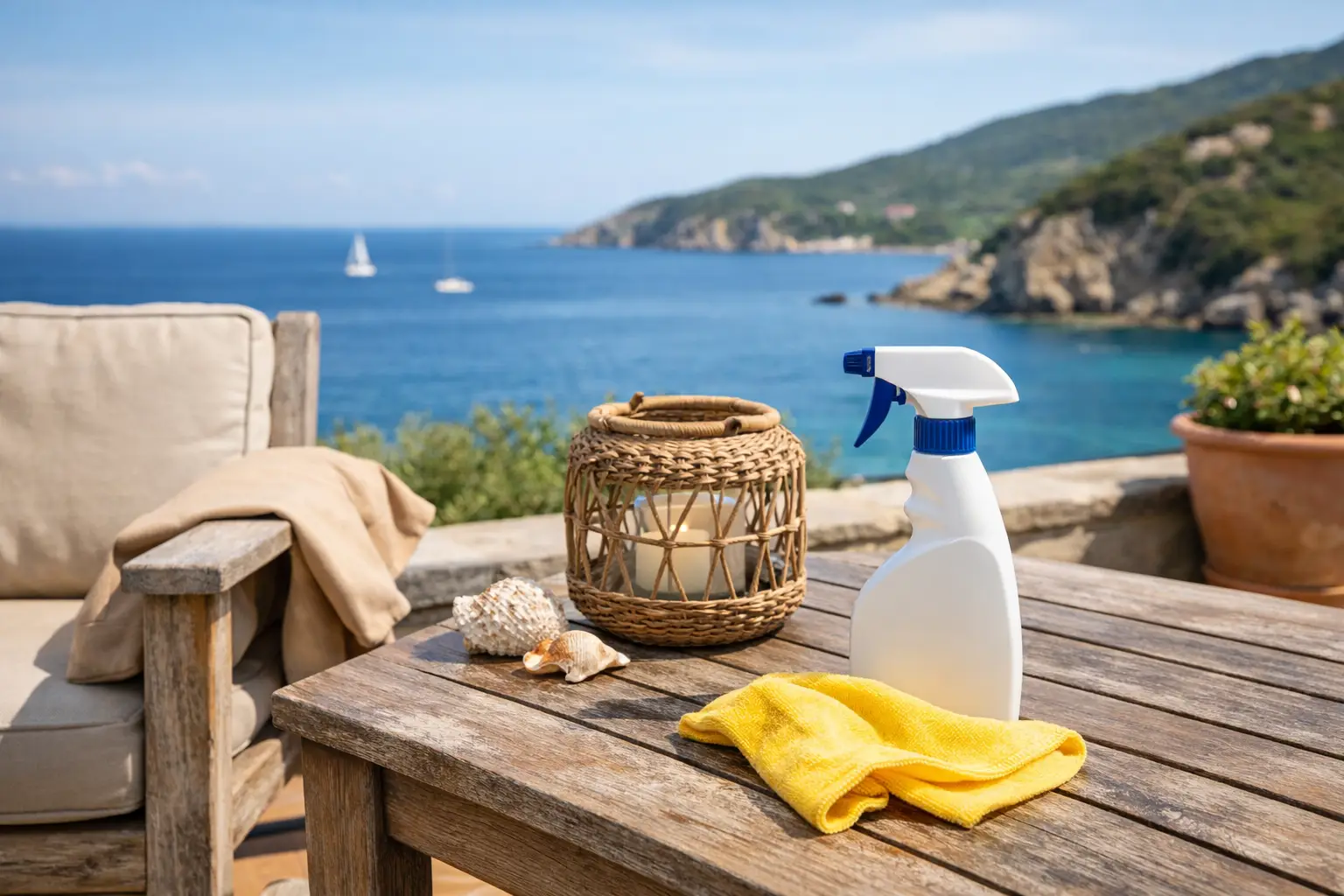
A shutter left ajar, a terrace exposed to sea winds, or a house closed for a few weeks can be enough for salt spray to start settling on furniture, fixtures, and metal surfaces. Protecting furniture from salt spray on Elba Island doesn't just mean cleaning more often; it means preventing progressive deterioration which, if ignored, can become costly and difficult to remedy.
In second homes on Elba Island, the risk increases during periods of absence. The sea breeze carries saline particles that settle everywhere, while humidity, condensation, and poor air circulation promote stains, oxidation, wood swelling, and mold. Local and constant monitoring allows for intervention when the problem is still minor.
Why salt spray damages furnishings and surfaces
Salt doesn't always act in an obvious way. It deposits as a thin film on outdoor tables, railings, handles, lamps, appliances, and furniture near openings. It draws moisture from the air and keeps surfaces wet longer, accelerating metal corrosion and weakening paints, finishes, and coatings.
Wood is particularly vulnerable when humidity fluctuates frequently. Furniture can swell, lose stability, or show small cracks in the varnish. Veneered surfaces risk edge lifting, while hardware, hinges, and screws can oxidize even before visible damage to the furniture occurs.
In homes closer to the coast, but also in hilly areas exposed to winds, salt spray can enter through open windows and accumulate over months. Distance from the sea matters, but it alone isn't enough to define the risk: exposure, home ventilation, the presence of terraces, and the duration of closure make a real difference.
How to protect furniture from salt spray on Elba Island
Effective protection starts with a simple distinction: outdoor furniture must withstand direct exposure, while indoor furniture needs protection from humidity, saline dust, and stagnant air. Treating both the same way often leads to disappointing results.
Regular cleaning, without aggressive products
Removing salt deposits is the first preventive measure. For washable surfaces, it's useful to use a soft cloth lightly dampened with fresh water, then dry thoroughly. Letting water evaporate on its own can create streaks and keep moisture in contact with the material.
For painted metals, aluminum, and steel, overly abrasive cleaners can damage the protective layer and make the surface even more exposed. Wood also requires specific and carefully dosed products: excessive wetting does not eliminate the problem; it transfers it into the wood fibers.
Frequency depends on the property's location. Furniture on an open terrace in Porto Azzurro or Marina di Campo may require closer checks than furniture stored in a well-ventilated internal room. After storms, rough seas, or particularly windy days, an additional check is a sensible precaution.
Covering does not mean sealing
Covers are useful for outdoor tables, chairs, and sofas, but only if they are breathable, securely fastened, and compatible with the shape of the furniture. An impermeable tarp left for a long time on damp furniture can trap condensation, promote mold, and create stains more difficult to remove than the salt spray itself.
Before covering furniture, ensure it is clean and completely dry. Covers must also allow air circulation and not collect rainwater in the folds. For more delicate items, when the house remains empty for a long time, it is preferable to store them in a dry environment rather than leaving them exposed under a tarp.
Choose materials suitable for the location
Not all outdoor furniture is suitable for a seaside home. Teak and other durable woods can offer good performance if treated and maintained correctly, but they still require periodic cleaning and protection. Natural rattan and some common metals, however, suffer more from saline humidity if left exposed.
Painted aluminum, good quality stainless steel, and synthetic materials designed for outdoor use can reduce maintenance, but they don't eliminate it. Even stainless steel can show signs of oxidation in the presence of persistent salt deposits. The right material is one consistent with the actual exposure and the availability of checks throughout the year.
For interiors, it's worth avoiding placing wooden furniture directly against cold or poorly ventilated walls. Leaving a few centimeters of space promotes air circulation and allows for earlier detection of any signs of condensation or mold.
Areas of the house to check during absences
Salt spray rarely affects just one element. When checking a second home on Elba, it's useful to observe the environment as a whole: furniture, openings, systems, and air conditions are interconnected.
Particular attention should be paid to fixtures, locks, shutters, awnings, and railings. If a window does not close properly, sea air enters more easily, and the problem extends to nearby furniture. A deteriorated seal, a shutter blocked by oxidation, or a small infiltration can turn into more extensive damage during a long period of disuse.
Inside, it's good to check for musty odors, stains on fabrics, condensation on windows, spots in corners, and the condition of hinges or handles. In kitchen and bathroom furniture, where humidity tends to concentrate, checks should also include any water leaks. Salt and humidity are not the same, but together they rapidly worsen the situation.
The most useful prevention is timely prevention
Many owners discover damage upon arrival: a stained railing, a sticky table, a stiff lock, or a wardrobe with a musty smell. At that moment, it is possible to intervene, but often deeper cleaning, specific treatments, or replacement of deteriorated components are required.
Scheduled checks change this dynamic. A periodic visit allows for airing when conditions permit, identifying salt accumulations, drying exposed surfaces, checking covers, and reporting anomalies before they compromise furnishings and finishes. This approach is particularly useful for those who live far from the island and cannot personally check after bad weather or during less frequented months.
Elba Property Care operates precisely with this logic: local presence, regular checks, and practical attention to what can deteriorate while the house remains empty. It's not about waiting for a problem but about creating continuity in property care.
When professional intervention is needed
A light saline film or a small spot of oxidation can be managed quickly. However, if wood shows swelling, paint peels, widespread mold spots appear, or metals show extensive corrosion, improvising can worsen the outcome. In these cases, it's necessary to assess the material, the cause of the humidity, and the most suitable treatment.
Even replacing a cover, restoring a shutter, or checking for an infiltration can protect furniture more than any product applied to the surface. Effective care is not a single operation: it is the ability to see in time what the house is communicating.
A second home should remain a welcoming place, not a source of unknowns upon arrival. With correct cleaning, suitable materials, and a reliable presence on Elba Island, even salt spray can be managed before it leaves permanent marks.