How to Prevent Damage in an Empty House on Elba
Prevent damage in an empty house on Elba with regular checks, preventive inspections, and local oversight to avoid breakdowns and unforeseen incidents.
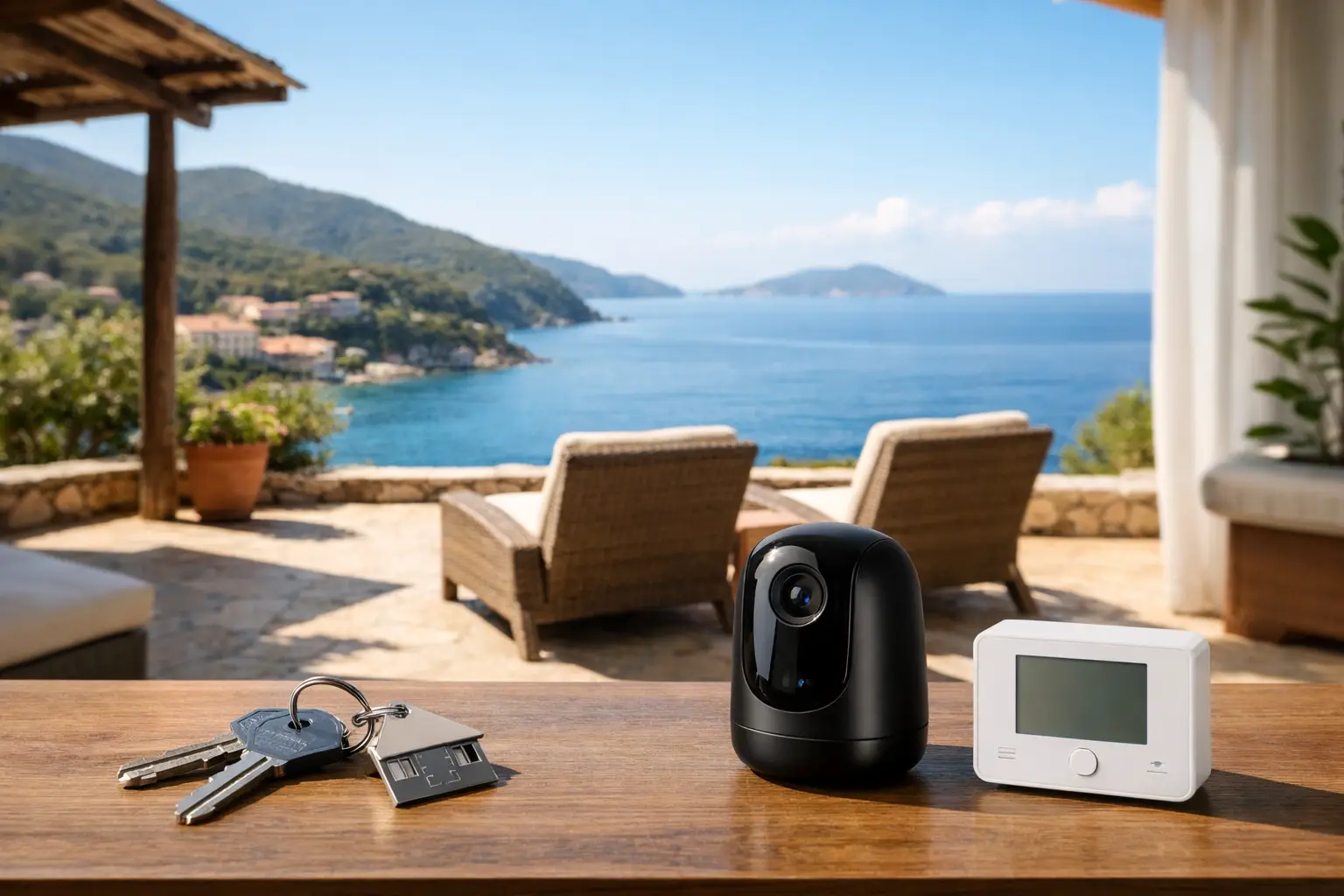
A house left closed for weeks or months doesn't truly stay still. On Elba Island, salty air, humidity, summer heat, thunderstorms, and overlooked minor faults can turn a simple absence into a costly problem. To prevent damage in an empty house, active, regular, and local supervision is needed, not just an occasional check before your arrival.
Preventing damage in an empty house means acting proactively
Many damages in second homes don't stem from exceptional events. They arise from neglected details. A window left slightly ajar, a tiny leak under a sink, a tripped circuit breaker, a water infiltration starting from the roof or a terrace. If no one notices in time, the damage grows while the house is empty.
This is why prevention is not the same as extraordinary maintenance. It's a continuous activity of vigilance. It means periodically checking the property's status, inspecting systems, observing initial signs, and acting immediately when something isn't right. For those living off Elba, this oversight is often the real critical point.
The most common risks in an unoccupied house
When a property remains uninhabited, some problems become more probable and more costly to manage. Humidity is one of the primary concerns. In closed environments, it can foster mold, persistent odors, and deterioration of walls, fabrics, and furnishings. In Elba's coastal areas, salt spray also impacts fixtures, locks, gates, and metal components.
Another frequent risk concerns water. A small leak can go unnoticed for weeks. The same applies to water heaters, flush tanks, flexible hoses, fittings, and taps. The problem doesn't always suddenly explode. It often starts silently, but when the owner returns, they find stains, bulges, damaged cladding, or anomalous consumption.
Then there are the electrical systems. A power outage, a tripped safety switch, or a malfunction of refrigerators, dehumidifiers, or alarm systems can leave the house vulnerable. If no one checks, discomfort is compounded by risk.
Finally, there's the exterior aspect. Neglected gardens, damaged shutters, accumulated mail, or visible signs of absence make a property more exposed. It's not just an aesthetic issue. A house that appears unattended communicates vulnerability.
What really needs to be checked to prevent damage in an empty house
To be effective, a check must be concrete. It's not enough to simply open the door, take a quick look, and close it again. A precise routine must be followed, adapted to the type of house, its exposure, and the season.
Water systems and sensitive points
Checking the water system is among the most important tasks. Visible leaks, traces of humidity, the condition of sanitary ware, anomalous pressure, drains, and hidden areas such as under-sink cabinets, utility rooms, and laundries must be inspected. If the property remains empty for a long time, in some cases it may be prudent to shut off the water, but this depends on the system's configuration and the presence of appliances requiring power.
Ventilation, humidity, and indoor environment
A closed house accumulates humidity more easily, especially during less-frequented periods. Airing out rooms, checking for unusual odors, and inspecting corners, ceilings, and walls is essential to stop the first signs before they become a widespread problem. In houses near the sea, this point requires even more attention.
Electricity and appliances
The electrical panel, refrigerator, automatic systems, pumps, gates, and alarms should be checked regularly. If something is unpowered or not responding correctly, the problem must be addressed immediately. Waiting until the next stay is rarely a good idea.
Exteriors, access points, and signs of exposure
Shutters, fixtures, terraces, roofs, gardens, gates, and fences often tell the true state of the property. A fallen branch, a clogged gutter, a stuck roller shutter, or a corroded lock may seem like minor details, but it's precisely these details that generate costs when left unsupervised.
The frequency of checks varies from house to house
There is no single valid frequency for everyone. An isolated villa requires a different level of attention compared to an apartment in a condominium. The season also matters. After periods of bad weather, strong wind, or heavy rain, an additional check can prevent major consequences.
Generally, houses used only in the summer or for a few weeks a year should not remain unchecked for long intervals. The longer the absence, the more valuable constant local oversight becomes. Not to create alarm, but to reduce the time between the problem and the intervention.
Why distance makes everything more difficult
Anyone who owns a second home on Elba and lives elsewhere knows the most delicate point well: not knowing. Not knowing if water entered after a thunderstorm, if there was a breakdown, if the house lost power, if a supplier actually intervened, if everything is ready for the next arrival.
Distance also amplifies timelines. Organizing a remote check requires phone calls, the availability of third parties, and trust. If the owner is out of the area or abroad, even a simple decision becomes slow. This is where a local contact makes a difference, because they reduce steps, check on-site, and accurately report what needs to be done.
The value of local oversight on Elba Island
On Elba Island, prevention works best when entrusted to those who know the territory, the climatic conditions, and the typical needs of unoccupied houses. A property in Portoferraio, Capoliveri, or Marina di Campo can have very different characteristics in terms of exposure, access, and sensitivity to external agents.
A well-organized home watching service does more than just “take a look.” It performs scheduled visits, targeted checks, preventive inspections, and if a problem arises, coordinates the initial operational steps. For the owner, this means continuity and, above all, clarity. Not a generic presence, but a system for protecting the house while it is empty.
In this context, specialized entities like Elba Property Care meet a very precise need: to offer reliable oversight to those who do not live permanently on the island but want to find their home checked, monitored, and ready.
Common mistakes to avoid
One of the most common mistakes is thinking it's enough to close everything up and return months later. In reality, a sealed house without monitoring can deteriorate more quickly, especially in terms of humidity and indoor air quality.
Another mistake is to rely occasionally on uncoordinated neighbors, friends, or suppliers. Occasional availability can be useful in an emergency, but it does not replace regular checks with clear criteria. The difference lies in continuity.
Then there's the tendency to postpone minor interventions. A worn gasket, a stiff lock, a crack to be observed, a gutter to be cleaned. Taken one by one, they seem like details. Accumulated over time, they become the reason why the house presents problems precisely when it should be ready for use.
A ready home is not just a home without faults
Protecting an empty property is not just about avoiding damage. It also serves to maintain the house in decent, functional, and welcoming conditions between stays. This aspect is often underestimated by those who use the property only during certain periods of the year.
Returning to find everything in order, aired, checked, and verified changes the relationship with the house. It reduces stress, avoids last-minute rushes, and allows you to enjoy your stay from day one. For many owners, this is the true advantage of constant supervision: not having to deal with problems as soon as they arrive.
Preventing damage in an empty house, therefore, isn't just about protecting walls and systems. It means protecting the property's value, the owner's time, and the peace of mind with which that home is lived in.
If a property on Elba remains empty for long periods, the right time to organize its inspection is not after the first problem, but before the next period of absence. That's when prevention stops being a good intention and becomes a true form of protection.