Periodic Property Checks: What They Prevent
Regular property checks reduce risks, breakdowns, and unforeseen issues in second homes, with consistent inspections and local presence.
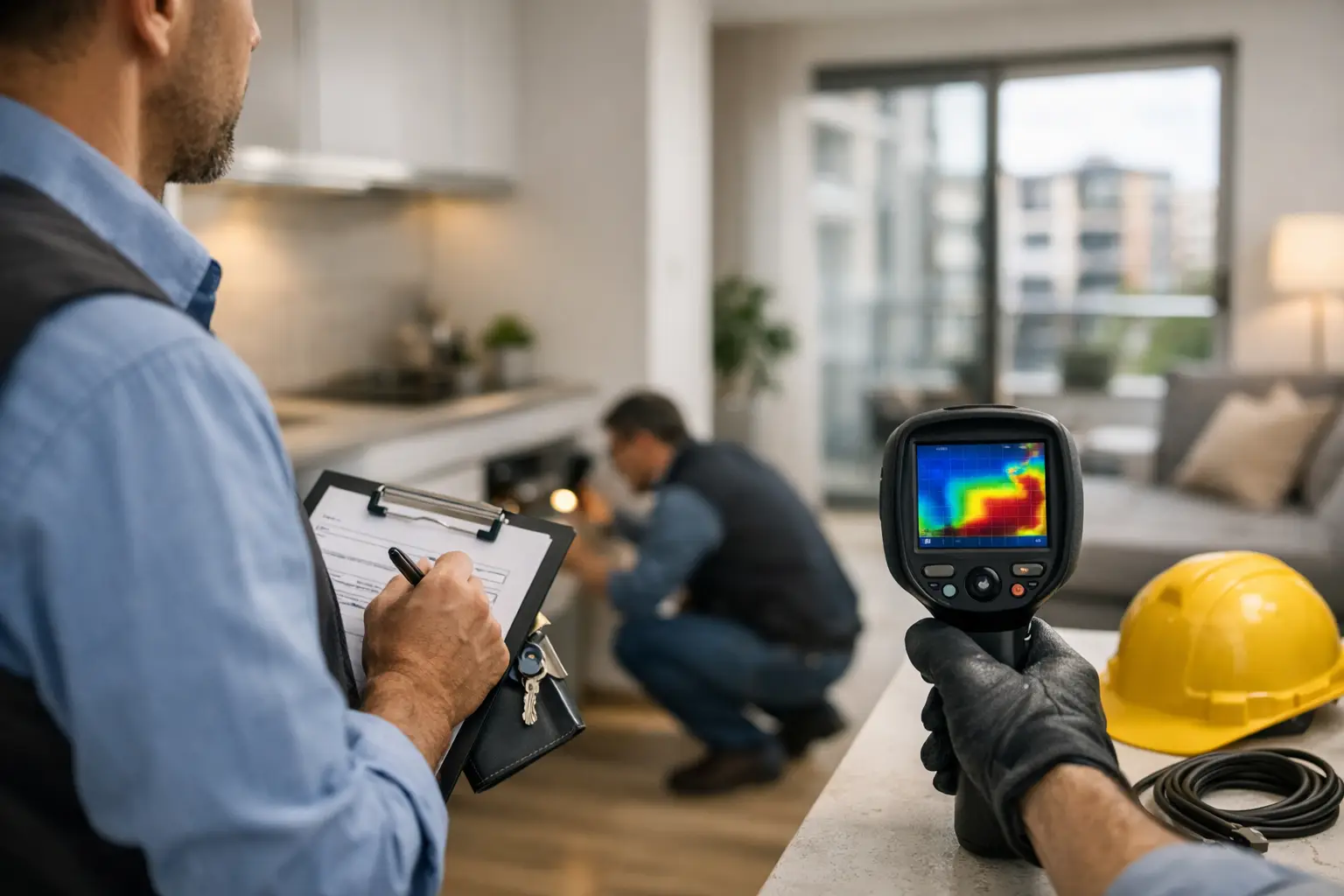
A house left closed for weeks or months doesn't truly remain still. Humidity, minor malfunctions, service interruptions, signs of forced entry, or simple degradation continue to develop even when the owner is away. This is why periodic property checks are not a mere formality, but a concrete protective measure for those who own a second home on Elba and cannot continuously oversee it in person.
When a property remains empty, the real problem is not just what happens, but what no one sees in time. A minimal leak under a sink, a window not perfectly closed, a blackout that disables a system, the presence of humidity in a poorly ventilated room: small situations at first, much more costly after a few weeks. The value of a regular check lies precisely here—intercepting issues early, verifying on-site, and intervening before damage escalates.
Why Periodic Property Checks Are Essential
Those who live far away know the feeling of uncertainty well. One wonders if everything is in order, if the house is safe, if systems are working, if the last storm surge or a heavy downpour has left consequences. Relying on sheer luck, or an occasional visit from a neighbor, is rarely enough.
Periodic property checks serve to transform the owner's absence into organized management. It's not just about "taking a look." A well-executed check verifies access points, internal conditions, signs of infiltration, the general state of the premises, service continuity, and the presence of anomalies that require immediate attention. This approach reduces the risk of invisible damage and also limits deterioration due to lack of presence.
In second homes, especially in insular and coastal locations, the continuity of checks matters more than a one-off intervention. Salt spray, humidity, wind, intense rains, and long periods of closure create conditions that require regular presence, not sporadic checks.
What Risks Do Regular Checks Avoid?
An unsupervised property tends to accumulate vulnerabilities. Some are obvious, others only emerge with a careful inspection. The most common critical issues include infiltrations, plumbing leaks, stagnant odors, mold, compromised fixtures, detachment due to bad weather, electrical problems, or utility interruptions.
Then there's the issue of security. A house visibly closed for a long time can attract unwanted attention. Even without serious incidents, an attempted forced entry or a minor intrusion, if not detected quickly, can leave consequences on fixtures, locks, and the owner's peace of mind.
Another often underestimated risk is breakdowns that prevent the use of the house precisely when the owner is about to arrive. Finding a last-minute problem with water, electricity, or internal environments means transforming an anticipated stay into a race against time. Periodic checks also reduce this type of unforeseen issue, as they keep the house in a more stable state of readiness.
What a Good Periodic Property Check Includes
The quality of the service depends on the method. A serious check follows a precise routine and leaves no room for improvisation. Each visit should start with checking external access points, locks, and unusual signs on doors, windows, shutters, or gates. This is the first level of protection and often the most immediate to assess.
Inside, attention shifts to the general conditions of the premises. Checks are made for any traces of humidity, infiltrations, foul odors, presence of mold, condition of bathrooms and kitchen, visual state of walls, ceilings, and floors. In a house not continuously inhabited, these signs speak volumes long before overt damage.
Another decisive point concerns the systems. While a technical intervention isn't always necessary, it's essential to identify anomalies, interruptions, or signs of malfunction. Even a simple check of the apparent status of water, electricity, and other services helps to understand if everything is regular or if immediate action is needed.
In a context like a second home, effective monitoring also includes a practical assessment of the property's liveability. Is the house ready for use? Are there elements that, while not an emergency, require attention before worsening? This distinction between urgency and prevention is central.
How Often to Perform Checks
There isn't a one-size-fits-all frequency. It depends on how long the property remains empty, the season, exposure to weather agents, and the house's characteristics. An apartment used occasionally in a protected setting does not have the same needs as an independent villa exposed to wind, rain, and long periods of absence.
Generally, the longer the owner's absence, the more regular the checks should become. The time of year also plays a role. During humid months or in the presence of intense weather events, a higher frequency offers real protection. The same applies to properties that have shown vulnerabilities in the past, such as infiltrations, window issues, or delicate systems.
The right choice is not the minimum possible, but one proportionate to the risk. A well-calibrated visit schedule costs less than damage ignored for too long and, above all, avoids the continuous uncertainty that plagues many absent owners.
The Value of Local Presence
When managing a home remotely, the difference is made not just by the check itself, but by who performs it and with what consistency. Having a local contact means knowing that someone knows the property, monitors its evolution over time, and can distinguish what is normal from what represents a change to investigate further.
This continuity is important because an occasional check only captures a snapshot of the moment. A structured service, on the other hand, recognizes weak signals: a spreading stain, a fixture that responds worse than usual, an environment showing different humidity levels compared to previous visits. Prevention often arises from these details.
For owners living out of the area or abroad, local presence also has organizational value. In case of an anomaly, there's no need to hastily search for a local contact. An active guardian is already in place who can verify, document, and guide decisions. This is what transforms the service into true protection, not just a simple inspection.
Periodic Property Checks and Long-Term Value Protection
Protecting a second home means not only avoiding emergencies but also preserving its condition, efficiency, and image over time. A property regularly monitored tends to maintain itself better, require fewer extraordinary interventions, and remain ready for use with shorter restoration times.
This aspect is even more crucial when the house represents a family or patrimonial investment. Silent degradation impacts both future costs and the quality of the living experience. Conversely, constant supervision helps maintain high standards and plan interventions with clarity, without always being late.
For many properties on the island, the issue is not just maintenance, but continuity of custodianship. This is the principle governing Elba Property Care: reliable, scheduled, and concrete presence for those who cannot be on-site all year but want to know that their home is not left to itself.
When DIY Is No Longer Enough
Many owners start by relying on informal solutions. A friendly neighbor, a relative who passes by occasionally, a quick visit before summer. This is understandable, but often this model only holds up until a real problem emerges. At that point, it becomes clear that frequency, method, and clear responsibility were lacking.
The limitation of occasional checks is precisely this: they do not guarantee continuity or a consistent standard of attention. If the goal is to truly protect an unoccupied house, a simple but stable system is needed, consisting of programmed checks, careful observation, and the ability to react when something changes.
Those who own a second home on Elba don't need alarmism, but operational certainty. Knowing that the property is regularly checked, that each visit has a precise purpose, and that any critical issues do not remain invisible offers a concrete advantage: experiencing the distance with less worry and finding the house as it should be, not as chance has decided to leave it.
An unattended property demands attention even when it's perfectly in order. It is precisely in those moments, before problems arise, that periodic checks offer their best value.