How to Protect Outdoor Furniture on Elba Island
How to protect your outdoor furniture on Elba from sun, salt, wind, and rain: seasonal checks and practical care for second homes left vacant all year.
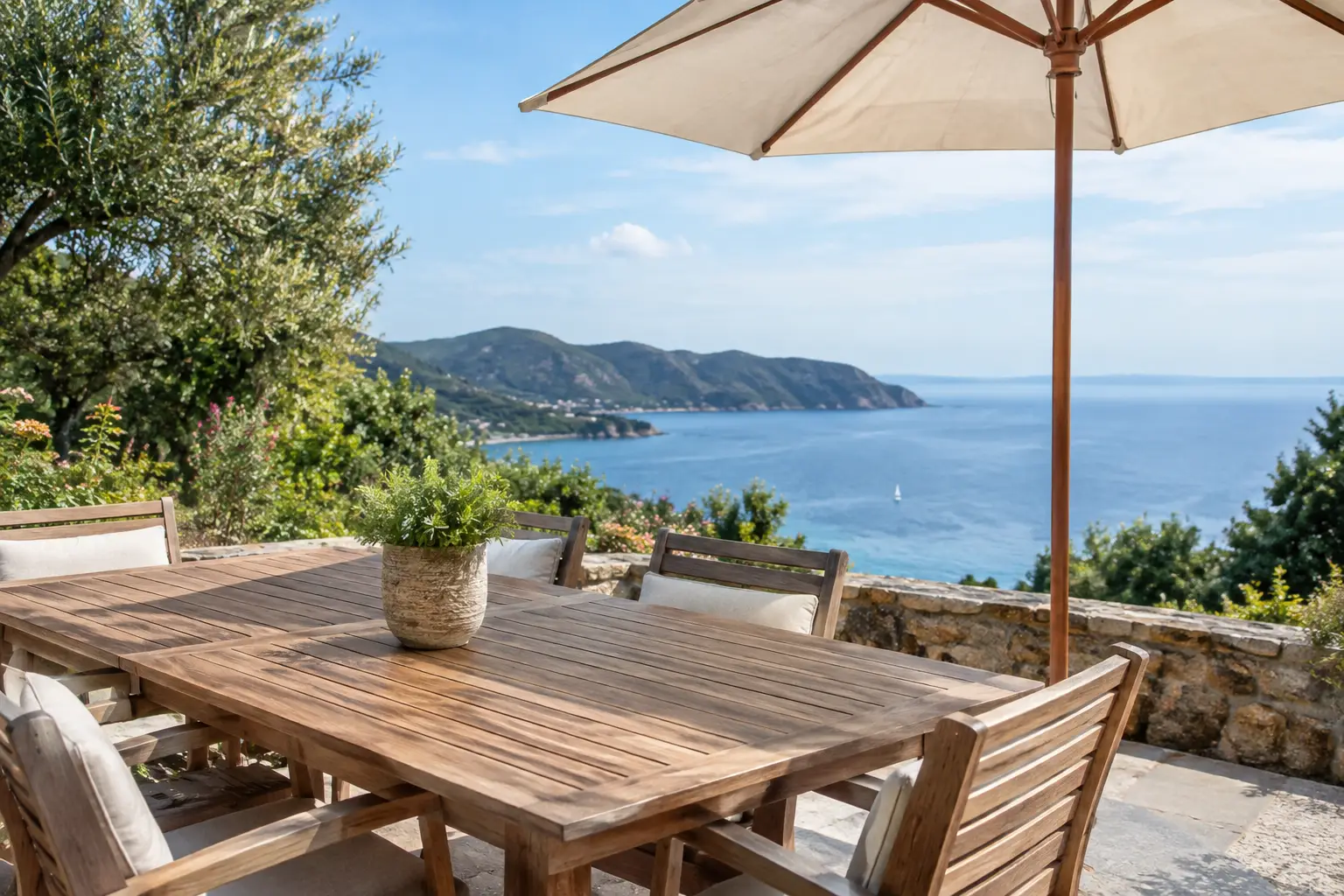
A sea-view terrace, a garden pergola, or a patio by the pool are important parts of a home on Elba Island. However, when the property remains closed for weeks or months, understanding how to protect outdoor furniture on Elba becomes a real necessity. Intense sun, salt spray, wind, humidity, and sudden rains act daily, even when no one is there to notice a torn cover or an overturned chair.
Effective protection isn't just about covering furniture and cushions at the end of the season. It requires suitable materials, small preventive measures, and regular on-site checks. For the owner who lives far away, the difference means having the certainty that outdoor spaces are cared for, tidy, and ready for use upon their next arrival.
Factors That Damage Outdoor Furniture on Elba Island
Exposure is the primary element to consider. A house on the hills, in an open area, or near the coast can experience much stronger wind gusts than a sheltered, internal garden. Lightweight chairs, umbrellas, pots, and tables can shift, fall, or strike surfaces and windows. Simply leaving them under a cover isn't enough if they aren't secured or stored stably.
Salt spray is equally insidious. Saline deposits settle on metal, wood, glass, and fabrics, promoting corrosion, stains, and degradation of finishes. The risk increases for properties near the sea, but it's not limited to the coastline: wind and marine aerosol can reach even more inland areas of the island.
Then there's the sun and summer heat. UV rays discolor fabrics, make some plastics more brittle, and can dry out untreated wood. In winter, persistent humidity and rain encourage mold on cushions, stains on upholstery, and stagnant water in covering structures. Each material reacts differently, so effective protection starts with a realistic assessment of the environment.
How to Protect Outdoor Furniture on Elba Based on Material
Wooden furniture requires constant attention, especially if exposed to direct sun and rain. Gentle cleaning removes dust, pollen, and salt, while periodic protective treatment helps keep the material stable and attractive. Teak, acacia, and treated woods resist well, but they are not maintenance-free: leaving stagnant water on a tabletop or covering wood while it's still damp can create stains and promote surface alterations.
For iron, steel, and aluminum, the critical point is to check for scratches, joints, screws, and areas where the protective coating appears damaged. Aluminum is generally practical in marine environments but still needs washing to remove salt. Wrought iron and painted steel require more frequent checks, as a small rusted area, if neglected, can spread rapidly.
Synthetic rattan and resins are popular choices for second homes because they are easy to clean and relatively durable. This doesn't mean they can remain exposed without caution. Prolonged sun, wind, and debris can weaken weaves and plastic components; moreover, the light weight of many pieces of furniture makes them vulnerable to gusts.
Fabrics, cushions, and padding are the most delicate elements. If a house remains unused, it's preferable to store them in a dry, ventilated environment, avoiding damp cellars or closed containers when the material is not perfectly dry. If they must remain outdoors during a short absence, using technical fabrics and breathable covers reduces the risk, but it doesn't replace a check after heavy rains or strong winds.
Covers Are Useful, But Only If Used Correctly
A good cover protects against dust, pine needles, solar rays, and wind-borne dirt. However, the wrong cover can trap condensation and create a humid microclimate beneath it. The result is paradoxical: furniture that appears protected, but with mold, stains, or deteriorated metal parts.
The safest solution is to choose UV-resistant covers that are waterproof but offer minimal breathability, with adequate fastening systems. The cover should not adhere completely to surfaces and cushions, nor should it form pockets where water can accumulate. After windy days, it's necessary to check that it hasn't lifted, torn, or turned into a sail.
For umbrellas, the prudent rule is to close them, secure the structure, and remove the fabric when the property will be vacant for an extended period. An open or poorly closed umbrella can suffer significant damage from a single gust, in addition to becoming a danger to nearby furniture, fences, and windows.
Preparing the Outdoor Space Before a Prolonged Absence
Before leaving a villa, holiday home, or apartment with a terrace, it's advisable to organize the furniture based on its stability. Lightweight tables and chairs should be grouped in a sheltered area or secured; pots should be placed away from edges and walkways; fragile decorative objects are best stored indoors. This is not excessive caution: it takes very little for a wind-blown item to cause damage more costly than prevention.
Initial cleaning also matters. Leaves, sand, bird droppings, and salt residue should not remain on surfaces and fabrics for long. Cleaning before covering furniture prevents dirt from being trapped for months. It's also useful to check drains, grates, and outdoor paving: stagnant water near furniture or wooden structures can worsen the condition of the entire area.
If the property has a pergola, awnings, or gazebos, preparation must include these elements. Retractable awnings should be closed, while light structures should be examined to check fastenings, tension cables, and coverings. In some cases, temporarily disassembling a non-essential part is the most prudent choice.
The Value of Seasonal Checks for a Second Home
The protection of outdoor furniture doesn't end the day it's arranged. A periodic visual inspection allows for timely identification of a displaced cover, an overturned pot, stagnant water, rust marks, or damaged covering. These are often simple interventions, but they become impossible for those far from Elba.
The frequency depends on the house's location, exposure, and the season. A property by the sea or in a very windy area may require more frequent attention than a sheltered urban terrace. After significant weather events, a local check is particularly useful: damage is not always evident from the outside or through a camera.
A local supervision service can ensure that furniture, covers, and outdoor spaces remain in order between the owner's visits. Elba Property Care performs scheduled checks on properties on the island, promptly reporting anomalies and helping to keep the home under observation throughout the year.
When to Store Furniture Instead of Leaving It Outside
Not all furniture needs to remain outdoors for twelve months. If the house remains vacant for a long period, storing cushions, textile accessories, small tables, and folding chairs is often the solution with the best balance between time spent and protection achieved. More expensive or difficult-to-replace items deserve even greater care.
The choice also depends on available space. A dry storage room, a well-ventilated outdoor shed, or an empty indoor area allows for the preservation of items most susceptible to humidity. If there isn't enough space, it's preferable to leave out only the furniture truly designed for continuous exposure, properly cleaned, covered, and placed in a protected position.
A well-maintained exterior communicates attention even when the house is empty. Scheduling small checks, especially during seasonal changes, ensures that terraces and gardens are found in better condition and allows for intervention before a neglected detail becomes a problem. For those living far away, knowing that someone regularly inspects these spaces transforms absence into more serene management.