How to Protect a Closed Holiday Home
How to protect a closed holiday home on Elba Island: regular checks, damage prevention, and constant year-round security.
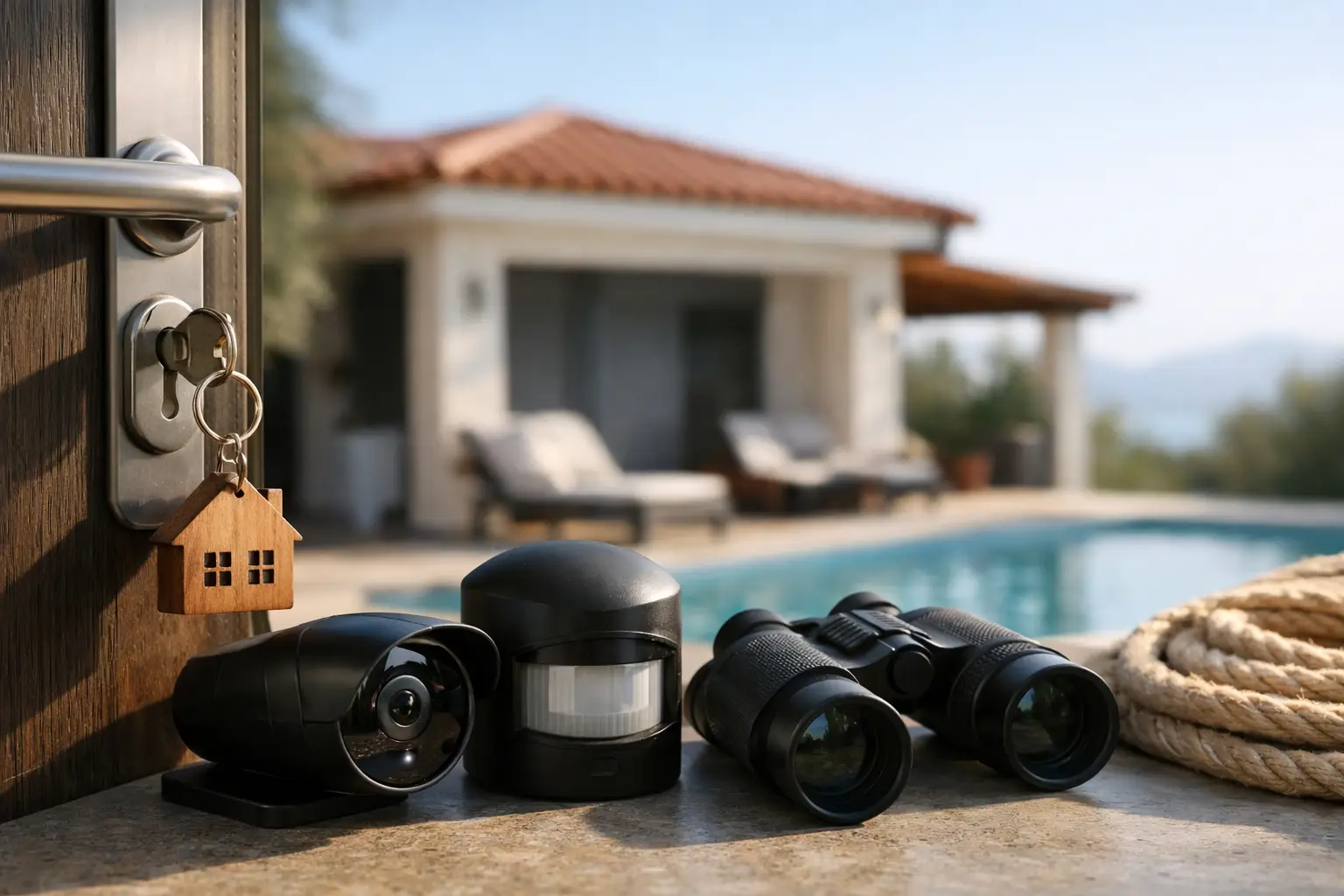
When a house remains empty for weeks or months, theft isn't the only concern. Those looking to protect a closed holiday home, especially on the Island of Elba, must also consider humidity, leaks, electrical faults, minor structural issues, and neglected signs that, from a distance, become costly. An uninhabited house doesn't maintain itself: it needs continuous monitoring, verification, and attention.
How to Protect a Closed Holiday Home Without Leaving Anything to Chance
Real protection starts with a simple principle: prevention is more effective than late intervention. Many owners first think about reinforced doors, alarms, and cameras. These are useful tools, but they are not enough on their own. If the power goes out, if a window is left ajar after a storm, or if a leak appears in the bathroom, no device can solve the problem without an on-site check.
This is why a closed holiday home should be managed as a property that needs vigilance, not as a space to be locked up until next summer. The value lies in continuous checks. Knowing that someone enters, checks, observes, and reports makes the difference between a small intervention and extensive damage.
On Elba, this aspect is even more critical. The marine climate, periods of disuse, and the distance of many owners make reliable local supervision essential. If you live elsewhere, you don't just need a security system; you need the certainty that the house is genuinely looked after.
The Most Common Risks in a Closed House
Theft remains a concrete concern, but it is often not the most frequent. In unguarded homes, problems also arise from ordinary events. A stuck roller shutter, a slow leak under the sink, a musty smell indicating humidity, an undetected blackout, shutters banging in the wind: minor details if caught in time, serious problems if ignored for months.
Then there's the external appearance. A property that appears abandoned attracts unwanted attention. A full mailbox, an unkempt garden, signs of prolonged disuse, and an obvious lack of activity communicate vulnerability. Protecting a closed holiday home also means giving the impression that the property is being looked after.
In seasonal locations, the risk is double. On one hand, there's the winter period, when many houses remain empty for extended periods. On the other hand, there's the change of season, when accumulated faults emerge upon reopening the property. Arriving for a few days of vacation only to find closed water, mold, or systems needing inspection leads to a loss of time, money, and peace of mind.
Physical Security and Human Monitoring: Both Are Needed
A good level of protection arises from the balance between physical barriers and operational presence. Quality locks, secure windows, external lighting, and alarm systems form a proper foundation. But effectiveness depends on the ability to immediately notice if something is wrong.
A camera can show an anomaly, but it won't dry a leak or re-close an access left exposed to the wind. An alarm can send a notification, but if you're abroad or far from the Island of Elba, the problem of who intervenes remains. For a second home, the decisive point is not just detecting an event: it's having a local contact person who can quickly verify the situation.
That's why periodic checks are not an extra. They are the heart of protection. Regularly visiting the property allows verification of access points, general condition, systems, presence of humidity, external integrity, and internal conditions. Each check reduces the interval between when a problem arises and when it is identified.
How to Protect a Closed Holiday Home on Elba Island
On Elba Island, the proximity of the sea requires special attention. Salt spray, wind, intense rainfall during certain periods, and long intervals of closure affect more than it seems. Shutters, window frames, gates, metal parts, and external systems can deteriorate more quickly if no one checks their condition.
Protecting a closed holiday home on Elba means scheduling checks that are not merely formal. You need to open, observe, test, and report. Verify that there are no leaks after bad weather. Check that electricity is active where necessary. Ensure that water has not created anomalous pressure or leaks. Inspect terraces, gardens, perimeter walls, and the most exposed access points.
In some areas, such as Portoferraio, Capoliveri, Porto Azzurro, or Marina di Campo, the type of exposure can vary from property to property. An isolated villa, an apartment in a residence, or a house near the sea do not have the same priorities. For this reason, effective protection is not standard. It must be adapted to the location, the property's structure, and the owner's actual times of absence.
The Checks That Really Matter
There's no need to complicate management with unnecessary procedures. What's needed are concrete and constant checks. In a closed holiday home, it's essential to check access points, the state of doors and windows, and the absence of signs of forced entry or attempted intrusion. Immediately after come the systems: water, electricity, any alarm systems, air conditioning, and drains.
The internal environment also matters a great deal. A musty smell, stains on the walls, condensation, traces of mold, or standing water are signals that should not be put off. Outside, however, you need to observe roofs, walkways, gates, shutters, terraces, and green spaces. An orderly and checked house communicates presence. A neglected house communicates opportunity.
When the owner lives far away, the quality of the feedback makes all the difference. It's not enough to know that the check has been done. You need to receive a clear, timely update, with any critical issues reported immediately. Peace of mind comes from this: knowing the state of your home, not having to imagine it.
Common Mistakes to Avoid
The first mistake is thinking that simply closing everything is enough. A sealed house left unchecked can develop problems invisible from the outside. The second is relying solely on technology. Technology helps, but without a local presence, it remains incomplete.
Another frequent mistake is to intervene only before summer. Protection should not focus on the moment of reopening, but on the period of closure. That's where damages are prevented. Even postponing small jobs is risky: a worn gasket, a shutter that doesn't close properly, or a clogged gutter seem like secondary details until bad weather turns them into a more serious problem.
Then there's a practical aspect often underestimated: not having a trusted local contact person. When a report arrives, when a neighbor notices something, or when a technician needs to be let in, the absence of a local contact slows everything down. And with house problems, time is critical.
The Best Protection is Continuous Protection
For a non-resident owner, true protection means transforming absence into orderly management. You don't need to live on the island to keep your house under control, but you do need someone who does it methodically. A well-organized home watching service doesn't just replace your presence: it makes it operational, even when you're away.
This approach is particularly useful for those who use the house only during certain periods of the year, for those who live abroad, or for those who own a villa that remains closed for long periods. Continuous protection allows for prevention, coordination of any interventions, and maintaining the property in reliable conditions between stays.
On Elba, where many second homes alternate between busy and empty months, continuity is more valuable than occasional intervention. A one-off check might find a problem. A regular check can prevent it.
When It's Worth Relying on Local Presence
If getting to the house requires a ferry, organization, and time, the answer is simple: before an emergency arises. Having a local presence means not depending on the unexpected. It means knowing that the property is being looked after even out of season, that any anomalies emerge sooner, and that there is someone who can verify the situation on site without unnecessary delays.
For many properties on the island, this is not an accessory service but a concrete form of asset protection. Elba Property Care operates with precisely this logic: periodic checks, local supervision, and constant attention to homes that remain empty for part of the year. For those far away, true security is not just about locking the door well. It's knowing that that door, and everything else, is checked even when you're not there.
A closed holiday home remains an precious asset even during the months you don't live in it. If it is continuously looked after, it awaits you as it should: secure, in order, and ready to welcome you without surprises.