How to Manage Home Emergencies Remotely
How to manage home emergencies remotely with a clear plan: water, blackouts, intrusions, and local checks for homes on Elba Island.
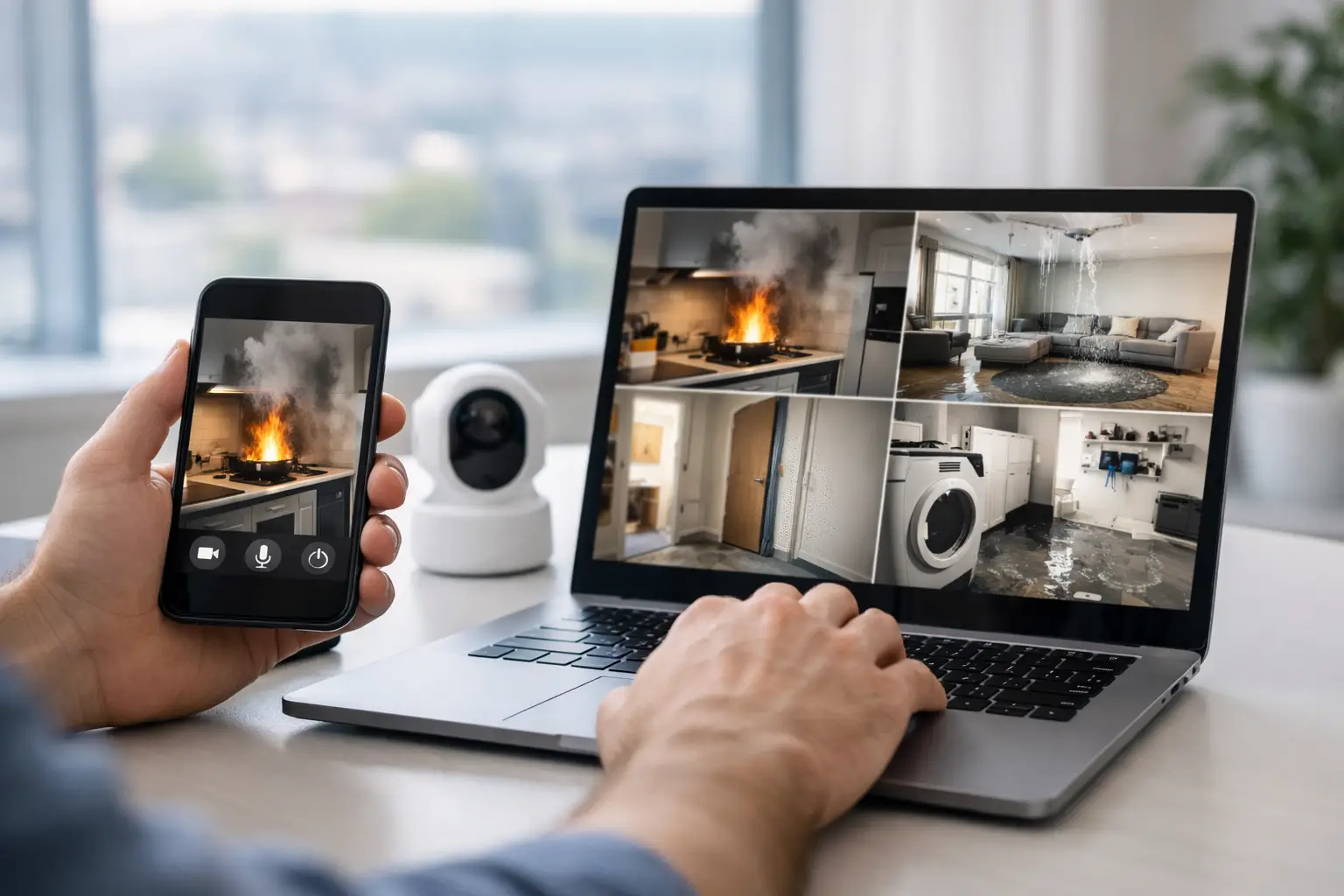
A 10 PM call: there's water on the floor, the circuit breaker tripped, or a window was left open after a storm. For second-home owners, knowing how to manage home emergencies remotely isn't a convenience. It's a real necessity, especially when the property remains empty for weeks or months, and every lost hour can increase damages.
On Elba Island, this issue weighs even more heavily. A continuously uninhabited house can be exposed to leaks, power outages, post-bad weather problems, small faults that quickly worsen, or simply situations requiring an on-site presence. When you live elsewhere, the real problem isn't just the emergency itself. It's the distance.
How to manage home emergencies remotely without improvising
The most common mistake is treating every problem as an isolated incident. In reality, effective management starts before the emergency. If there isn't a clear procedure, you end up wasting time searching for contacts, trying to figure out who can enter the house, verifying if the fault is real or just presumed, and making decisions without a precise overview.
A safer approach is to prepare a simple intervention chain. First, identify the problem; then, limit the immediate risk; finally, organize the technical solution. This order matters. If, for example, there's a water leak, the priority isn't immediately finding the perfect professional, but stopping the source of the damage and assessing the extent of the problem.
For a home on Elba, the decisive factor is having a reliable local contact. It's not enough to be able to call someone. You need a person or service that can enter the property, check carefully, document the situation, and coordinate the next steps.
The most common emergencies in a second home
Not all emergencies have the same urgency, but almost all worsen if left unchecked. The most frequent issues in unmonitored homes involve water, electricity, access, and general property conditions.
Water leaks and infiltrations
A small leak under a sink, a damaged pipe, a failing boiler, or an infiltration after heavy rains can turn into extensive damage in just a few hours. From a distance, it's hard to tell if it's a drip or a flood. That's why the initial on-site check is essential.
In these cases, you need to verify if water is still flowing, shut off the supply if necessary, check walls, floors, and adjacent rooms, and photograph everything accurately. Only then does it make sense to activate technical intervention. Acting in reverse often prolongs the time needed.
Blackouts, tripped circuit breakers, stalled systems
A power outage might seem like a minor problem, but in an empty house, it can have significant indirect effects. Refrigerators turn off, alarm systems deactivate, pumps or devices get stuck, and humidity increases in poorly ventilated environments. If the problem stems from the meter, the electrical panel, or an internal fault, immediate and competent verification is needed.
The same rule applies here: first ascertain the cause, then safely reactivate. Resetting a system without checks can be risky if the problem originates from a short circuit or faulty equipment.
Open windows, damaged shutters, effects of bad weather
Strong winds, heavy rain, and sea surges can leave clear marks, especially if no one checks the house after the event. A window left open or a damaged shutter are not minor details. They can let in water, dirt, humidity, and accelerate interior deterioration.
In these cases, the value of a local inspection is immediate. From a distance, you might receive fragmented news from a neighbor or an alarm, but only a direct check allows you to understand what really happened and what needs to be secured immediately.
Intrusion attempts or abnormal access
An open gate, a forced door, suspicious signs outside, or an unconfirmed alarm require clear thinking. When you're far away, anxiety can lead you to imagine the worst. Precisely for this reason, an ordered response is needed: external check, access verification, documentation, and, if necessary, activation of competent authorities.
Not every report indicates a real intrusion, but every report must be treated seriously. An uninhabited house must show attention and monitoring, even when the owner is not present.
What a truly useful emergency plan should include
Knowing how to manage home emergencies remotely means preparing in advance what, in a critical moment, you won't have time to organize. A useful plan doesn't have to be complicated. It has to be practical.
First, an essential archive is needed: available keys, authorized access, location of meters and valves, technical contacts, updated photos of main systems, any specific instructions for gates, alarms, or electrical systems. When this information is missing, even a small intervention slows down.
It's also useful to establish priorities. There are emergencies that need attention within a few hours, such as floods, forced entries, or electrical faults with immediate consequences. Others can wait a few days, but only after a check confirms their true extent. Without an on-site evaluation, everything seems urgent or, conversely, tends to be underestimated.
Another often overlooked aspect concerns operational authorization. Who can enter? Who can call a technician? Who can approve an urgent expense within a pre-established threshold? Deciding this beforehand avoids roadblocks precisely when speed matters most.
The limits of “pure remote” management
Many owners try to manage everything with phones, messages, and video cameras. In some cases, it's enough, but not always. Cameras show one angle, not the entire state of the house. A neighbor might report a problem, but often cannot intervene. A technician might be available, but without access or a local contact, their intervention becomes complicated.
The real difference is made by local presence. For a property on Elba Island, this means having someone who knows the area, can reach the house quickly, knows what to check, and keeps the owner clearly updated, without alarmism and without vagueness.
It's not just about fixing faults. It's about protecting the property's value, reducing exposure to risk, and maintaining continuous control throughout the year.
When periodic checks prevent emergencies
Emergency management often begins with prevention. Many serious problems arise from small, ignored anomalies: a sign of damp, an unusual smell, a jammed roller shutter, an electrical panel showing an anomaly, a window that doesn't close properly.
Periodic visits serve precisely this purpose. They don't eliminate every unforeseen event, but they greatly reduce the probability that a defect will turn into costly damage. In an empty second home, the lack of control is the real risk multiplier.
This is why a local supervision service should not be seen as a response only to problems that have already exploded. It is a form of continuous protection. On Elba Island, where many owners only stay for certain periods of the year, this type of monitoring has concrete and daily value.
Whom to trust when your home is on Elba
If the property is located in Portoferraio, Capoliveri, Porto Azzurro, Marciana, Marciana Marina, Campo nell'Elba, or Rio, the right question is not just who to call in an emergency. The right question is who can continuously monitor the property, intervene quickly, and serve as a stable point of reference when you are not there.
Effective local support must do three things well: truly check, communicate precisely, and coordinate necessary interventions. These are simple elements, but rarely found together. Elba Property Care was created precisely for this type of need: to offer owners of unmonitored homes on the island a reliable, present, and operational point of reference.
When distance comes into play, peace of mind doesn't depend on hoping nothing happens. It depends on knowing that if something does happen, someone is already ready to intervene judiciously and without wasting time.