How to Inspect Your Villa's Drainage System on Elba Island
How to inspect your villa's drainage system on Elba: practical checks, risk signs, and preventive measures to protect an empty home year-round.
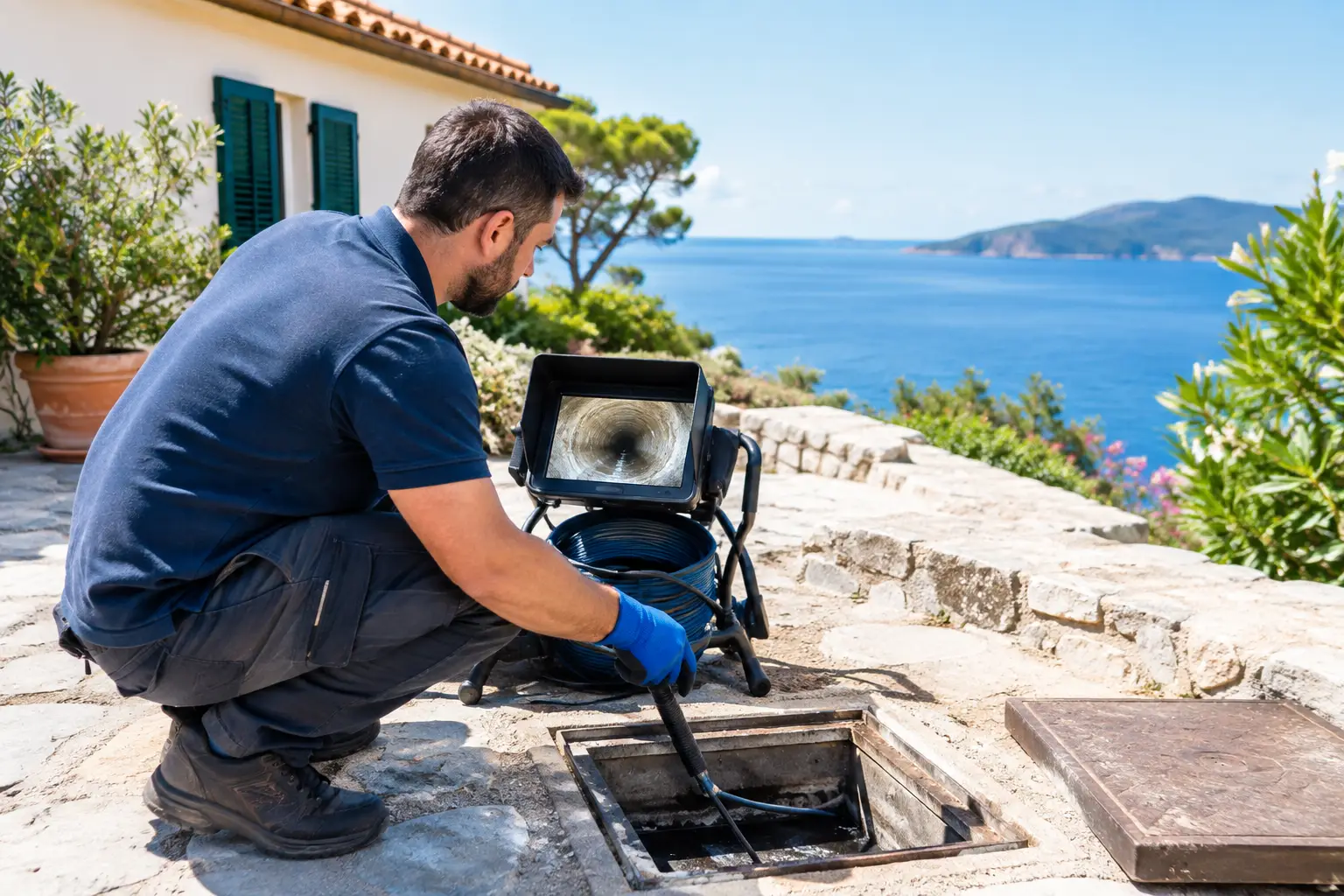
A leaking pipe doesn't give a warning when your villa is empty. It can act slowly, hidden behind furniture or under a floor, until a small anomaly turns into mold, bad odors, or significant damage. Knowing how to inspect your villa's drainage system on Elba is therefore an essential part of caring for a second home, especially during the months when no one is living there.
The inspection doesn't always require invasive intervention, but it must be regular, organized, and documented. The goal is not just to ensure water drains away; it's to identify the first signs of a problem before the property is exposed to leaks, stagnation, or unpleasant smells returning.
Why Drainage Systems Deserve Attention in an Unoccupied Home
In a villa used only for holidays or weekends, sinks, showers, bidets, and floor drains remain inactive for long periods. This inactivity can cause the water in the traps (siphons) to evaporate, which is the barrier preventing foul odors from rising from the pipes. Upon your return, the smell might seem like a minor inconvenience, but it's also a signal not to be ignored.
Elba Island adds specific conditions to consider: many homes are exposed to sun, salt spray, humidity, and periods of heavy summer use alternated with long months of closure. In properties with gardens, annexes, outdoor kitchens, or multiple bathrooms, the drainage network can also be more complex. One neglected point is enough to create a problem that manifests far from its origin.
Drainage inspection is therefore part of a preventive home supervision. It doesn't replace a plumber's intervention when necessary, but it allows you to call them promptly with precise information.
How to Inspect Drainage Systems in a Villa on Elba
An effective inspection starts indoors and calmly proceeds to external and technical areas. It's best to perform it when the property is empty or lightly used, making any noises, odors, and leaks easier to detect.
Check the Flow, Not Just the Sink
Turning on a tap for a few seconds is not enough. In kitchens, bathrooms, and laundry rooms, it's advisable to run water for a sufficient time to observe the drainage speed. The water should drain smoothly, without accumulating in the sink, shower, or outdoor tray.
A gurgling sound, an air bubble, or a drain that slows down more than usual can indicate a partial blockage or insufficient ventilation in the stack. The problem isn't always near the fixture where it manifests: in a multi-level villa, the source could be further downstream.
After running the water, observe for a few minutes. A siphon or connection with a slow leak might not immediately show drips but could leave moisture on the bottom of the cabinet, along the skirting board, or under the sink.
Examine Siphons, Connections, and Vanity Units
A visual inspection of accessible elements is one of the most useful steps. Under sinks and basins, look for stains, drips, whitish traces of limescale, rust on metal components, and warped wood. A swollen panel or a persistent odor in the cabinet requires attention even if no water is visible.
Check that connections and siphons are intact and haven't been bumped during cleaning, renovations, or stays. In sporadically used homes, a small problem can remain hidden for weeks. By the time it's discovered, moisture might have already affected furniture, walls, or coverings.
It's not advisable to dismantle components if you're unfamiliar with the system or if connections appear fragile. A careful check serves to detect anomalies, not to improvise a repair that could worsen a leak.
Inspect Showers, Tubs, and Floor Drains
Showers and floor drains deserve a dedicated test. Pour water slowly and check that it drains without pooling. In seldom-used bathrooms, adding water to the siphon helps restore the hydraulic seal against odors.
Grates with hair, sand, leaves, or soap residue should be cleaned carefully. In outdoor areas, the problem can arise from debris carried by wind or rain. However, if water struggles to drain after superficial cleaning, avoid aggressive chemical products: they can damage pipes, gaskets, and older systems without resolving a deep obstruction.
Also check bathroom corners, grout lines, silicone seals, and walls near the shower. A perfectly clear drain doesn't rule out leaks caused by deteriorated sealing. Dark stains, peeling paint, or a musty smell are sufficient reasons for further investigation.
Observe Kitchen, Laundry, and Connected Appliances
The kitchen sink collects grease and residues that, over time, can reduce the effective diameter of the pipes. Running water and checking for the absence of odors from the cabinet under the sink is good practice, but you should also look at the connections for dishwashers, washing machines, and auxiliary drains.
When appliances remain unused for long periods, gaskets and flexible hoses require a visual check. A kinked, hardened, or loose hose is an avoidable risk. If the house is closed for months, the position of the valves and their actual seal should be known to whoever performs the inspections.
Don't Neglect Manholes, Rain Gutters, and Outdoor Areas
Outdoor drains don't only concern bathroom water. Manholes, catch basins, channels, and rain gutters protect walls, courtyards, terraces, and villa entrances during rain. Leaves, soil, and pine needles can quickly obstruct them, especially after strong winds or storms.
A manhole must be accessible and inspectable, with no vegetation preventing its opening. During a site visit, it's useful to check that grates are clear, there are no unusual water puddles, and water isn't being directed towards the house. In the presence of septic tanks, sumps, or private treatment systems, maintenance must follow the system's specifications and be entrusted to qualified operators.
Signs Requiring Prompt Intervention
Some clues should not wait until the owner's next stay. A persistent sewage odor, water backing up from a drain, damp stains, leaks under a fixture, widespread gurgling, and external puddles after rain all require a technical assessment.
Abnormal water consumption also deserves attention if the property has a controllable meter. With the house closed and all uses suspended, a meter registering usage can suggest a leak. It doesn't necessarily indicate that the problem is in the drains, but it allows for intervention before water causes damage or unexpected costs.
If there is a risk of backflow or dirty water spillage, do not use the affected systems and do not attempt to clear the pipe with improvised tools. A technician is needed to identify the point of obstruction or breakage and to assess the entire line.
Create a Reliable Inspection Routine
Frequency depends on the villa's location, the age of the systems, the presence of outdoor areas, and how long the property remains closed. For many second homes, a periodic check is more effective than a single, long inspection performed only once before summer.
A well-organized routine includes testing internal drains, refilling siphons, checking furniture and connections, inspecting external grates, and recording any anomalies. Photographs and essential notes help compare the house's condition over time and provide clear instructions to a technician if needed.
For owners far from Elba, a local presence capable of continuously checking the property makes all the difference. Elba Property Care can incorporate drainage and sensitive point checks into scheduled visits, promptly reporting what requires attention and coordinating practical support on-site.
A well-maintained villa should hold no surprises when you open the door. Regular drainage checks protect the most delicate areas of the house and ensure you find it ready, dry, and welcoming upon your return to Elba.