How to control a second home remotely
How to control a second home remotely with regular checks, local presence, and constant prevention to avoid damage and unforeseen events.
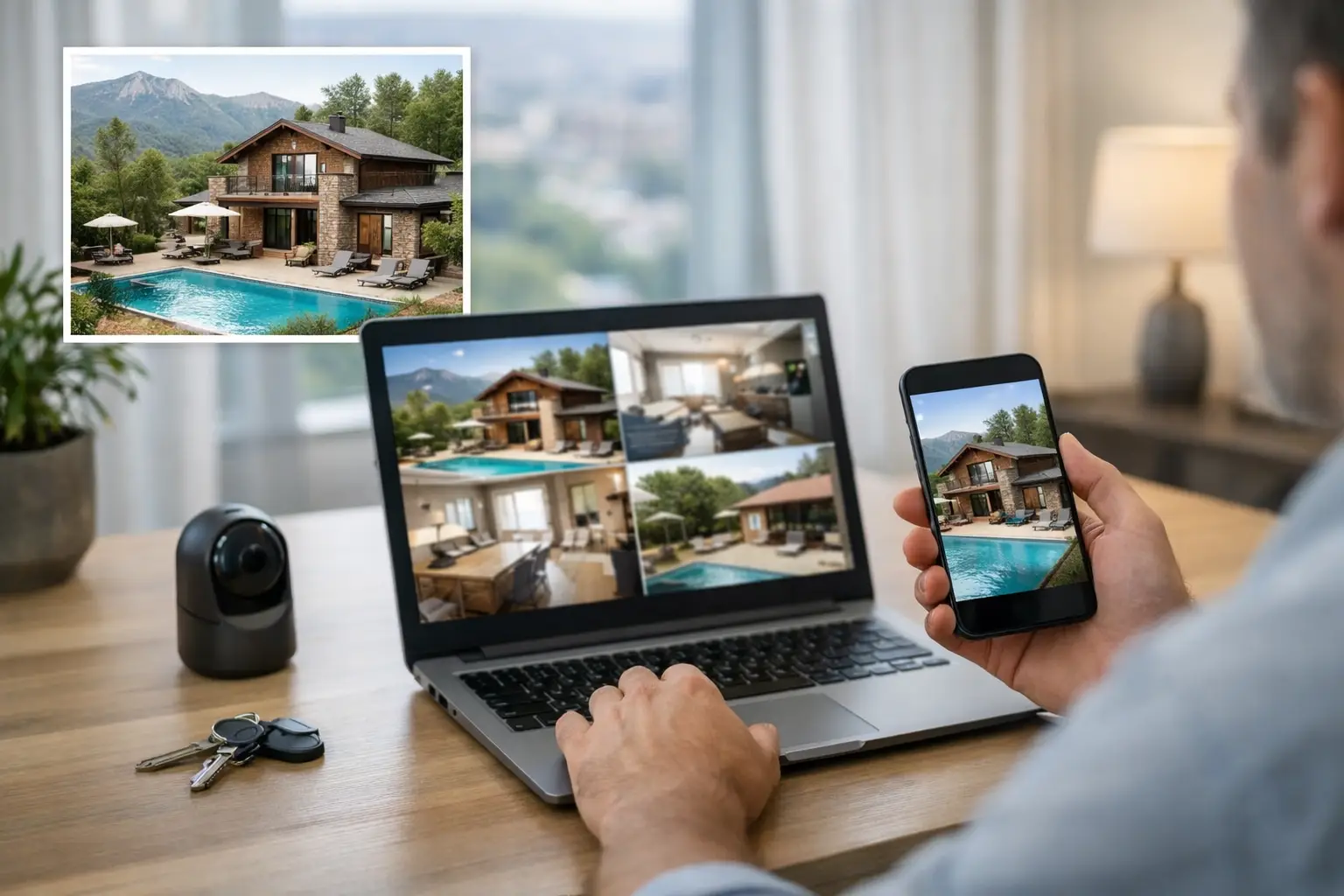
A house left empty for weeks or months never truly sits still. Humidity builds up, a small fault worsens, a window not properly closed becomes a risk, and a power outage can go unnoticed for too long. This is why understanding how to control a second home remotely is not just a matter of convenience, but of concrete property protection.
Those who own a home on Elba Island know this well. Distance makes everything slower: noticing a problem, verifying it, finding a reliable person on-site, and intervening in a timely manner. When a property is not continuously inhabited, the difference comes not from an improvised solution, but from a regular monitoring system, with a local presence and preventive checks.
How to effectively control a second home remotely
Remote management only works if it's based on real checks, not just the feeling that “everything is fine.” A second home needs to be seen, opened, inspected, and monitored. Cameras can help, as can smart devices, but they don't replace an attentive presence on-site.
The central point is this: remote control doesn't mean doing everything from afar. It means organizing a reliable local presence that allows the owner to know the condition of the property, how frequently it's checked, and who intervenes if an anomaly arises.
In practice, effective control is based on three elements. The first is continuity, because sporadic visits are of little use if a problem arises between one check and the next. The second is method, which means a clear routine of checks. The third is local responsibility, indispensable when the owner cannot arrive immediately.
The most common risks of an unattended home
Many owners first think about security against intrusions or attempted access. This is a real concern, but not the only one. Often the most costly damages come from ordinary problems that remain invisible for too long.
A minimal water leak, for example, can cause mold, stains, and deterioration of furniture and finishes. Stagnant humidity can compromise enclosed spaces for months. Electrical systems, appliances, fixtures, and alarm systems also need periodic checks. If something stops working while the house is empty, the problem is not just the fault itself, but the time that passes before someone notices it.
In locations like Elba Island, a second home is often exposed to salt spray, wind, heavy rain, or long periods of seasonal closure. This makes constant supervision even more useful. The house should be thought of as a living asset, requiring attention even when the owner is away.
What needs to be checked during visits
A serious check is not limited to “taking a look.” It involves verifying access points, fixtures, shutters, any signs of forced entry, internal conditions of rooms, presence of humidity or anomalous odors, status of meters and systems, any leaks, proper functioning of essential utilities, and conditions of outdoor spaces.
If the property has a garden, terraces, or exposed areas, these points also deserve attention. Accumulated leaves, infiltrations, standing water, or small external criticalities can quickly become more serious problems.
Technology yes, but with precise limits
When considering how to control a second home remotely, the first idea is often to rely entirely on home automation. Sensors, alarms, video cameras, and remote control of lights or air conditioning are useful tools. They help to receive quick alerts and maintain a certain visibility into the house.
The limit is that technology signals an issue, but doesn't solve it. A sensor can indicate an anomaly, but someone still needs to go and check. A camera shows a partial image, not the real state of the entire property. Furthermore, devices and connections can experience interruptions, false alarms, or uncovered areas.
For this reason, the best solution is not to choose between technology and human presence. It's to combine them. Technology improves control, but true protection comes when there's also a local point of contact who can enter the property, verify in person, and act immediately.
The value of a stable local contact
If the owner lives far away, the decisive factor is knowing who has the keys, who knows the house, and who can intervene without wasting time. Relying on different people each time creates uncertainty. Relying on a willing neighbor may be fine for occasional cases, but it doesn't always offer continuity, method, and operational responsibility.
A home-watching service is precisely designed to fill this gap. It's not just about availability. It's a program of planned checks, with periodic inspections, feedback on the property's condition, and rapid management of anomalies. This approach reduces the risk of a small sign being overlooked.
For many owners, the true relief is not just knowing that someone can intervene. It's knowing that someone is checking before the intervention becomes urgent.
How to organize a truly useful control system
The solution varies based on the type of property, the period of absence, and the level of risk exposure. A house used only in summer will have different needs compared to a villa visited multiple times a year. The presence of a pool, garden, complex systems, or independent access also affects the type of control required.
Therefore, a proportionate plan is needed. In many cases, it's advisable to establish periodic visits throughout the year, with greater frequency during months of disuse or after intense weather events. It's also useful to define a clear checklist: opening and airing rooms, internal and external visual inspection, checking systems and utilities, collecting any accumulated mail, and immediate reporting of problems.
Those who want serious control should ask not only “how often is the house visited,” but also “what exactly is checked” and “who takes operational management if something goes wrong.” Without these answers, the control remains incomplete.
When to increase the frequency of checks
There are times when a second home requires more attention than usual. After heavy rains, wind, storms, or long periods of closure, an additional visit can prevent greater damage. The same applies before the arrival of owners or guests: a preventive check ensures the house is ready, functional, and in order.
Seasonal changes also deserve attention. Moving from humid months to warm months, or vice versa, tests the integrity of environments and systems. During these phases, a scheduled check has concrete value.
How to control a second home remotely without stress
The safest way to reduce anxiety is not to receive more notifications on your phone. It's to have fewer unforeseen events. For this reason, remote control must be simple for the owner and rigorous on-site. If every anomaly requires phone calls, urgent searches, and improvised decisions, the system is not truly protecting the house.
A well-organized approach works when the owner knows there is a constant, discreet, and reliable presence. Someone who knows the property, performs regular checks, recognizes the signs of a problem, and acts quickly. In the context of second homes, prevention is worth more than emergency management.
This is where a specialized service makes a difference. Companies like Elba Property Care work on precisely this principle: not just intervening when damage is already visible, but keeping the property under control throughout the year, with continuity and local responsibility.
The most prudent choice is also the most economical over time
Many postpone organizing professional control because they first think about the cost. It's understandable. But an unattended second home can generate much higher expenses: delayed repairs, restoration work, extraordinary cleaning, replacements, wasted time, and remote stress.
The correct assessment is not how much it costs to control a house, but how much it can cost not to control it. And especially how much it's worth being able to rely on continuous, discreet, and reliable supervision when you are not present.
If the house remains empty for long periods, remote control should not be left to chance or occasional checks. Peace of mind comes from a regular presence, expert eyes on-site, and a system designed to prevent, not chase problems. This is what allows a second home to truly remain ready, protected, and under control, even when you are elsewhere.