How to Close Your Elba Island Beach House Before Leaving
How to securely close your Elba Island beach house: essential checks, prevention, and local supervision to keep your property protected all year round.
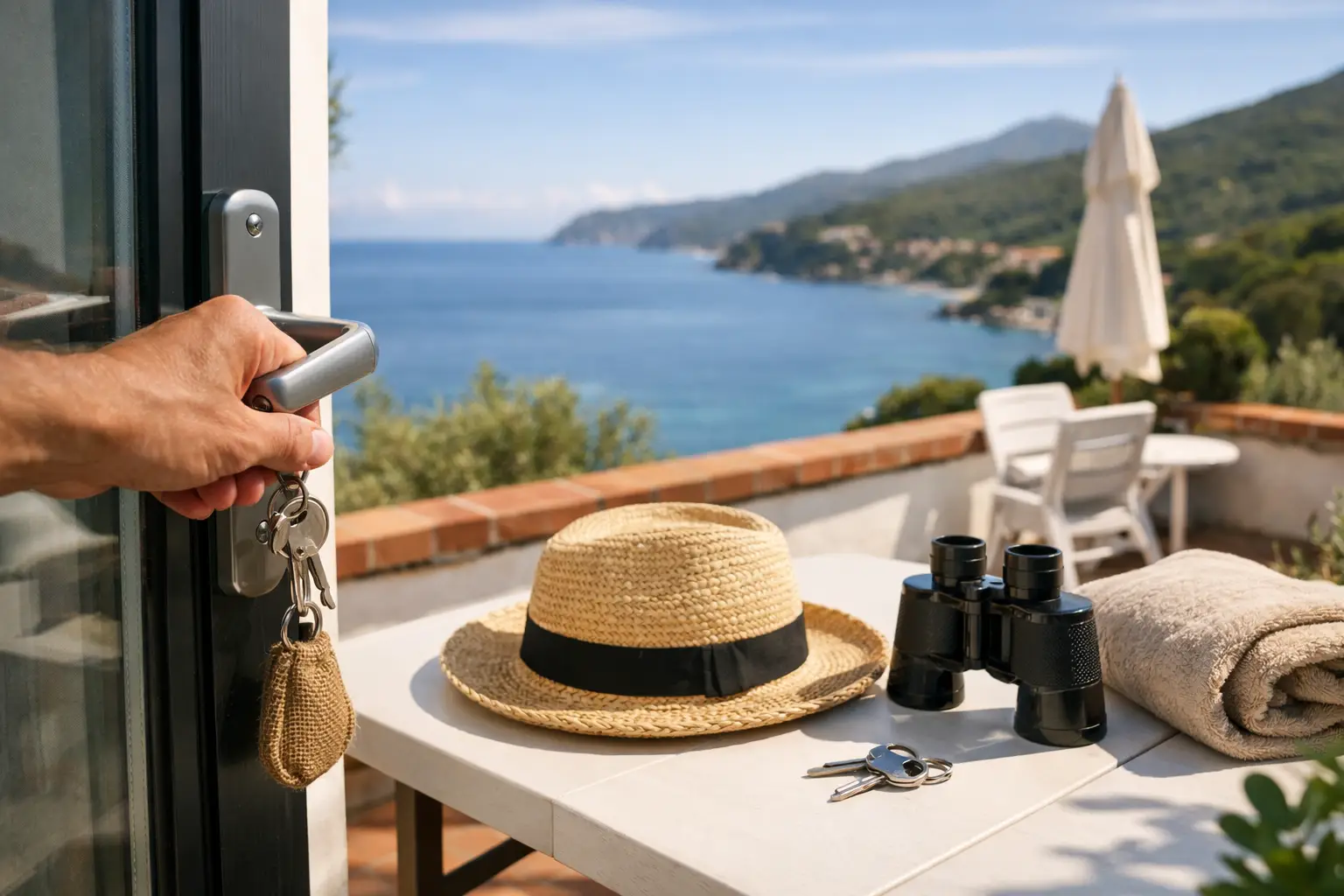
A beach house on Elba, when left empty, isn't just a closed house: it's a property exposed to salt air, wind, storms, humidity, and small unforeseen issues that, without someone on-site, can become costly. Understanding how to close your Elba Island beach house therefore means preparing it for your absence methodically, not just turning the key in the lock.
The correct closure method varies based on the season, the property's location, and the expected duration of absence. An apartment in the center of Portoferraio requires different attention than a more isolated villa in Capoliveri, Marciana, or Marina di Campo. However, the goal remains the same: to leave the property protected, tidy, and verifiable until your next arrival.
How to close your Elba Island beach house without leaving hidden risks
The first point concerns utilities. Before leaving, turn off the gas, check that no unnecessary appliances are running, and assess which electrical devices need to remain powered. Refrigerators, alarm systems, pumps, or smart home devices may require different management: there isn't a one-size-fits-all solution for every house.
If you switch off the electricity, it's best to do so knowing exactly which systems will stop working. An automatic gate, a lift pump, or a video surveillance system could depend on power. If the system remains active, it's wise to unplug non-essential appliances and check the electrical panel, especially after a period of intense use.
Water deserves the same attention. Turning off the main tap reduces the risk of leaks while the house is empty. This is a particularly useful precaution for long absences but must be coordinated with any systems that require water supply. In a house with a garden, pool, or dedicated technical systems, turning everything off without verification can create a problem instead of solving it.
Before leaving, check taps, visible drains, flexible hoses under sinks, and toilet cisterns. A drip today can turn into a significant leak if no one enters the house for weeks. Photographing the water and electricity meters can be useful for a clear reference upon your return.
Windows, shutters, and doors: protection without imprisoning the house
Properly securing access points doesn't mean blindly sealing every room. Doors, windows, shutters, and blinds must be checked one by one, including secondary entrances, utility rooms, cellars, and external storage areas. In coastal homes, hardware and locks easily suffer from salt air: a closure that seems to work in summer can become difficult to manage after months of inactivity.
Completely closed shutters protect from sun and external views, but in some properties, they can excessively limit air circulation and retain humidity. The choice depends on exposure, the condition of the fixtures, and the presence of security systems. For short absences, a different configuration may suffice compared to winter closure.
Also check external awnings, umbrellas, terrace furniture, and light accessories. The wind on Elba Island can move, damage, or make dangerous objects left outdoors. Chairs, cushions, clotheslines, unstable pots, and garden toys should be stored or secured. It's a simple check, but it often prevents damage to the house and neighboring properties.
Humidity, salt air, and stale air: checks that prevent surprises
In a second home by the sea, humidity should not be considered a minor nuisance. Closed wardrobes, poorly ventilated bathrooms, damp textiles, or rooms without air circulation can foster bad odors, mold, and surface deterioration. Before leaving, leave the house clean and perfectly dry: towels, mats, sponges, and damp laundry should not remain inside.
Emptying the refrigerator is essential if it's turned off. After cleaning and drying it, leave the door slightly ajar to prevent odors and mold. Dishwashers and washing machines should also be emptied, dried, and left in the conditions indicated by the manufacturer. Waste should always be removed, without exception: just a few days of closure can be enough to create an unpleasant problem.
Salt air requires an extra step. Cleaning railings, external handles, fixtures, and metal components before a long absence helps limit the corrosive action of salt. It's not extraordinary maintenance, but a concrete form of prevention. Similarly, checking gutters, external drains, and water runoff points is particularly useful before the rainy seasons.
Garden, terraces, and outdoor systems
Outdoor areas should not be forgotten just because they are not under lock and key. A neglected garden makes it harder to spot anomalies, encourages leaf accumulation, and can hide small damages to fences, irrigation, or furniture. If the house has an irrigation system, check programming, leaks, and connection status before departure.
For pools, water pumps, electric gates, and technical systems, the rule is to avoid improvised solutions. Each system has specific needs, and for prolonged absences, it should be periodically checked by a competent person present on the island. Leaving a system on unsupervised can be risky; turning it off without knowing the consequences can be equally so.
Security: making the house closed, but not invisible
Good closure also includes practical signs of presence and control. An active alarm is only useful if someone can receive a notification, verify what's happening, and intervene locally if necessary. The same applies to cameras and sensors: seeing a notification from afar won't fix a malfunction, an open window, or a flood.
Leave essential information with a reliable contact: updated contacts, access instructions, meter locations, necessary codes, and contacts for any technicians. Avoid hiding keys in predictable spots, such as flowerpots, mailboxes, or under doormats. Organized key management is part of property security.
For those living far away, the most effective measure remains scheduled supervision. A periodic visit allows checking that doors and windows are intact, that there are no leaks, abnormal odors, signs of humidity, utility problems, or consequences of bad weather. It also allows identifying a detail before it becomes an urgent intervention.
Elba Property Care operates exclusively on Elba Island precisely to offer this continuous presence to non-resident owners. The value is not just checking an empty house: it's knowing that someone is watching it carefully, understands the local context, and can clearly communicate what they find.
The useful checklist before leaving Elba
In the last hours before departure, take a tour of the house always following the same order, from outside to inside. Check access points, utilities, bathrooms, kitchen, terraces, and technical rooms. A repeatable check reduces oversights more than memory, especially after intense days of arrivals, guests, and preparations.
Note any small anomalies already present: a stain on the ceiling, a shutter that's hard to close, a dripping faucet, a non-working outdoor light. Not all require immediate intervention, but ignoring them until the next season can increase time and costs. The most useful prevention is often done when the problem is still small.
Properly closing a beach house means being able to leave peacefully, without turning every storm or weather alert into a worry. If the property remains empty for a long time, entrusting regular checks to a local presence is the most concrete way to protect what you've chosen on Elba and find it ready when you return.