How to check on an empty house in Elba
How to check on an empty house in Elba: essential checks, risks to prevent, and when to rely on consistent local supervision.
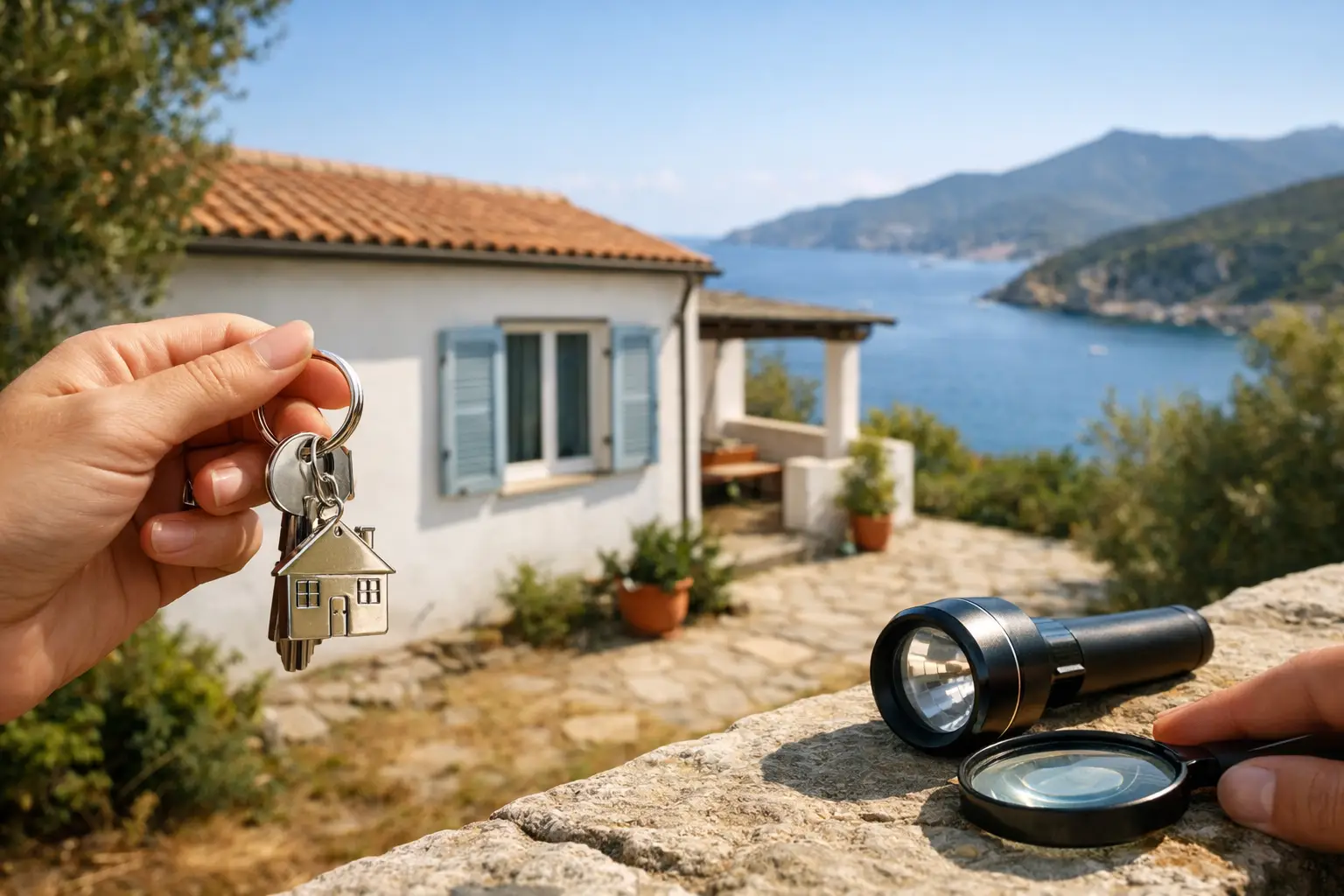
An empty house may seem dormant, but in reality, it continues to change every day. A small leak, a blackout, a window not perfectly sealed, or an ignored damp smell can turn a peaceful absence into a costly problem. This is why understanding how to check on an empty house isn't just a formality: it's a concrete measure of protection, especially if the property is on Elba Island and the owner lives elsewhere.
What it really means to check on an empty house
Checking a house doesn't just mean opening the door, taking a quick look, and closing it again. A thorough check helps determine if the property is secure, dry, intact, and ready to remain empty for weeks or months without developing hidden critical issues.
When a house remains uninhabited, small signs become crucial. A stain on the ceiling might indicate a leak that has just begun. A tripped circuit breaker could suggest an electrical problem or a simple power surge, but it needs to be differentiated immediately. Locks, shutters, fixtures, and access points must confirm that the home is truly protected. The state of the indoor air also matters: mold, salinity, and stagnant air are among the first effects in closed houses near the sea.
On Elba, this aspect is even more significant. The climate, humidity, and exposure to atmospheric agents can accelerate the deterioration of a property left without continuous supervision.
How to check on an empty house without overlooking critical points
Effective checks always start from the outside. Before entering, it's advisable to observe the facade, access points, windows, shutters, gates, terraces, and surrounding areas. If there's a sign of forced entry, a shutter off its track, a door swollen by humidity, or a damaged fence, the problem must be detected immediately. Even the garden or outdoor spaces speak clearly: overgrown vegetation, standing water, accumulated leaves in drainage points, and animal tracks are signals not to be underestimated.
Once inside, the check must be methodical. Opening and closing without a system risks missing important elements. It's best to always follow the same path, room by room, to compare each visit with the previous one.
Leaks, humidity, and odors
The first check concerns water, as this is the damage that most often worsens silently. Ceilings, corners, perimeter walls, the backs of furniture, bathrooms, the kitchen, and areas near windows and French doors must be inspected. It's not just about visible water. Stains, peeling paint, flaking plaster, darkened grout, and unusual odors also matter.
In an empty house, smell is a very useful indicator. If a stronger-than-usual scent is noticed upon entering, there could be a problem with poor ventilation, trapped humidity, or dry drains. It's not always an emergency, but it's almost always a sign that requires attention.
Electrical system and refrigerators, pumps, devices
After water, comes electricity. It must be checked whether the electrical panel is in order, if any circuit breakers have tripped, and if any appliances left on are functioning as expected. In some second homes, a refrigerator, an alarm system, a pump, or a dehumidifier might be left on. A visual and functional check prevents discovering too late that an appliance has been out of order for weeks.
Balance is needed here. Not everything should remain on, but not everything should always be turned off. It depends on the season, the type of property, and the installed systems. A villa with technical rooms, cisterns, or automatic systems requires different checks compared to an apartment used only in summer.
Fixtures, locks, and access points
Knowing how to check on an empty house also means verifying if the physical protection of the property is still reliable. Doors, windows, gates, shutters, grilles, and locks must close properly, without play or deformation. If a fixture has absorbed humidity or salt, it can lose its seal even if it appears intact.
It's also advisable to check less obvious points: secondary access points, garages, technical rooms, outdoor storage areas, and accessible terraces. In vacant homes, problems often arise precisely where no one consistently looks.
Periodic checks matter more than occasional checks
Many owners think that a visit before winter and one before summer is enough. In reality, this is not always sufficient. The real issue is not just doing a check, but doing it regularly.
An empty house changes over time when vacant for long periods. An element that today only needs monitoring might become an urgent intervention three weeks later. This is the difference between mild condensation and extensive mold, between a small leak and ceiling damage, between a simply neglected garden and an outdoor area difficult to restore.
For this reason, the frequency of checks must be tailored. It depends on the house's exposure, its proximity to the sea, the season, the presence of outdoor spaces, the age of the systems, and the owner's absence duration. A property closed in Portoferraio or Marina di Campo, for example, may require different attention compared to a more exposed and isolated property.
When remote monitoring is not enough
Cameras, sensors, and home automation are useful, but they don't replace a local presence. They can signal movement, an anomalous temperature, or a power outage. They cannot detect the smell of stale air, verify if a wall is starting to swell, check if a shutter has failed, or if the wind has moved something outside.
Even images don't tell the whole story. A camera in the living room doesn't see behind a piece of furniture, doesn't enter the technical room, and doesn't assess the true condition of fixtures and humidity. Technology helps, but an empty house still needs to be seen in person.
This is even truer for those who live far from Elba and cannot intervene quickly. Waiting for the next stay at home, perhaps after months, often means arriving too late.
How to organize a reliable check on Elba Island
If the owner cannot be present continuously, a clear method is needed. The check should include scheduled inspections, consistent monitoring of sensitive points, and timely reporting if anything unusual emerges.
It's not enough to have someone who occasionally passes by. What's needed is a presence that knows what to observe, distinguishes a minor sign from a real risk, and maintains a history of the property's conditions. Only then does supervision become concrete protection and not just occasional presence.
For a second home on Elba, this means having a local point of contact able to check the property throughout the year, especially during long periods of absence. Those who live off the island need continuity, not generic impressions. Knowing that the house has been opened, checked, and properly secured offers a much different level of peace of mind compared to an occasional check.
Common mistakes when checking an empty house
The most frequent mistake is just checking if "everything seems okay." Empty houses can appear perfect while already having an ongoing problem. Another mistake is performing checks too quickly, without sequence and without comparison to the previous visit.
Then there's the tendency to consider exteriors secondary. In reality, roofs, terraces, gardens, gates, drains, and perimeter walls are often the first points where something changes. Ignoring small odors or minimal variations in humidity is also a typical mistake. In empty houses, serious damage rarely comes without warning.
Finally, many only intervene when the problem is already visible from a distance. But the value of a good check lies precisely in intercepting what is not yet evident.
How to check on an empty house in a truly protective way
If the house remains uninhabited for short periods, the owner can often organize specific checks independently. However, if the absence is prolonged, the check must become part of a routine protection strategy. It's not a bureaucratic matter, but a choice of prevention.
For a property on Elba Island, distance complicates everything: intervention times, coordination, control of unforeseen events, and simple confirmation that the house is truly in order. In these cases, constant local supervision becomes the most concrete way to protect the property between stays. This is the approach that Elba Property Care also uses: regular checks, attention to initial signs, and direct oversight of the property when the owner cannot be there.
An empty house doesn't demand grand gestures. It requires presence, method, and expert eyes at the right time. This is how you avoid finding, upon the next opening, a house that has truly been left alone in the meantime.