Elba Garden Management Guide for Second Homes
Elba garden management guide: seasonal checks, irrigation, and local interventions to protect your second home all year round, even from a distance.
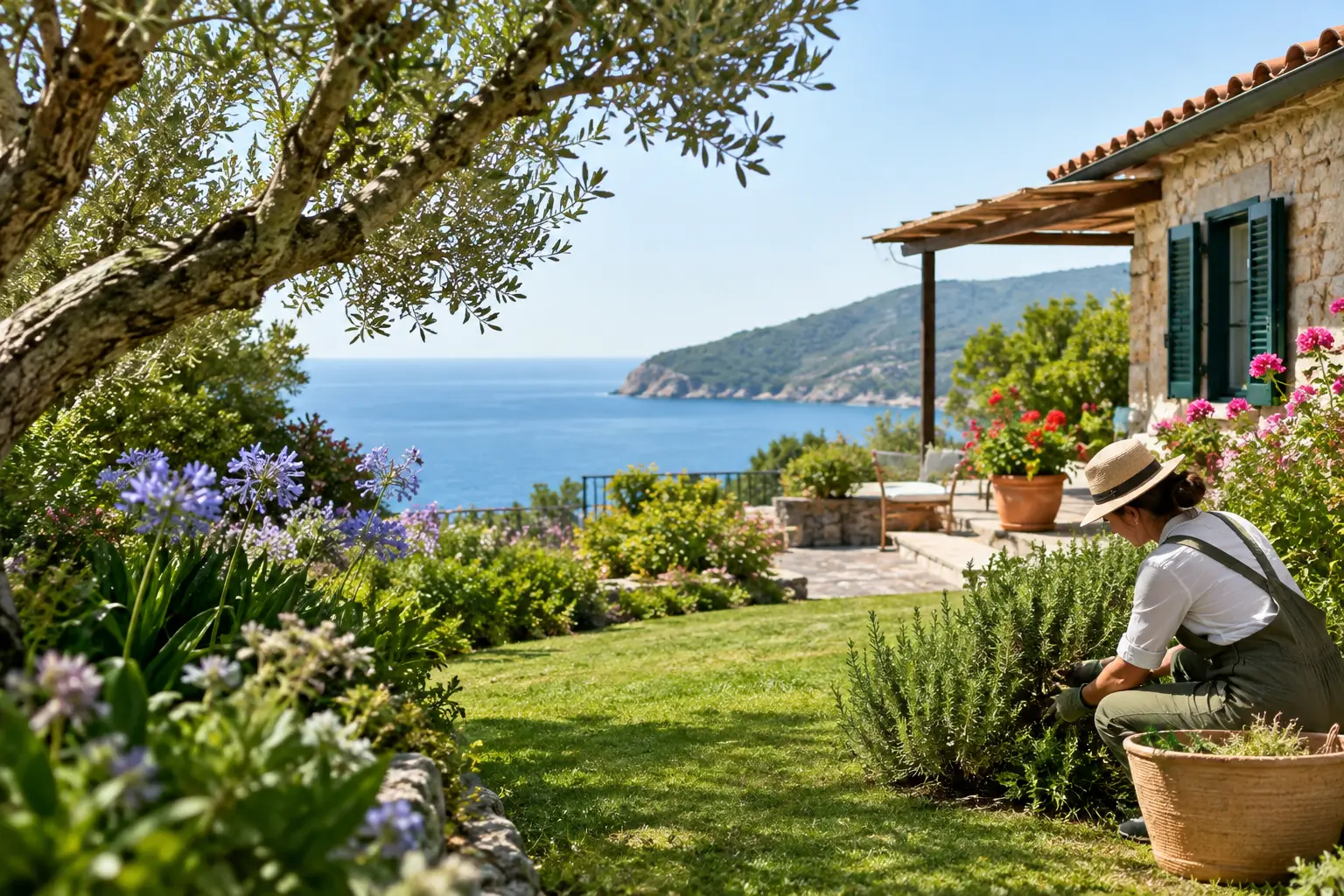
A garden left unattended can change dramatically in just a few weeks: a blocked irrigation system, wind breaking a branch, vegetation encroaching on a pathway, or water pooling near the house. This Elba garden management guide is designed for those who own a second home on the island and want to find their outdoor spaces tidy, safe, and livable every time they return, even when living far away.
On Elba, the garden is an integral part of the property. It protects privacy, enhances the value of the villa or holiday home, and shapes the first impression for visitors. However, it requires presence, especially during periods when the house remains closed. Management isn't just about mowing the lawn; it means preventing damage, checking systems, and intervening before a small problem becomes an urgent and costly job.
Elba Garden Management: Why Continuity Matters
The island climate offers many advantages, but it also exposes outdoor areas to variable conditions. Intense sun, wind, salt spray in coastal zones, and periods of concentrated rain affect plants, surfaces, and irrigation systems. A well-designed Mediterranean garden may require less water than a traditional lawn, but it's not a garden that can be forgotten for months.
Distance makes it harder to assess the true condition of the property. A photo sent by a neighbor might show a well-kept corner, but not a damaged pipe, a malfunctioning control unit, or a precarious branch over the driveway. Scheduled local checks allow for an overall assessment and decisions based on what is actually happening.
For a house in Portoferraio, Capoliveri, Campo nell’Elba, or in more secluded areas of the island, priorities can change based on exposure, proximity to the sea, soil type, and the presence of mature trees. This is why effective management always starts with the specific characteristics of the garden, not a generic calendar.
What to Check When the House Is Empty
A well-maintained garden is first and foremost a garden observed regularly. During inspection visits, it's useful to check the condition of the greenery, but also everything that could affect the safety of the house and the accessibility of the property.
Irrigation deserves particular attention. It's necessary to check that the control unit is active, that programs are consistent with the season, and that there are no visible leaks. A system that continues to over-irrigate can damage roots and soil, as well as lead to unnecessary consumption. Conversely, a deactivated control unit in the middle of summer can quickly compromise hedges, potted plants, and new plantings.
Equally important is checking for dead branches, leaning trees, vegetation growing against gates or fences, and accumulated leaves in drainage points. After episodes of strong wind or heavy rain, these aspects require closer inspection. Not everything requires immediate intervention, but everything must be assessed before it obstructs access, damages a surface, or creates a risky situation.
A thorough visit should include at least these distinct checks:
- visible operation of the irrigation system and condition of control units;
- condition of lawn, hedges, flowerbeds, potted plants, and trees;
- pathways, outdoor stairs, driveways, terraces, and areas around the pool;
- gates, fences, boundary walls, and water collection zones;
- presence of green waste, signs of infestations, or damage after bad weather.
Frequency depends on the season and the complexity of the property. In warmer months, when irrigation and vegetative growth demand more attention, checks should be more frequent. In winter, however, checks after rain, wind, and prolonged periods of inactivity may take precedence.
Irrigation: Consume Less Without Letting Greenery Suffer
Water is one of the most delicate aspects of managing a second home garden. It's not enough to set a program once and leave it unchanged all year. Temperatures, wind, rain, and plant growth phases all change water requirements.
A well-managed system is gradually adapted. In spring, check that nozzles and drippers are working without obstructions and that vegetative regrowth is uniform. In summer, verify that water reaches the necessary areas during the most suitable time slots, avoiding waste and stagnation. In autumn, the program should be reduced based on rainfall, while in winter it may be necessary to suspend or protect certain parts of the system.
The best solution isn't always to irrigate more. An extensive lawn, for example, requires more consistency than a garden with Mediterranean essences, draining gravel, and mulched areas. If the house remains empty for a long time, it may be more prudent to favor species compatible with the Elba context and a system that is simple to monitor. The choice depends on the desired effect, exposure, and water availability, but also on the level of assistance that can be guaranteed throughout the year.
Seasons Require Different Interventions
Routine maintenance becomes more reliable when it follows a seasonal plan. It's not necessary to intervene heavily every month, but it is necessary to know what to observe and when to act.
Spring: Preparing for Growth
As temperatures rise, the garden enters an active phase. It's time for light pruning, scheduled fertilization, cleaning of flowerbeds, and restarting irrigation. Potted plants also need careful observation: they are often the first to suffer from insufficient irrigation or windy days.
It's also useful to check the accessibility of outdoor spaces before the house's usage season. Clean paths, tidy furniture, and contained vegetation make it easier to organize an arrival without unforeseen issues.
Summer: Protect and Monitor
In summer, the goal is to maintain balance. Grass and hedges may require more frequent interventions, while the irrigation system must operate with precision. In properties near the sea, salt spray and wind can stress leaves, furniture, and light structures.
When the house is empty during the hottest period, a scheduled check is a tangible protection measure. It allows for the identification of a leak, a fallen pot, a dry area, or an accumulation of branches before the arrival of owners or authorized guests.
Autumn and Winter: Securing the Property
In autumn, cleaning and leaf management activities increase, especially where pines, fruit trees, or faster-growing species are present. Drainage channels, grates, and low-lying ground areas must remain clear to facilitate proper water runoff.
Winter is not a total break. It's the period when wind and rain can highlight hidden problems: weakened branches, damaged fences, standing water, or erosion. After significant weather events, an external verification provides the owner with reliable information on the state of the house and its perimeter.
Coordinating Suppliers Without Losing Control
For specialized work, such as major pruning, irrigation repairs, or tree interventions, it's normal to rely on local professionals. The point isn't to do everything with a single point of contact; it's to have someone who can detect the problem, facilitate access, and verify that the area is left tidy.
This presence is particularly useful for those who live off Elba. It prevents a small intervention from turning into a sequence of phone calls, missed appointments, and doubts about the outcome. Local supervision creates continuity between the owner, the garden, and suppliers, maintaining clear responsibility for each step.
Elba Property Care supports second home owners with scheduled checks and practical on-site assistance. The goal is not to replace the gardener or agronomist, but to ensure that the property does not remain unattended between owner visits.
A Garden Ready When You Decide to Return
A well-maintained exterior doesn't mean constant perfection. It means knowing that irrigation, access points, vegetation, and sensitive areas are regularly observed and that any anomalies do not go unanswered. For a second home on Elba Island, this continuity protects the value of the property and makes every arrival simpler.
The most useful choice is to establish a realistic plan, tailored to the garden and periods of absence. When the green spaces have reliable local oversight, even from afar, the house continues to send a clear signal: it is inhabited, cared for, and ready to welcome you.