Closed vs. Monitored Villa on Elba: What's the Difference?
Closed vs. monitored villa on Elba: discover what changes for security, checks, and continuity when a second home remains empty for months between uses.
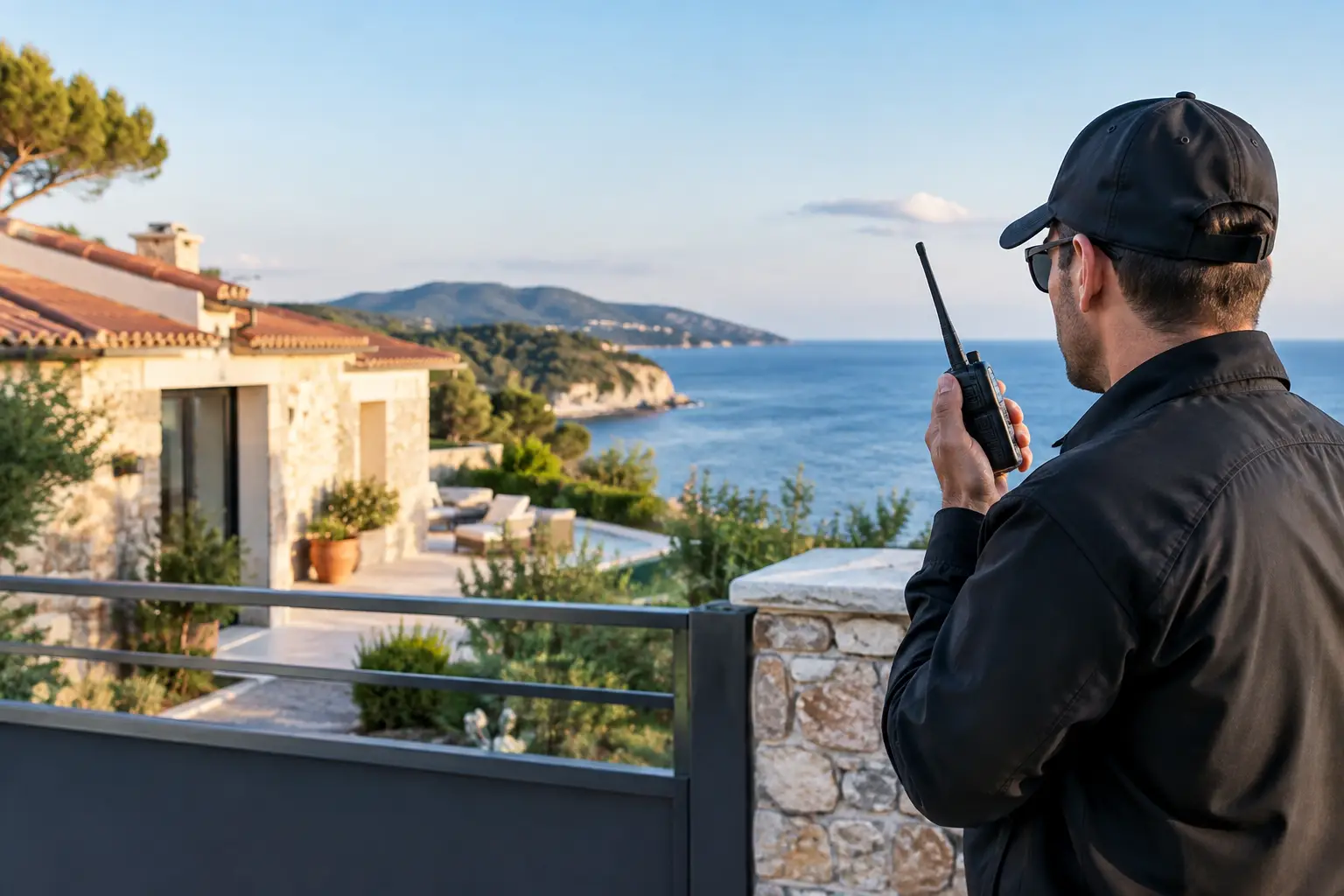
A closed vs. monitored villa on Elba isn't just a different management habit. It's the distinction between leaving a property unchecked for weeks or months and knowing that someone regularly verifies its conditions, intervenes when necessary, and remains a concrete point of contact on-site. For those who live far from Elba Island, this presence makes all the difference, especially when the house is empty.
A villa might appear perfectly in order at the time of departure. However, a hidden leak, a power outage, a gate damaged by wind, or an infiltration after heavy rain won't wait for the owner's next visit. The risk doesn't only depend on exceptional events; often, it's the lack of regular checks that turns a small sign into a more costly and difficult-to-manage problem.
Closed vs. monitored villa on Elba: the real difference
A closed villa is a house left empty with utilities, access points, and systems entrusted to the passage of time. It may have locked doors, an active alarm, and helpful neighbors, but it doesn't necessarily receive scheduled checks. The owner might feel that everything is protected, without, however, having updated information on the actual condition of the property.
A monitored villa, on the other hand, is a property integrated into a routine inspection schedule. A local contact visits the house according to an agreed-upon calendar, observes the most exposed elements, and communicates findings to the owner. Supervision doesn't replace a security system or promise to eliminate every risk, but it adds what a closed house lacks: continuous attention and local response capability.
A closed house can remain invisible for too long
The main limitation of a property that is simply closed is the time spent without verification. If a faucet drips in a rarely used bathroom, if a roller shutter jams, if a sensor signals an anomaly, or if humidity starts to concentrate in a room, no one can notice until they enter the villa.
This interval might be short for those who visit Elba every week, but it becomes significant for those who live in another city, abroad, or only reach their second home in the summer. Relying on the hope that everything remains unchanged is not a protection strategy; it's the absence of verification.
A monitored house has eyes on site
The monitoring of a villa translates into regular visual and practical checks. During a visit, access points, fixtures, external conditions, signs of infiltration, the general state of the rooms, and the essential functioning of systems or utilities can be verified, according to the agreed-upon service.
The value lies not just in the inspection, but in the continuity. Someone who knows the property can notice a change from the previous visit: a stain appearing on a wall, vegetation invading a pathway, an unusual noise, a gate left open, or a meter showing unusual behavior. These are details that, if detected early, allow for a clear-headed assessment of the most suitable solution.
Why a villa on Elba requires periodic checks
Elba Island offers an extraordinary setting for living and vacationing, but an unoccupied house is exposed to the normal effects of the climate, sea salt, and seasonality. Properties near the coast may be more affected by marine air on gates, railings, fixtures, and external components. In hilly or more exposed areas, wind and rain can require attention to roofs, terraces, gutters, and green spaces.
The time of year also matters. Winter can mean months of less owner presence; spring often requires checking the house before reopening; summer increases the importance of having a ready, tidy, and functional property upon the arrival of family or guests. Well-organized supervision follows these phases instead of treating every month the same way.
Not all villas have the same needs. An apartment in an occupied condominium, with limited outdoor spaces, has different requirements than an independent villa with a garden, pool, automatic gates, and multiple systems. For this reason, the frequency of visits should be defined based on the concrete characteristics of the property and the time it remains vacant.
The checks that allow for timely intervention
An effective home watching visit doesn't just consist of opening the door and closing it a few minutes later. It requires an organized check, with attention to points that can reveal critical issues. Depending on the property and agreements, checks may include:
- access points, doors, windows, gates, and visible signs of tampering or damage;
- internal environments, unusual odors, humidity, leaks, stains, and general conditions;
- electrical panel, utilities, and essential systems within the limits of the planned checks;
- terraces, gutters, garden, pathways, and components exposed to weather agents;
- notifications to the owner and practical coordination if a technician needs to be involved.
The advantage is timeliness, not alarmism. A small problem identified during a check can often be documented and managed before it compromises finishes, furnishings, or the availability of the house. If specialized intervention is needed, the owner retains the decision, but doesn't have to start a remote search at the moment of urgency.
Monitored doesn't just mean protected from theft
When we talk about a monitored villa, the first thought often goes to security against intrusions. This aspect is relevant, but it's not the only one. An unoccupied property can suffer damage even without anyone crossing the gate: water, humidity, wind, malfunctions, uncontrolled vegetation, and gradual deterioration are equally concrete risks.
Local supervision complements existing security measures with human oversight. An alarm can send a notification, but it doesn't check the state of the garden after a storm, observe a slow leak, or prepare the house for a scheduled arrival. The combination of adequate devices and periodic presence offers a more realistic level of control for a second home.
It's also useful to maintain clear expectations. Home watching is not an armed security or unlimited emergency response service, unless specific agreements and available services are in place. It's a careful guardianship activity, based on scheduled visits, clear communication, and direct knowledge of the property. Precisely this clarity allows the owner to know what they can count on.
How often should an empty villa be checked?
There's no one-size-fits-all frequency. A villa used only for a few months, with a large garden and complex systems, may require more frequent visits than a small property occasionally inhabited and part of a condominium. The house's exposure, the presence of a pool, the age of the systems, and the owner's distance also influence the choice.
Generally, the correct criterion is simple: the longer a property remains empty and the more elements require attention, the greater the continuity of checks must be. It's preferable to agree on a plan that considers periods of absence, seasonal conditions, and family needs, also anticipating the possibility of additional checks after significant weather events or before a stay.
The value of a reliable local contact
For an owner who does not permanently reside on the island, having a local contact doesn't mean delegating without knowing what's happening. It means receiving timely information, having a presence that knows the house, and being able to make decisions with concrete data. Photos, clear updates, and timely reports help maintain control even from a distance.
Elba Property Care operates exclusively for properties on Elba Island with this objective: to offer continuous attention between stays. The house remains the owner's, the decisions remain the owner's, but it does not remain alone.
Choosing between leaving a villa closed or keeping it monitored is, ultimately, choosing how much time you are willing to let pass before knowing if everything is truly in order. For a second home that holds value, memories, and family plans, regular verification is a concrete form of peace of mind.