Best solutions for your second home on Elba
The best solutions for your second home on Elba: inspections, prevention, and a local contact to protect the property all year round with constant care.
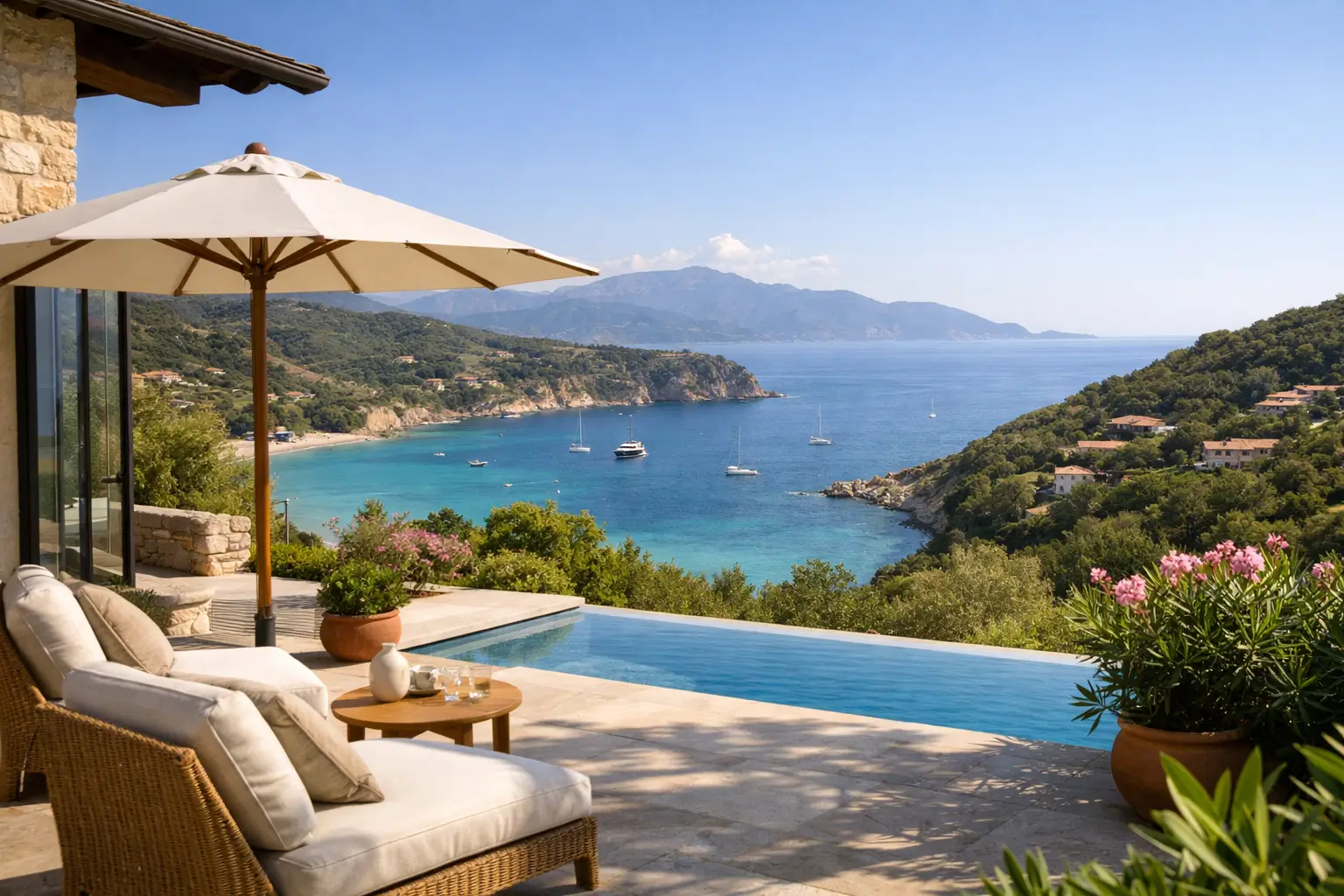
A house left closed for weeks might seem safe. On Elba, however, it only takes an intense storm, a small leak, salt spray, or an electrical fault for a minor problem to turn into an urgent intervention. The best solutions for a second home on Elba don't just involve closing doors and windows before leaving: they require a local presence, regular checks, and a concrete response when the owner is away.
For those living off the island, true protection comes from continuity. Knowing that someone enters the property, observes, checks, and accurately reports what is happening eliminates uncertainty between stays. It's a practical way to preserve the home's value and find it ready when you decide to return.
What an unoccupied second home truly needs
A second home is not simply an empty dwelling. It's a property that remains exposed without the daily presence of someone who could immediately notice an anomaly. A dripping faucet, a musty smell, a refrigerator turned off after a power outage, or a shutter damaged by the wind are easy to detect only when someone visits the house regularly.
On Elba Island, seasonal conditions have a significant impact. During quieter months, prolonged absence can lead to stagnant water, humidity, and minor deterioration. During bad weather periods, wind and rain warrant a quick check of fixtures, terraces, gutters, roofs, and outdoor areas. Near the sea, salt spray can accelerate the wear of metal elements, window frames, and external systems.
The effective solution is not a generic promise of assistance, but a supervision plan built around the house, its location, and the frequency with which it is used. An isolated villa, an apartment in a residence, and a house with a garden have different needs, even if they belong to the same owner.
Best solutions for a second home on Elba: scheduled checks
Periodic checks are the starting point for protecting an empty house. This is not equivalent to a simple visit: it is an organized inspection that allows visible anomalies to be identified before they become costly or difficult to manage.
During a thorough check, the local contact can inspect the condition of access points, windows, and shutters; observe any signs of infiltration, condensation, or humidity; verify that essential systems show no obvious problems, and inspect outdoor spaces. Mailboxes, gates, fences, and pathways also deserve attention, as they can offer the first signs of an unusual situation.
The frequency should be chosen with common sense. A house used frequently in spring and summer may require a different schedule than a property that remains closed for many months. Increasing checks during more exposed periods is often a prudent choice, not an excess of caution. Conversely, relying on checks that are too far apart can leave a problem unnoticed for weeks.
A service like Elba Property Care works precisely on this principle: ensuring a constant presence on the island, with planned inspections and clear communication to the owner. Distance is not eliminated, but it is managed with a reliable method.
Prevention: intervening before an emergency
The protection of a second home should not begin after damage has occurred. Prevention reduces the likelihood of facing emergencies, limiting inconvenience, time, and unexpected expenses.
Before a long period of absence, it’s advisable to check the closure of doors, windows, shutters, and gates; verify that there are no visible leaks; and assess the condition of the systems. If the property has a garden, pool, pumps, irrigation systems, or other external elements, it's necessary to define who observes their condition and how often. Leaving everything unattended is not always the safest choice.
Prevention also requires a concrete knowledge of the house. A contact person who knows the usual access points, the location of meters, the most delicate areas, and the owner's instructions can act more quickly if an anomaly emerges. This is particularly useful for those living abroad or unable to reach Elba at short notice.
Not everything can be avoided, of course. A sudden weather event or a breakdown can occur even in a well-prepared property. The difference lies in the ability to notice it promptly, document the situation, and activate the necessary support.
A local contact reduces uncertainty and downtime
Having a contact on the island doesn't just mean having a number to call in case of need. It means being able to count on someone who knows the property and can carry out an on-site check when the owner is unavailable.
In the event of reports from neighbors, alarms, bad weather, or suspected technical problems, the speed of the verification makes all the difference. From a distance, it's hard to tell if it's a false alarm, simple maintenance to schedule, or a critical issue that needs immediate attention. An on-site inspection allows for factual assessment and updates the owner with useful information, free from assumptions.
This local presence is also valuable in the normal management of the house's opening and closing periods. Before arrival, it can be useful to check the general condition of the property. After departure, a verification helps confirm that everything has been left in order and secure. These are simple steps, but they provide continuity to the care of the home.
Clear communication, not vague messages
Trust also depends on the quality of the information received. A distant owner needs to know what has been checked, if anomalies have emerged, and what actions are recommended. A generic message only reassures for a short time; precise updates, on the other hand, allow for decisions to be made with peace of mind.
Communication should be proportionate to the situation. If the check reveals no problems, a clear confirmation suffices. If a critical issue emerges, a description, any documentation, and indications on the next steps are needed. The owner always remains at the center of decisions but is not forced to manage everything without feedback on site.
For a second home, this transparency also avoids the opposite risk: unnecessary interventions or unclear costs. The local presence should bring order, not complications. This is why it is useful to choose a service that precisely defines activities, frequency of checks, and contact methods.
How to choose the right solution for your home
There is no single formula that works for all properties on Elba. The choice depends on several concrete factors: how long the house remains empty, where it is located, what systems it has, whether it has outdoor spaces, and how quickly the owner can intervene in person.
An apartment in Portoferraio may have different priorities compared to a villa with land in Capoliveri or a seasonal house near Marina di Campo. The characteristics of the property matter more than any standard package. A well-designed plan therefore starts with an initial assessment and focuses on the points that require the most attention.
When comparing the best solutions for a second home on Elba, it is advisable to prioritize three elements: regularity of visits, ability to intervene or coordinate quickly in case of need, and reliable communication with the owner. Price is a legitimate criterion, but it should not be the only one. A well-executed check can avoid consequences far more costly than a service chosen simply because it is cheap.
A home on Elba should remain a place of pleasure, not a source of doubt between holidays. Entrusting it with a present, attentive, and organized supervision allows you to leave with greater peace of mind and return to find what matters: a home cared for with the same attention you give it when you are on the island.