Automatic Gate Control Guide for Elba Island
Elba automatic gate control guide: preventive checks to maintain secure, reliable, and controlled access for homes that are not inhabited monthly.
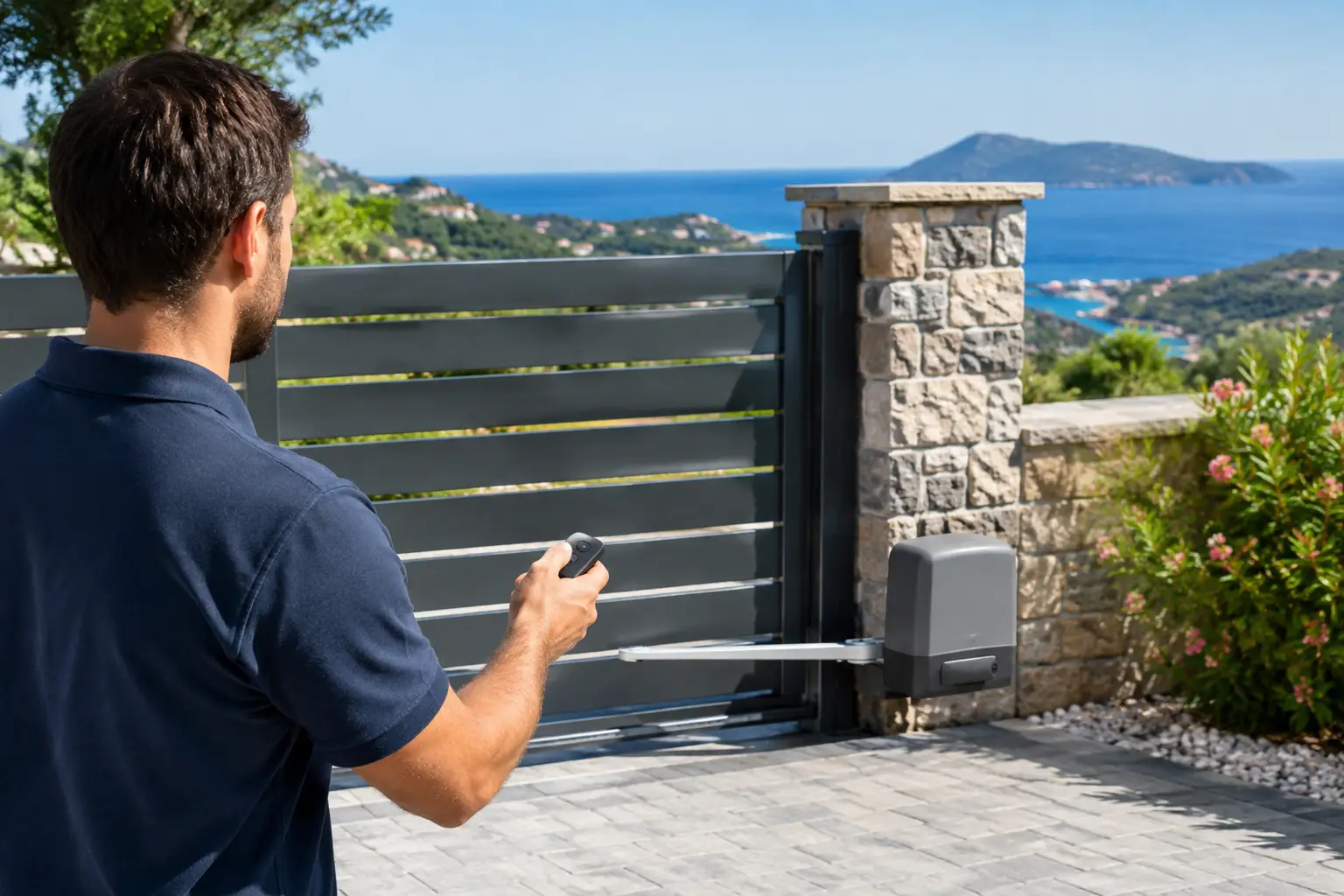
A stuck, slow, or left-open automatic gate can turn the entrance of an uninhabited house into a vulnerable point. This guide to automatic gate control on Elba Island helps owners of second homes, villas, and vacant properties recognize the warning signs they shouldn't ignore and organize useful checks throughout the year.
For those living far from Elba Island, the gate is not just a matter of convenience. It's the first barrier between the property and the outside: it regulates access, protects the perimeter, and helps make it immediately visible if something isn't working as it should. For this very reason, it deserves regular checks, not just an intervention when it stops opening altogether.
Why gate control goes beyond maintenance
An automatic gate is composed of mechanical, electrical, and safety parts that work together. A small defect can therefore have broader consequences: a malfunctioning remote control can delay access for someone who needs to check the house, an overloaded motor can suddenly stop, or a dirty photocell can block opening or closing.
In properties used only during certain periods of the year, the risk increases. After weeks without passage, an anomaly can go unnoticed until the owners arrive or, worse, until the gate remains open or no longer properly protects the access. Salt spray, wind, dust, humidity, and vegetation are common factors on the island and can affect the lifespan of components, especially in homes near the coast.
Periodic inspection does not replace the intervention of a qualified technician when necessary, but it allows for timely identification of situations that need to be reported. It is a concrete form of prevention: fewer uncertainties, fewer emergencies, and greater continuity in property protection.
Elba automatic gate control guide: what to check
A good inspection always starts with observation. There's no need to disassemble components or interfere with the electrical system: it's enough to carefully check that the gate operates smoothly and that the access area is clear, tidy, and safe.
Regular opening and closing
The first check concerns movement. The gate should open and close without jerks, unusual slowdowns, persistent metallic noises, or sudden stops. A slower-than-usual movement should not be considered a negligible detail: it can indicate friction, wear, obstacles along the path, or a motor problem.
For sliding gates, the track must be free of leaves, stones, dirt, and debris. For swing gates, it's useful to observe that the leaves do not sag, do not touch the ground, and do not encounter branches or vegetation during opening. The presence of obstacles is one of the simplest, yet most frequent, causes of malfunction.
Photocells and safety devices
Photocells detect the presence of people, vehicles, or obstacles in the doorway. If they are dirty, misaligned, or damaged, the gate may not close, reopen for no reason, or get stuck. During a control visit, it is advisable to visually check that the lenses are clean, intact, and not covered by tall grass, leaves, or cobwebs.
The functional test must be performed cautiously and in compliance with the system's instructions. If the gate's behavior appears uncertain, it is not advisable to force it or attempt improvised adjustments. The safest choice is to note the anomaly and request a technical check.
Remote controls, keypads, and manual opening
Reliable access also depends on control devices. Remote controls must be present, functional, and stored securely. Dead batteries are a trivial issue, but in an empty house, they can create a practical problem precisely when quick entry is needed for a check or an intervention.
If the entrance has a keypad, key selector, or intercom, it's useful to check that they are intact and protected from the elements. The possibility of manual unlocking in case of power failure should also be checked. The unlocking key must be accessible to an authorized person, but never left in a place easily accessible from the outside.
Electrical panel, lights, and visible signals
It is not necessary to tamper with the control panel, but it is useful to observe whether there are abnormal indicator lights, exposed cables, open boxes, signs of infiltration, or visibly deteriorated components. In the presence of water, corrosion, or external damage, quick action is needed because the problem can worsen with rain or humidity.
Access lights also deserve attention. A well-lit entrance makes any evening check easier, improves security, and helps identify anomalies. If the lighting is connected to sensors or timers, it must be ensured that it works during the scheduled hours.
The right frequency depends on the house and the area
There is no single interval for all properties. A villa inhabited only a few weeks a year, with a gate exposed to salt spray, generally requires more frequent attention than a frequently used and protected home in an inland area. The same applies to properties surrounded by pines, dense vegetation, or terrain that can quickly accumulate leaves and debris.
As a practical criterion, a visual and functional check during every scheduled property visit is a prudent choice. After intense storms, strong winds, or long periods of disuse, an additional check can prevent a minor inconvenience from becoming a complete access blockage.
Routine technical maintenance, on the other hand, must follow the installer's instructions and the actual condition of the system. Delaying it too long can reduce safety and increase the cost of subsequent interventions. Prevention does not mean unnecessary intervention: it means checking enough to act before the problem compromises access to the house.
Signals requiring immediate attention
Some signals require timely reporting. These include a gate that remains open or does not close completely, loud or new noises during movement, signs of impact, damaged hinges or guides, broken photocells, accessible cables, water near the control unit, and remote controls that suddenly stop working.
Attention should also be paid to external elements: signs of attempted forced entry, tampered closures, vegetation encroaching on the passage, or vehicles parked in a way that obstructs movement. In these cases, the problem is not just technical. It can directly affect the security of the property and the ability to intervene in a timely manner.
Forcing the gate, disconnecting components, or attempting electrical repairs without expertise can increase damage and create risks. It is preferable to secure the area, when possible, document the anomaly, and entrust the repair to a qualified professional.
The value of local presence for second homes
When the owner lives off Elba, knowing that someone periodically checks the house entrance changes how an unforeseen event is managed. A local check allows for verifying the actual operation of the gate, detecting anomalies, coordinating a technician when necessary, and updating the owner with clear information.
For Elba Property Care, property access is an integral part of property protection. During scheduled visits, observing the condition of the gate, the external area, and visible devices means not neglecting the house's first line of defense.
A reliable gate should not draw attention to itself: it opens when needed, closes correctly, and protects the property between stays. Scheduling constant checks allows for maintaining this peace of mind even when the house on Elba Island remains empty for months.