7 Risks of an Empty Home on Elba
Discover the 7 risks of an empty home on Elba: leaks, theft, and malfunctions. Learn how regular local checks protect your home in every season, always.
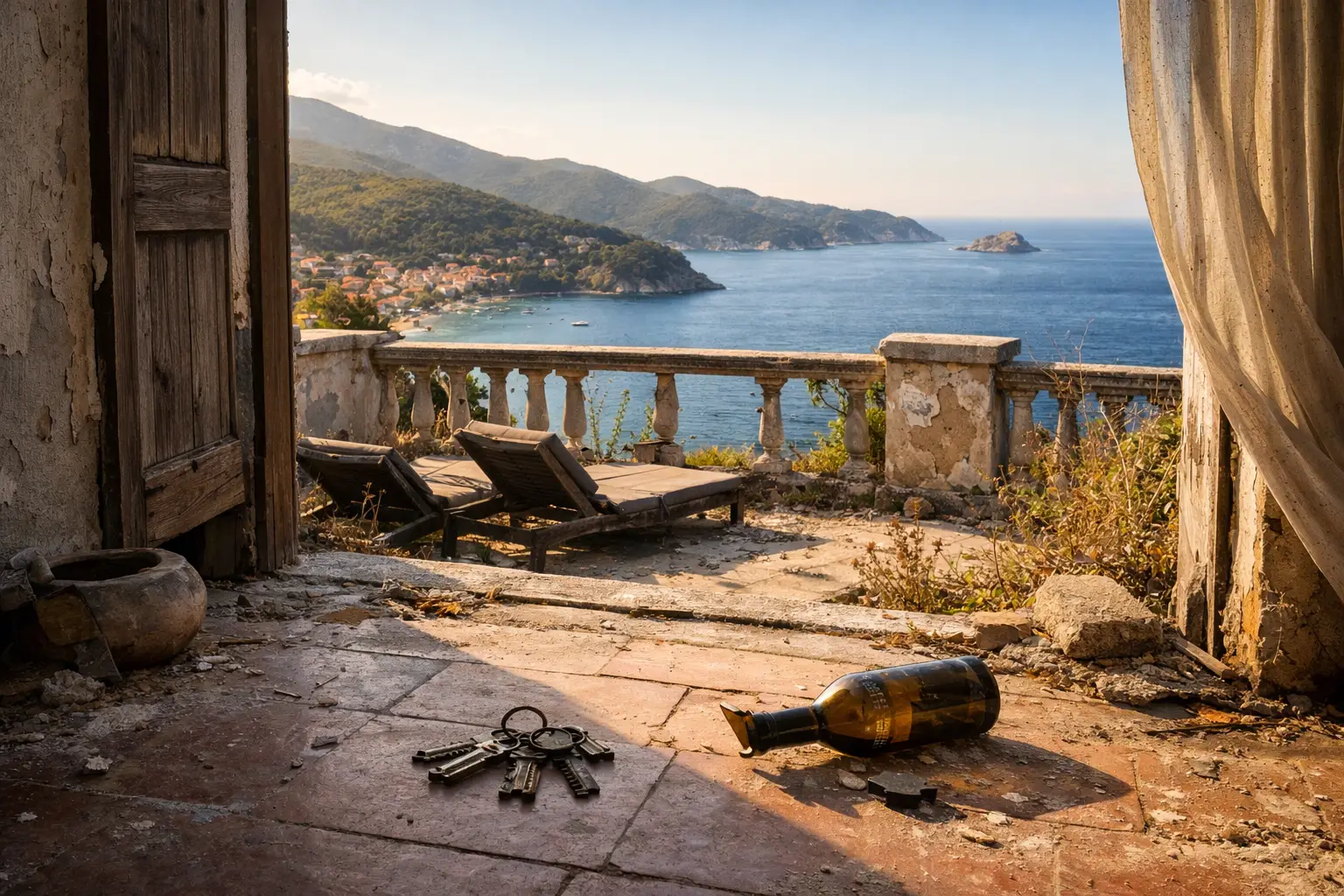
A house left empty for months can seem perfectly safe until a minor anomaly turns into costly damage. The 7 risks of an empty home on Elba primarily concern what isn't immediately visible: a slow leak, a blackout, an infiltration after bad weather, or a vulnerable entry point. For those living far from the island, the problem isn't just intervening; it's knowing promptly what's happening.
A second home requires presence even when uninhabited. Periodic checks do not replace technical maintenance but allow for the identification of early signs, verification of the property's actual condition, and quick activation of necessary on-site support.
The 7 Risks of an Empty Home on Elba
1. Water Infiltration and Hidden Dampness
A roof, gutter, terrace, or fixture exposed to the elements can let water through without immediately causing obvious damage. After heavy rain or a period of wind, moisture can accumulate in attics, hard-to-reach corners, internal walls, and technical rooms. When discovered months later, it may have already compromised paintwork, plaster, furnishings, electrical systems, and wooden surfaces.
On Elba Island, proximity to the sea and the alternation between dry seasons and concentrated rainfall make scheduled visual inspections valuable. Checking ceilings, windows, external drains, and exposed areas helps distinguish between a simple condensation mark and a problem requiring immediate intervention. Not all stains are serious, but none should go unchecked.
2. Plumbing Leaks and System Malfunctions
A small leak under a sink, near the water heater, or in an unused bathroom can continue unnoticed for weeks. The same applies to a damaged pipe, a faulty valve, or a dripping appliance. If the house is closed, there's no one to notice an unusual smell, a damp floor, or a meter showing abnormal consumption.
Prevention starts with proper system management during absence, but it also requires regular checks. An inspection allows for the verification of any visible leaks, the condition of damp areas, and signs such as humidity, condensation, or irregular pressure. If an anomaly occurs, having a local contact person reduces the time between discovery and intervention by a qualified technician.
3. Theft, Intrusions, and Attempted Break-ins
A property that appears uninhabited can attract unwanted attention, especially if shutters, gates, or access points remain unchanged for a long time. The risk isn't just theft: an attempted break-in can damage locks, windows, fixtures, and alarm systems, leaving the house more exposed until the owner's next visit.
Effective security doesn't rely on a single measure. Good locks, adequate lighting, alarm systems, and a tidy appearance are useful elements, but the presence of periodic physical checks adds a concrete layer of protection. An inspection allows for verification of doors, windows, gates, fences, and possible signs of tampering. If something is wrong, the owner receives clear information and can make informed decisions.
4. Blackouts, Power Outages, and Electrical Anomalies
A power outage can go unnoticed in an empty house. If the blackout affects refrigerators or freezers, the consequences can be unpleasant upon return: bad odors, spoiled food, and extensive cleaning. In other situations, a tripped circuit breaker can shut down essential devices, such as pumps, irrigation systems, or home security appliances.
During a check, it's possible to verify the condition of the electrical panel, the presence of power, and the general functioning of active elements. Of course, not every system needs to be managed the same way: a villa used even in winter may have different needs than a small apartment closed until summer. The most prudent solution is defined based on the house, existing systems, and duration of absence.
5. Neglected Garden and Damage to Outdoor Areas
The garden is often the first sign that a house is not being maintained. Excessive vegetation, branches near the roof, leaves in drains, inefficient irrigation, or exposed furnishings can turn into practical and security problems. Terraces, pergolas, swimming pools, gates, and driveways also deserve attention, as they remain exposed to sun, wind, and bad weather.
The risk varies greatly between a house in the countryside, a villa with large outdoor spaces, and an apartment with a small terrace. Therefore, the inspection must be proportional to the property. The goal is not to carry out unnecessary work, but to detect what can worsen: a broken branch, a clogged drain, an irrigation leak, or an external access that does not close properly.
6. Mold, Bad Odors, and Interior Deterioration
A house closed for too long can retain humidity and stagnant air. Fabrics, mattresses, furniture, wardrobes, and walls can suffer, particularly in less ventilated months or in homes close to the sea. The damage is not always immediate, but mold tends to advance silently and then requires more invasive interventions to be removed.
Opening and airing rooms during visits, when conditions allow, helps maintain a more balanced situation. It's also useful to check dehumidifiers, ventilation grilles, air conditioners, and enclosed areas such as storage rooms or wardrobes. Interior care is not only about aesthetics: it protects materials, comfort, and the property's value.
7. Emergencies Without a Local Contact Person
The most difficult risk for a non-resident owner to manage is receiving a notification and having no one on the island who can verify it. A neighbor might notice a damaged shutter or an unusual noise, but they cannot always enter, methodically check, or coordinate a technician. Without a contact person, every unforeseen event requires phone calls, waiting, and decisions made remotely with incomplete information.
Continuous local supervision offers a reliable point of contact between the owner, the property, and involved professionals. Elba Property Care conducts scheduled checks for homes located exclusively on Elba Island, documenting verifications and promptly reporting any critical issues. This allows the owner to maintain control even while living elsewhere.
The Frequency of Checks Depends on the House
There is no identical schedule for all properties. A house left empty for a few weeks, with deactivated systems and no outdoor space, may require a different plan than a villa used occasionally throughout the year. Location, exposure to weather, presence of a pool or garden, age of systems, and value of interior furnishings all matter.
During periods of greater exposure to bad weather or after specific events, it may be reasonable to increase verifications. The point is not to check without reason, but to prevent an ordinary problem from becoming an urgent, costly repair that is difficult to manage from afar.
Entrusting an empty home to regular checks means retaining the freedom to use it whenever you wish, with the certainty that someone has been monitoring its condition in the meantime. Peace of mind doesn't come from hoping everything will be fine, but from knowing that the house is continuously observed, maintained, and protected.