7 checks for an empty home in Elba every year
7 checks for an empty home in Elba: protect your second home from leaks, breakdowns, damp, and intrusions with scheduled local inspections throughout the year.
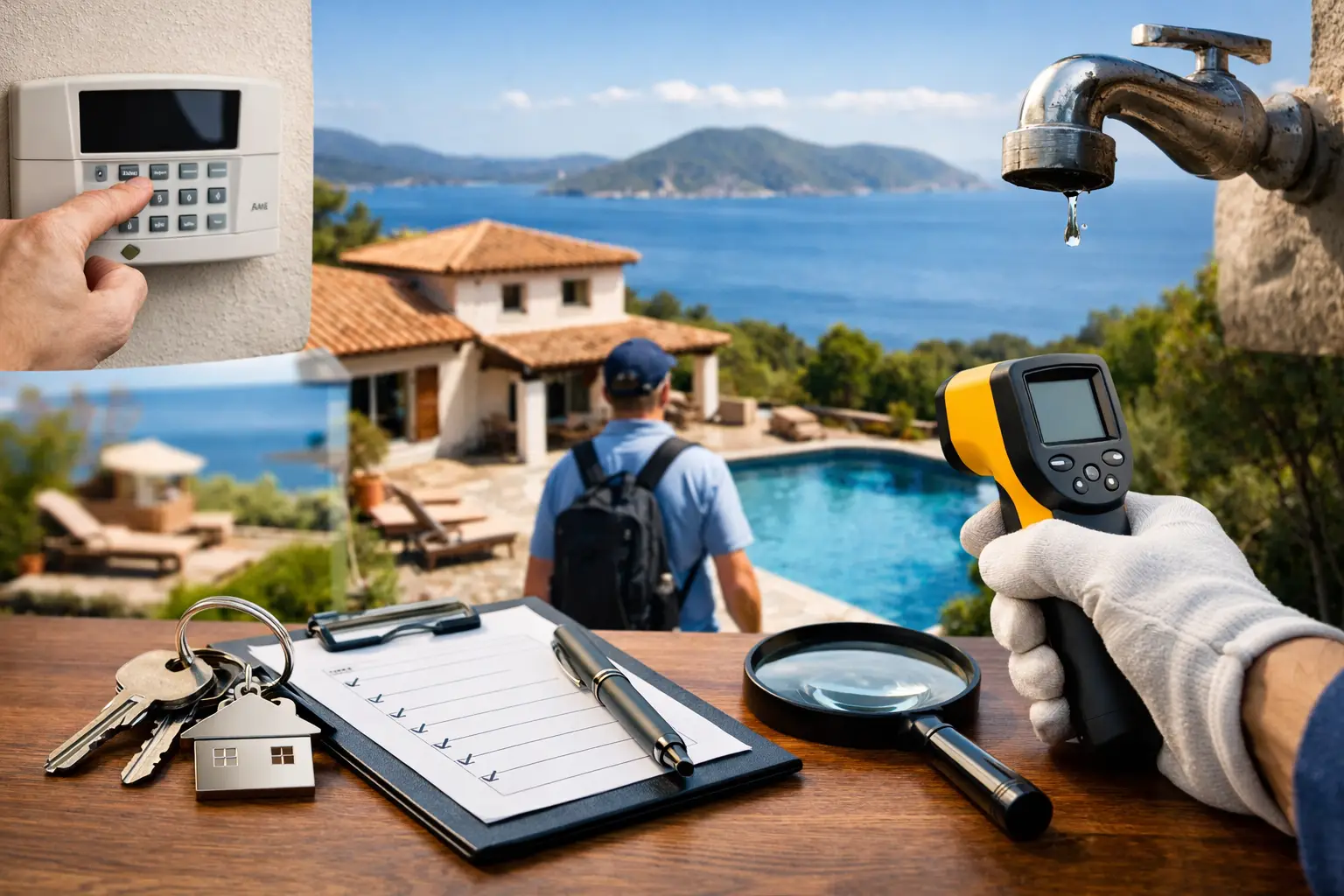
A home left closed for weeks or months might seem secure, but on the Island of Elba, a small, undetected fault can quickly escalate into an urgent intervention. The 7 checks for an empty home in Elba are designed precisely for this: to identify early signs, intervene promptly, and maintain a reliable local presence overseeing the property, even when the owner is away.
A periodic check is not just a courtesy visit. It's a preventative measure that protects the dwelling, its systems, and the property's value between stays. The frequency depends on the house’s location, the season, its exposure to the sea, and its amenities, but some checks should never be missed.
7 checks for an empty home in Elba
1. Access points, locks, and external signs
The first check concerns the physical security of the property. Gates, entrance doors, windows, shutters, roller blinds, and locks must be carefully inspected. A window left ajar, a forced lock, or a damaged shutter can expose the house to intrusions, water, and wind.
Outside, it's also useful to observe fences, perimeter walls, automatic gates, and less visible areas of the property. In an isolated villa or a house used only in summer, minor damage can go unnoticed for longer. The regular presence of a local contact person acts as a deterrent and allows any anomalies to be reported immediately.
2. Water leaks and the state of the plumbing system
Water is among the primary causes of damage in unoccupied homes. A leak under a sink, a loose fitting, a faulty water heater, or a damaged pipe can cause slow, unseen damage. By the time the owner returns, the damage might affect floors, walls, furniture, and electrical systems.
During an inspection, it is necessary to check bathrooms, the kitchen, the technical room, the boiler, the water pump, and external water points. Any signs of dampness, drips, stains, bad odors, and abnormal pressure variations are verified. If the house remains closed for an extended period, it may be advisable to consider turning off the water or taking other preventive measures, but the choice depends on the property's configuration and its intended use in the coming months.
3. Damp, mold, and room ventilation
The marine climate and periods of closure can promote condensation, damp, and mold, especially in poorly ventilated areas. Wardrobes, north-facing rooms, bathrooms without windows, basements, and storage rooms deserve a thorough check. Initial spots are often contained, but ignoring them risks their spread to walls, textiles, and furnishings.
Ventilating the house during scheduled visits, when weather conditions permit, helps to refresh the air and reduce the stuffy feeling. However, this must be done judiciously: leaving windows open unsupervised is not a safe solution, especially in case of wind, rain, or prolonged absence. Good supervision combines ventilation, visual inspection, and timely reporting of critical points.
4. Electricity, appliances, and alarms
An inactive electrical system is not automatically risk-free. Electrical panels, circuit breakers, outdoor lights, sockets, connected appliances, and alarm systems require periodic checks. A power outage can deactivate essential devices, while a faulty appliance or a turned-off refrigerator can create bad odors and hygiene problems.
The check should include verifying any alerts on the panel, the functioning of main lights, and the presence of obvious anomalies. If the property has an alarm, video surveillance, motorized gates, or pumps, it’s useful to ensure the system is operational and not reporting errors. Technology helps, but it doesn't replace a person on-site: a remote notification is only useful if someone can concretely assess what is happening.
5. Roof, terraces, gutters, and infiltrations
Infiltrations don't always start with an obvious stain on the ceiling. A displaced tile, a blocked gutter, worn waterproofing, or standing water on a terrace can cause progressive damage, especially after heavy rains. In coastal homes, salt spray, wind, and sun also affect materials, coverings, and external structures over time.
During visits, a visual inspection of the roof, downspouts, terraces, balconies, and exterior walls allows for spotting signs like halos, cracks, detached plaster, accumulated leaves, or stagnant water. Not every anomaly requires immediate intervention, but every sign should be evaluated and documented. The difference lies in not waiting until the next holiday to see if the problem has worsened.
6. Garden, external areas, and vegetation
A well-maintained exterior communicates presence and care. Tall grass, branches brushing against facades, leaves in drainage channels, blocked gates, and exposed furnishings can quickly deteriorate during the owner's absence. In some areas of Elba, wind can move objects, and vegetation can encroach on pathways, walls, or systems.
The inspection should therefore include driveways, the garden, terraces, pergolas, swimming pools if present, storage areas, and service areas. Fallen branches, accumulated material, visible damage, and conditions that could create safety problems are checked. Routine maintenance doesn't always coincide with home watching, but careful supervision allows for detecting what needs to be managed before it becomes an emergency.
7. Odors, infestations, and general condition of the house
The last check brings together everything that doesn't always show up in a photograph or an automatic alert. Musty, drain, gas, or stale odors; traces of insects or small animals; unusual dust, condensation, or deteriorated materials are concrete indicators of the house's condition. Even a simple inspection of the rooms can reveal a problem before it compromises comfort and health.
A well-executed visit considers the house as a whole: entering rooms, observing walls and ceilings, checking less-frequented spaces, and verifying that nothing has changed since the previous visit. For the owner, receiving clear feedback after each inspection means knowing that the house is not just closed, but looked after.
How often should empty home checks be scheduled?
There isn't a one-size-fits-all frequency. A small house in a residential context might have different needs compared to an independent villa with a garden, pool, and multiple systems. The time of year also matters: after significant weather events, in wetter months, or during a long absence, it may be prudent to increase the frequency of checks.
The correct approach is to build a plan proportionate to the property's real risk. The owner's distance, the house's exposure, the presence of technical systems, and the anticipated time until the next stay are all elements to consider. Regular checks cost less, in terms of stress and potential damage, than purely reactive management.
A local presence that protects property value
For those living far from the Island of Elba, the point is not just knowing if everything seems in order. It's about having a local contact who knows the property, identifies anomalies, and can coordinate necessary actions consistently. Elba Property Care fulfills this role with scheduled inspections and concrete attention to the property's condition.
The peace of mind of a second home comes from the certainty that someone is looking after it with the same care the owner would. Scheduling constant checks today means being able to return tomorrow to a safer, tidier home, ready to welcome its occupants.